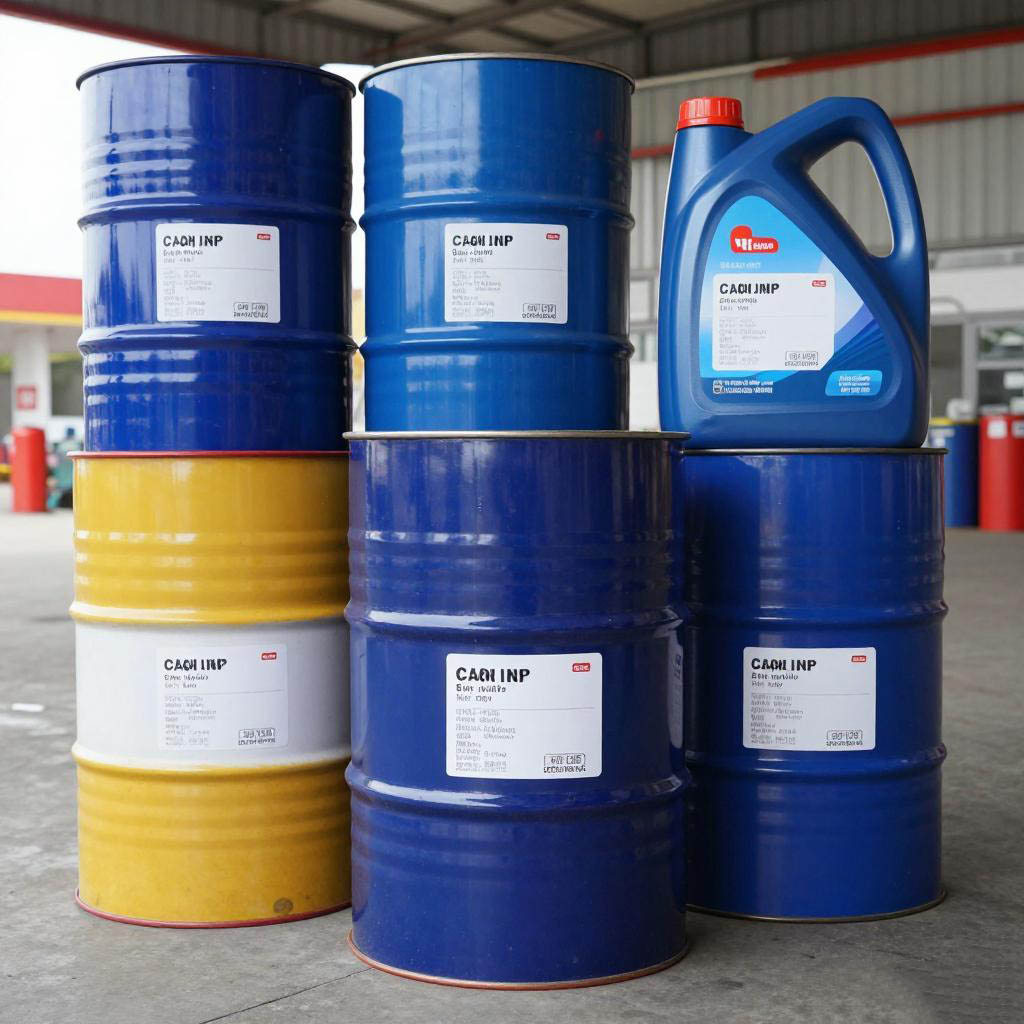
Bucket Labeling Machine——Automatic Pail & Large Container Labeling System
Large containers such as buckets, pails, and industrial drums are widely used in chemical production, coatings, lubricants, construction materials, and agricultural formulations. Unlike small bottles or cartons, these containers present unique labeling challenges due to their size, weight, and often semi-cylindrical or tapered surfaces. Accurate label placement on buckets is essential not only for branding, but also for safety warnings, regulatory compliance, and traceability in industrial supply chains.
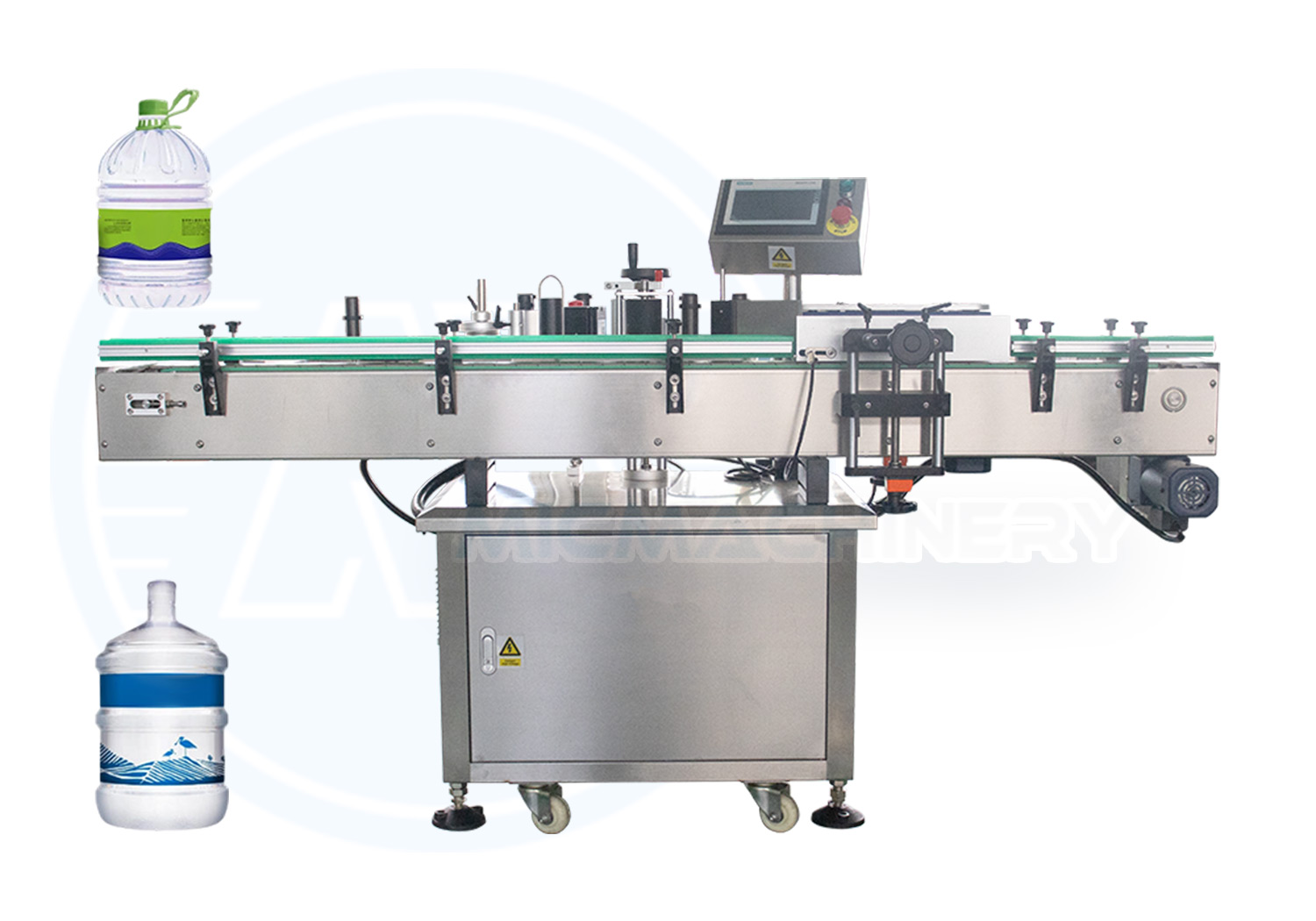
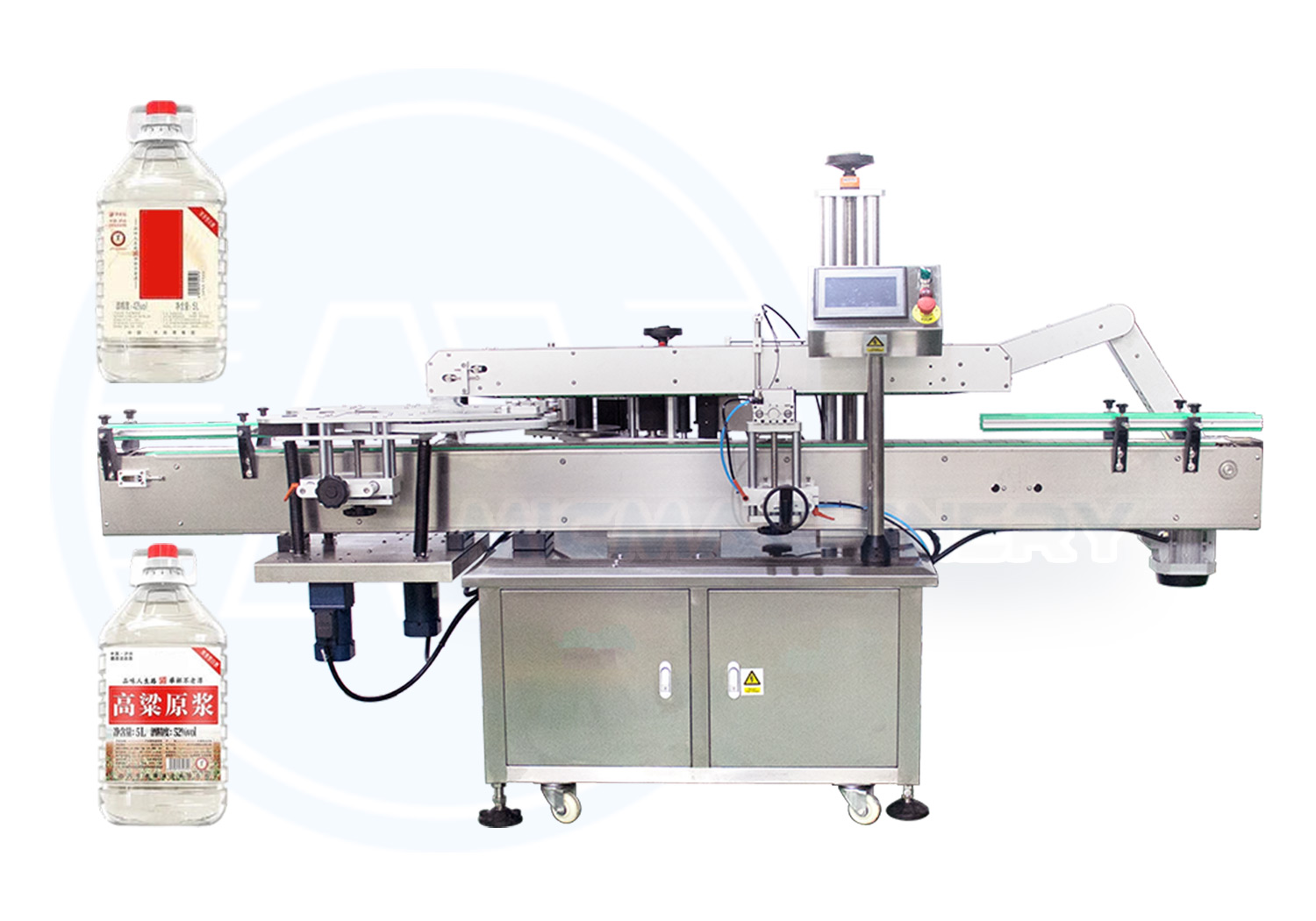
The Bucket Labeling Machine from MIC Machinery is engineered specifically for heavy-duty containers ranging from small plastic pails to large industrial buckets. It ensures stable, high-precision application of self-adhesive labels on curved surfaces while maintaining consistent alignment in high-output production environments.
Working Process
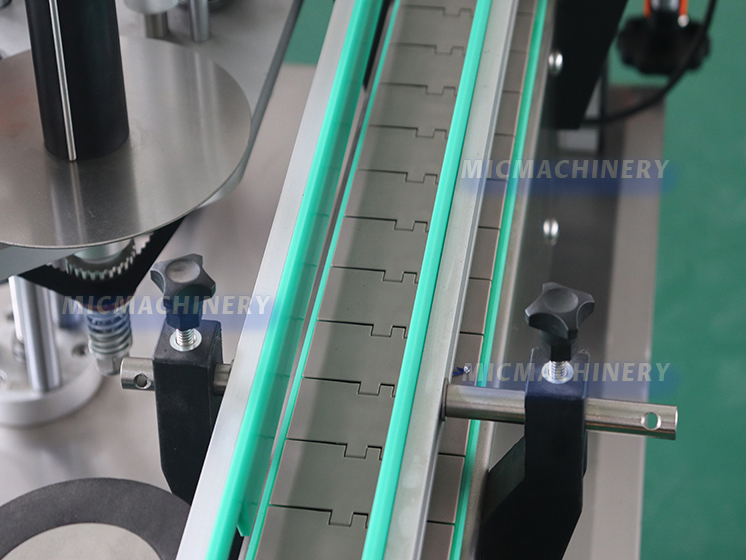
The labeling process begins when empty or filled buckets are loaded onto the heavy-duty conveyor system from upstream filling or stacking equipment. The conveyor stabilizes each container and transports it toward the labeling station.
A spacing control system ensures consistent distance between buckets, which is essential for accurate labeling on large surfaces. Photoelectric sensors detect each incoming bucket and send signals to the PLC control system to initiate label dispensing.
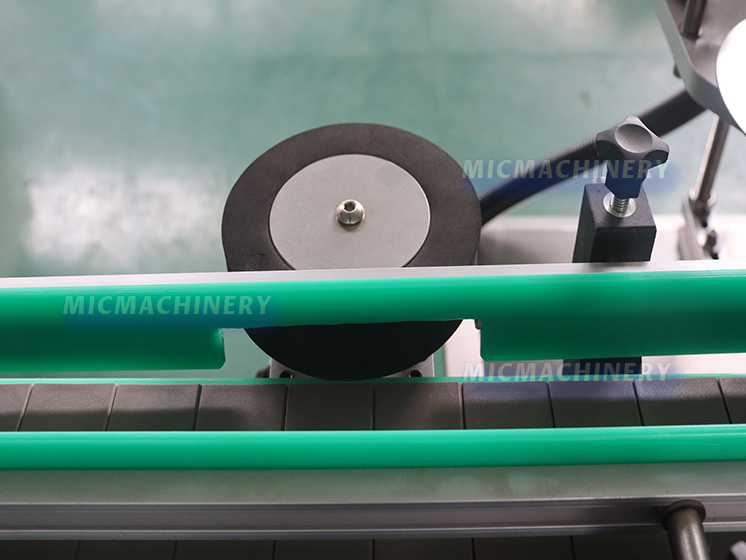
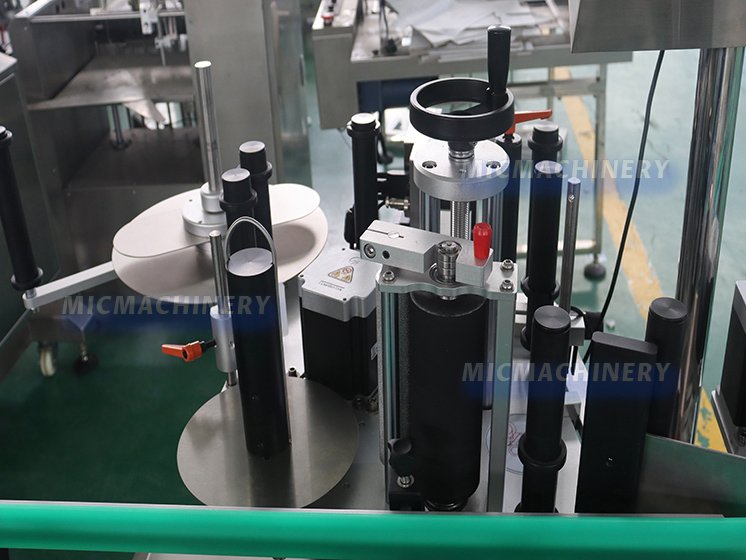
As the bucket enters the labeling zone, side guides and positioning rollers align the container to ensure stable rotation or controlled movement. The servo-driven labeling head then dispenses the label at a precisely controlled speed synchronized with conveyor movement.
For wrap-around applications, the bucket rotates smoothly during labeling, allowing the label to be applied evenly across the curved surface. Pressure rollers ensure full adhesion, preventing air bubbles and ensuring strong bonding even on textured plastic or slightly uneven surfaces.
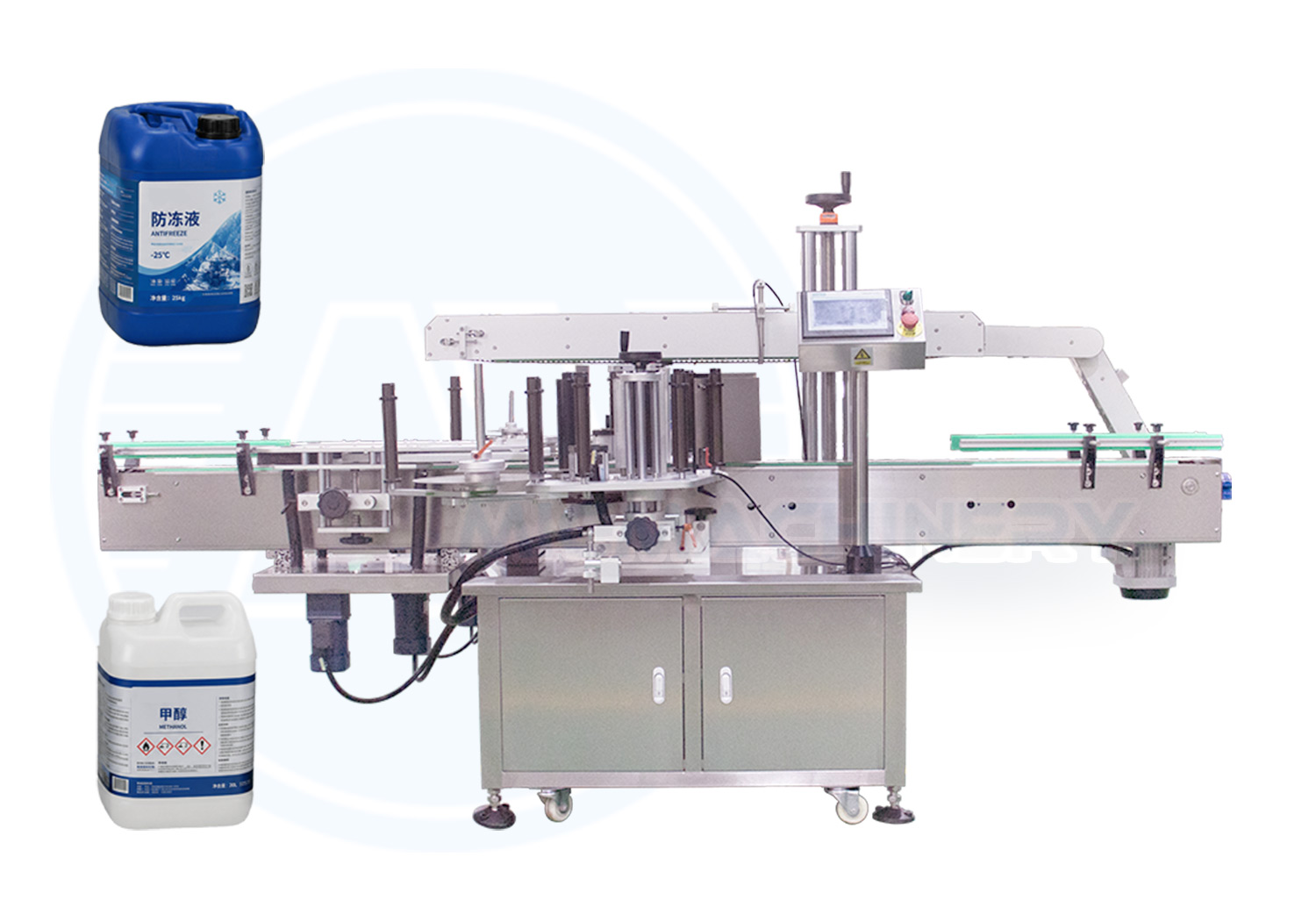
In multi-label configurations, the system applies multiple labels in sequence or simultaneously depending on production requirements. After labeling, buckets continue toward stacking, palletizing, or packaging systems. Throughout the process, the PLC continuously monitors speed, sensor feedback, and servo coordination to maintain stable operation.
Video Demonstration
Applications
The Bucket Labeling Machine is widely used in industries that require durable packaging and high-visibility labeling on large containers.
Typical applications include:
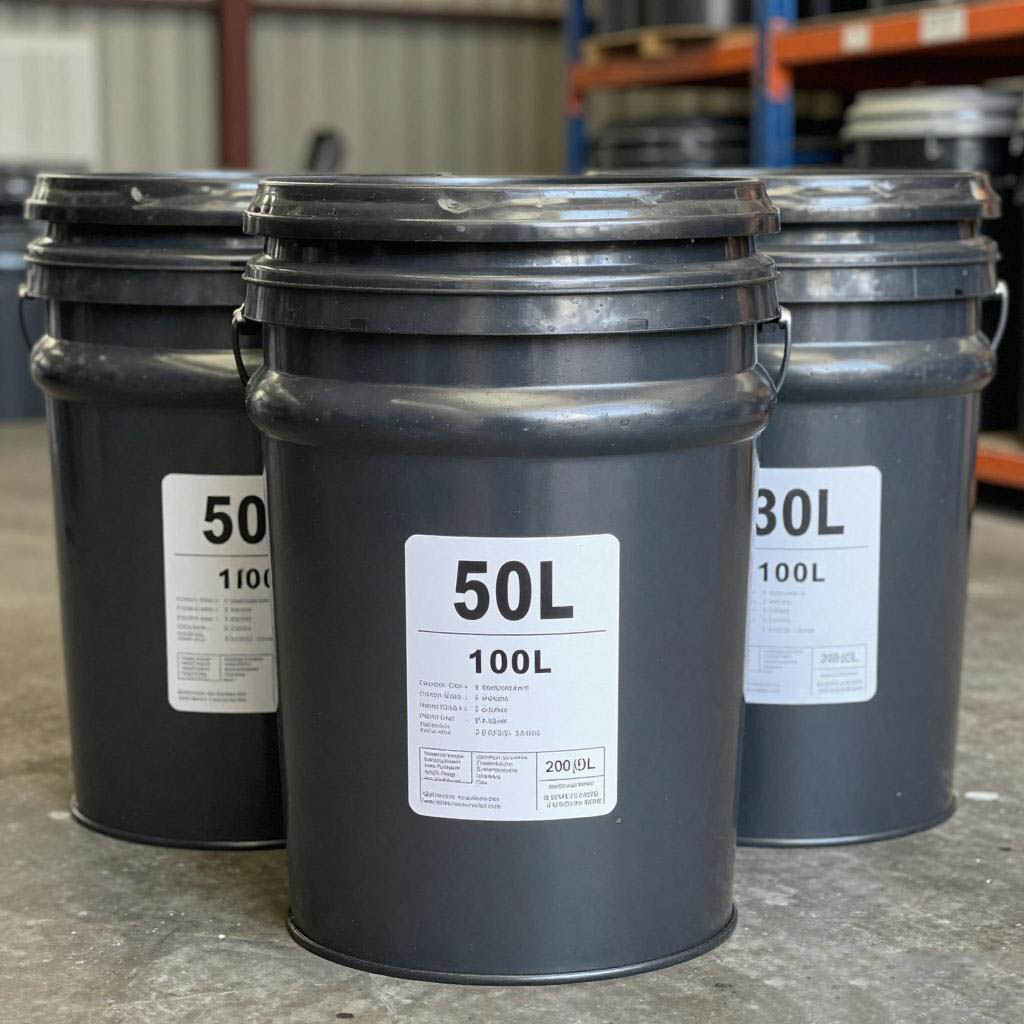
Paint and coating buckets
Construction material pails
Chemical storage containers
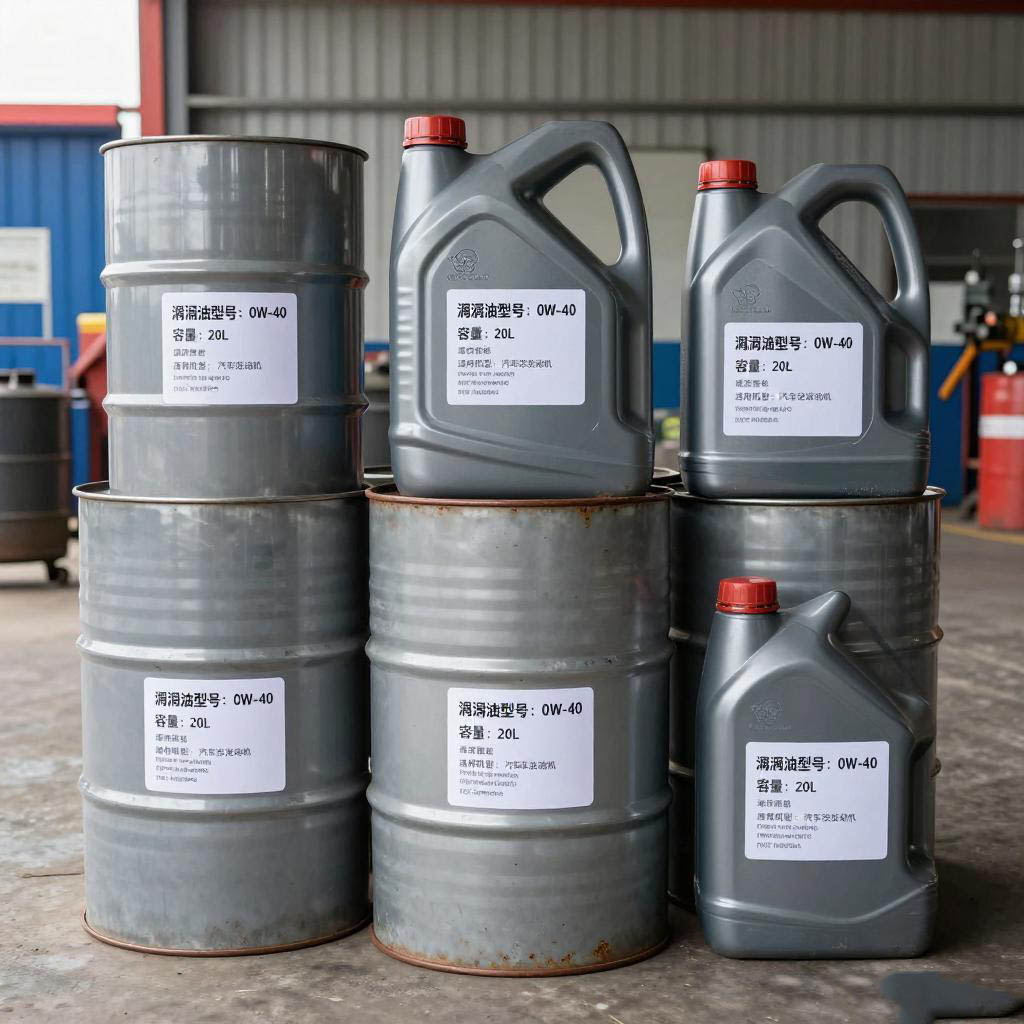
Industrial lubricant drums
Agricultural chemical buckets
Adhesive and sealant containers
Food-grade bulk storage buckets
Detergent and cleaning chemical pails
Resin and polymer containers
Automotive chemical buckets
Industrial powder storage containers
The machine supports HDPE, PP, PET, and other rigid plastic materials, as well as coated metal containers depending on configuration.
Customization Options
Different industrial applications require flexible labeling solutions for large containers. MIC Machinery provides multiple customization options for bucket labeling systems.
Heavy-Duty Conveyor System
Reinforced conveyors designed for high-load industrial buckets.
Servo-Controlled Wrap Labeling
Ensures accurate label placement on curved surfaces with consistent tension control.
Dual or Multi-Label Systems
Supports front, back, and safety warning label applications in one system.
Vision Inspection System
Optional cameras verify label position, alignment, and print quality.
Integrated Coding System
Supports inkjet or laser printing for batch numbers, hazard symbols, and production dates.
Adjustable Container Handling
Quick-change guide systems accommodate different bucket diameters and heights.
Full Line Integration
The machine integrates with bucket filling systems, sealing machines, palletizers, and warehouse automation systems.
Maintenance and Operation
Routine maintenance is essential for stable operation in heavy-duty industrial environments. Daily cleaning should focus on conveyors, rollers, labeling heads, and sensor surfaces to prevent dust, adhesive residue, or product contamination from affecting performance.
Weekly inspections should verify servo synchronization, conveyor tension, guide rail alignment, and sensor calibration. Pressure rollers and rotating mechanisms should be checked for wear and replaced when necessary.
Lubrication of mechanical components should follow a structured maintenance schedule to ensure smooth operation under heavy load conditions. Electrical systems, PLC modules, and communication interfaces should be inspected regularly to ensure stable system coordination.
Preventive maintenance reduces downtime and ensures consistent labeling accuracy for large-format industrial containers.
FAQ
Q1: What types of buckets can the machine label? It supports plastic buckets, paint pails, chemical drums, and other large cylindrical containers.
Q2: Can it apply wrap-around labels? Yes. It is specifically designed for full or partial wrap-around labeling on curved surfaces.
Q3: What is the labeling accuracy? Standard accuracy is approximately ±1.5 mm depending on container size and speed.
Q4: Can it handle heavy containers? Yes. It uses reinforced conveyors designed for industrial-grade buckets and pails.
Q5: Is it suitable for chemical products? Yes. It is widely used in chemical, coating, and industrial packaging industries.
Q6: Can it integrate into a full production line? Yes. It can connect with filling, sealing, palletizing, and warehouse systems.
Bucket Labeling Machine Solutions from MIC Machinery
The MIC Machinery Bucket Labeling Machine provides a robust and precise solution for large-container labeling in industrial environments. With reinforced mechanical design, servo-driven control, and intelligent sensing technology, it ensures stable label application on heavy and curved surfaces, supporting reliable performance across chemical, coating, construction, and industrial packaging production lines.