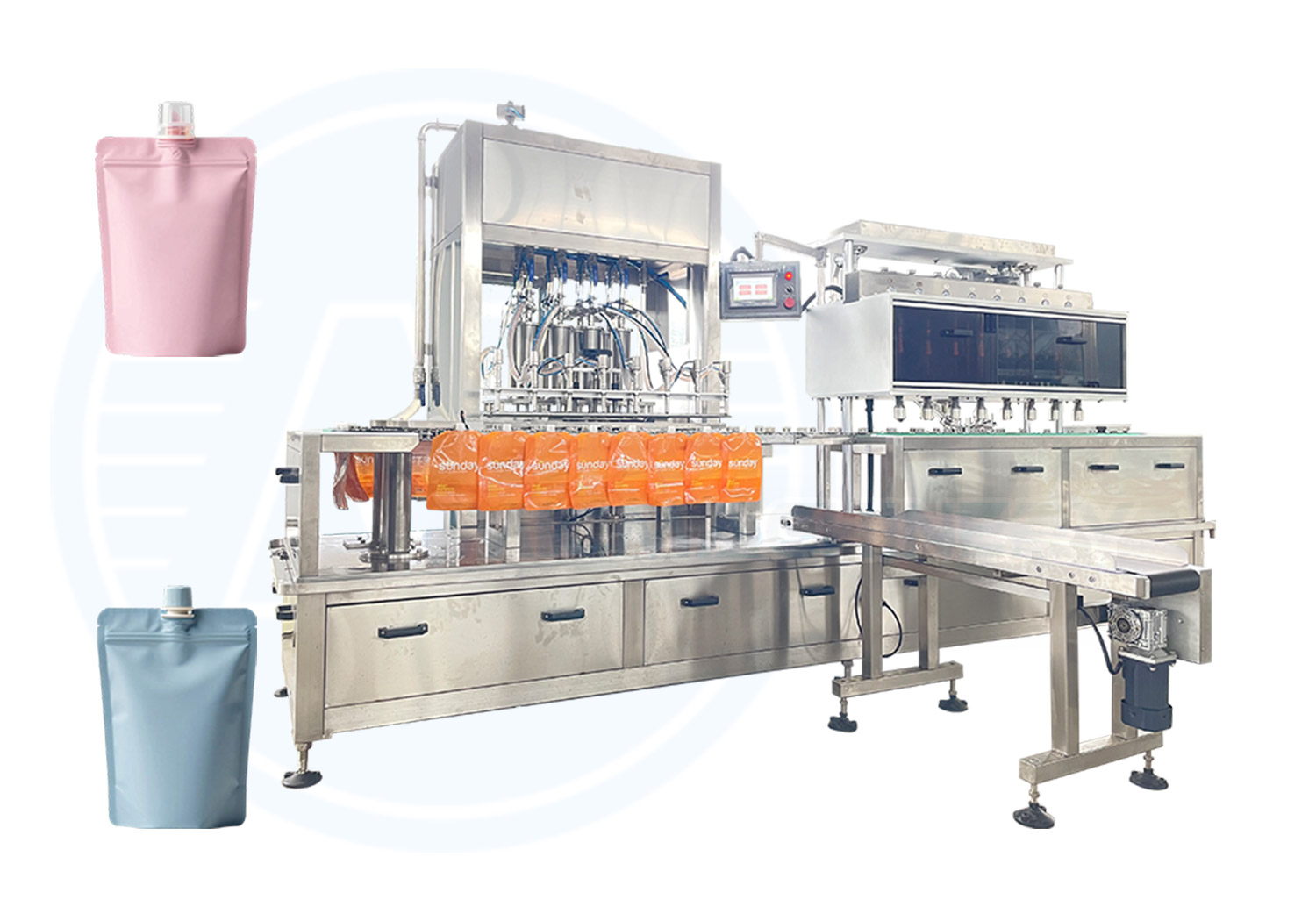
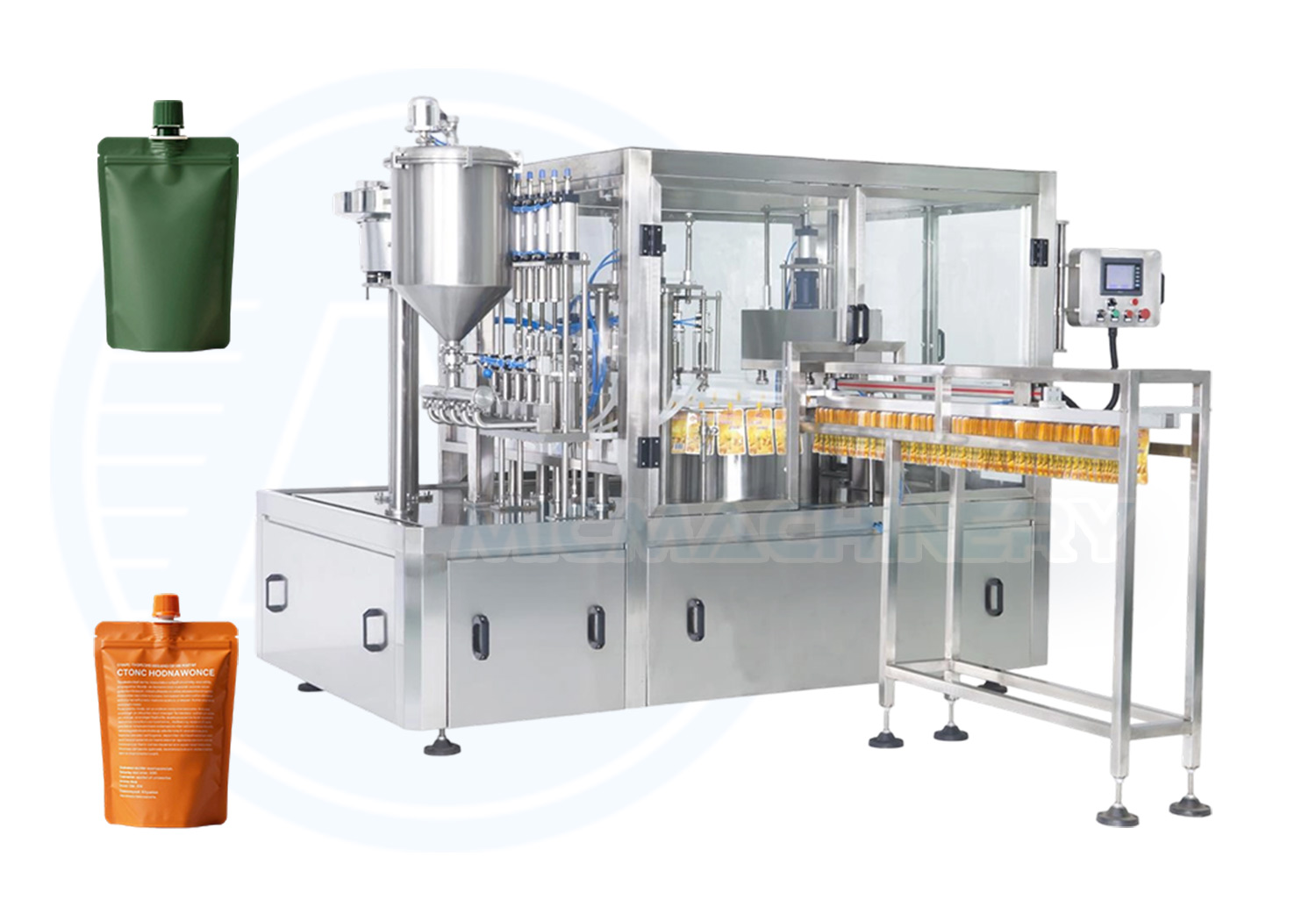
Lotion Filling Machine——Precision Cosmetic Filling System
Lotion products sit in a sensitive category within the personal care industry. Their viscosity is higher than liquid soaps but lower than creams, and most formulations include emulsifiers that can shift consistency depending on temperature and mixing conditions. In industrial filling, this creates challenges related to flow stability, foaming control, and dosing accuracy.
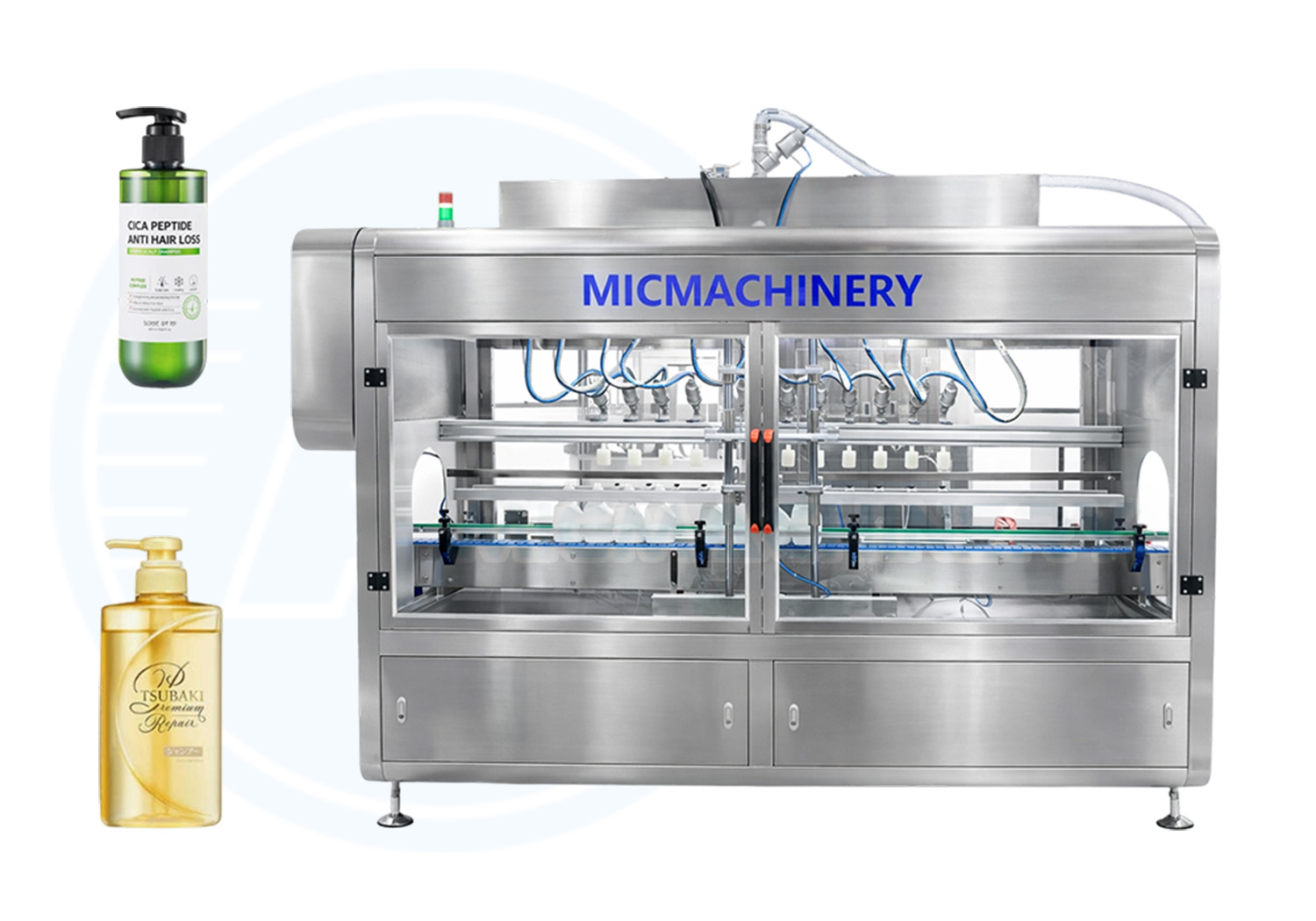
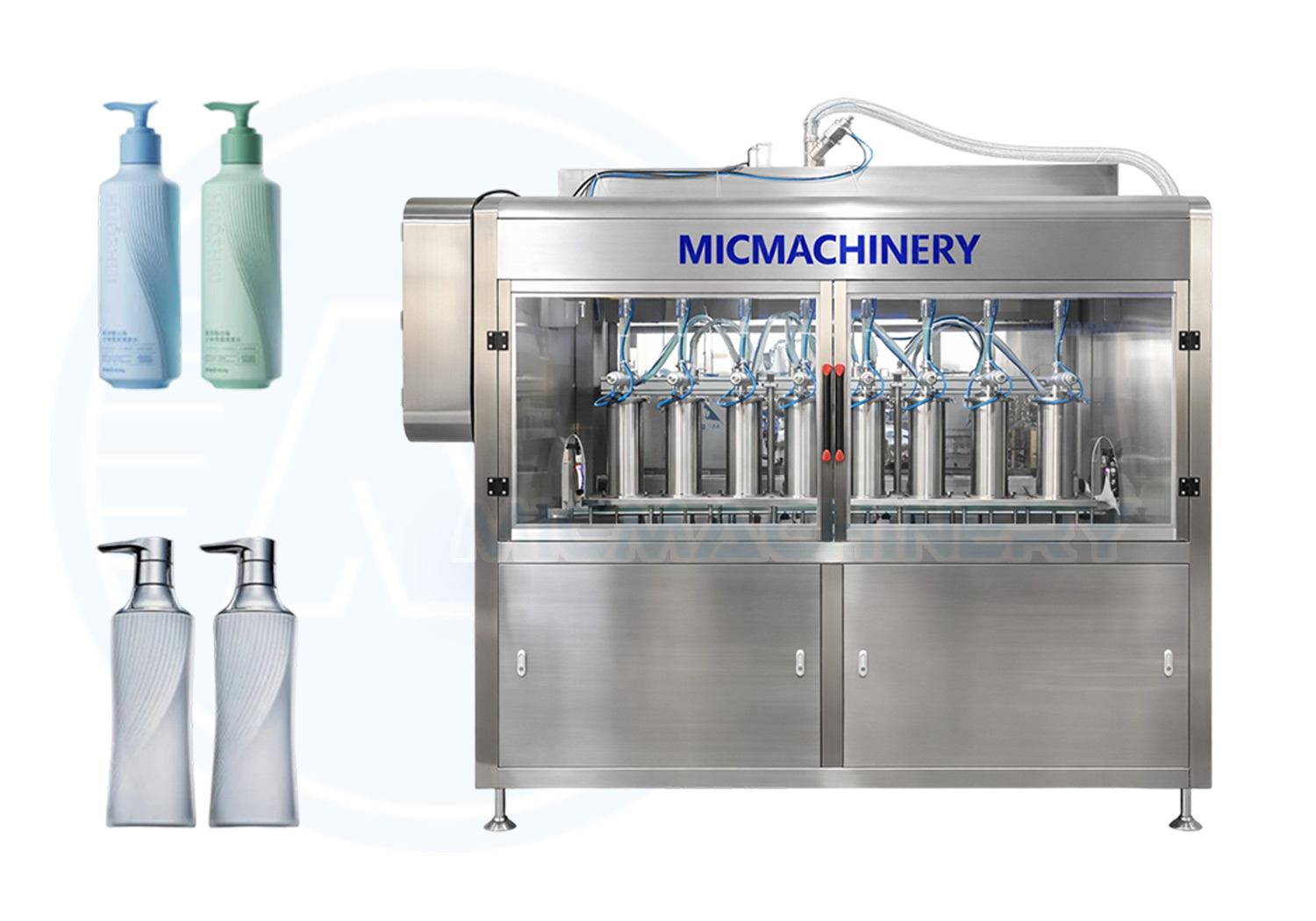
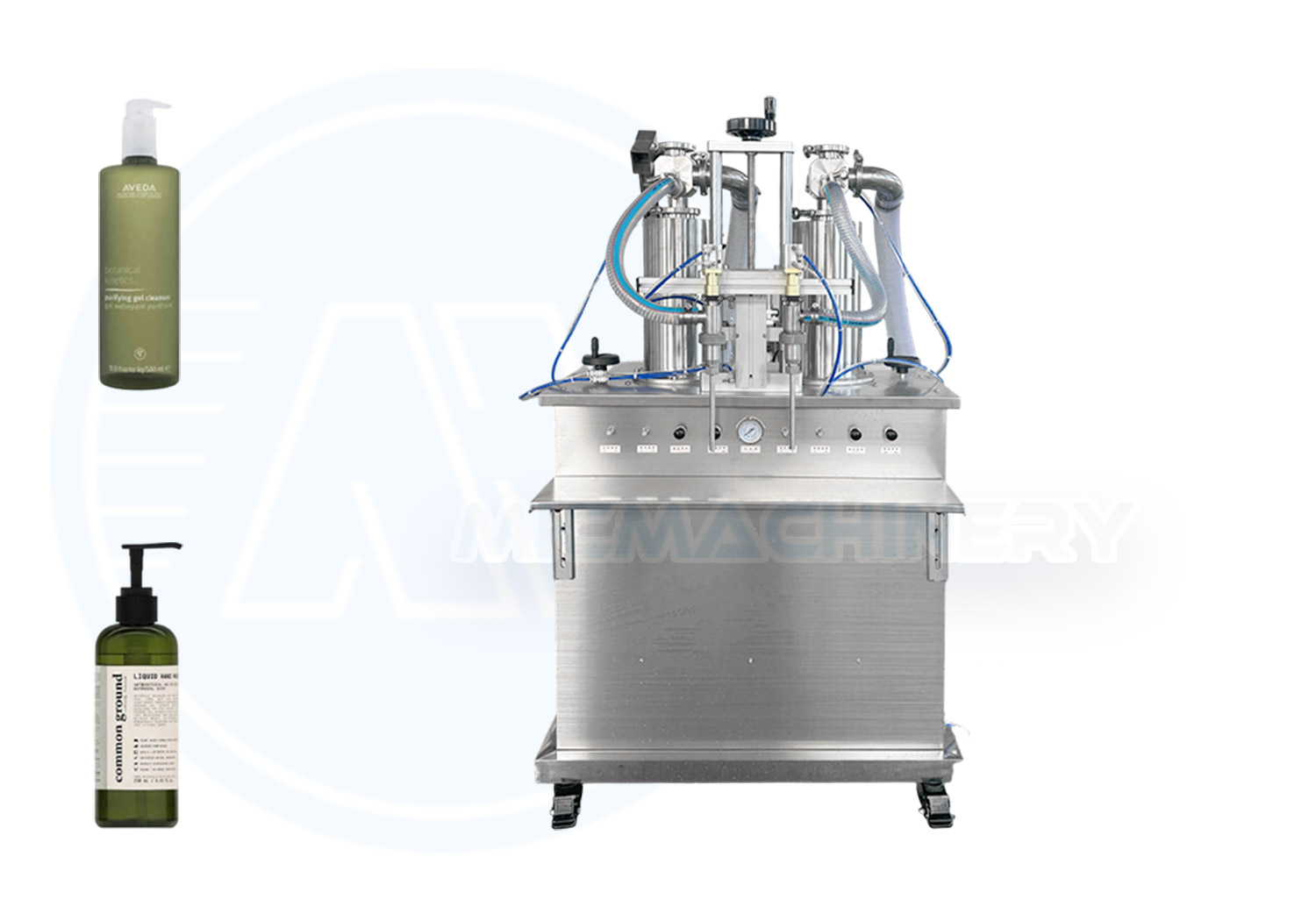
The Lotion Filling Machine developed by MIC Machinery is designed for controlled handling of semi-viscous cosmetic products. It is widely used in skincare manufacturing plants producing body lotion, hand lotion, moisturizing emulsions, sunscreen lotions, and similar personal care formulations. The system focuses on stable volumetric filling, clean cut-off, and compatibility with continuous automated packaging lines.
The lotion filling process begins with product preparation in a mixing tank where viscosity and texture are stabilized to ensure uniform consistency. Lotion is then transferred into a buffer hopper that maintains steady supply pressure to the filling system. In many production lines, gentle agitation is used to prevent separation of oil and water phases, especially in natural or organic formulations.
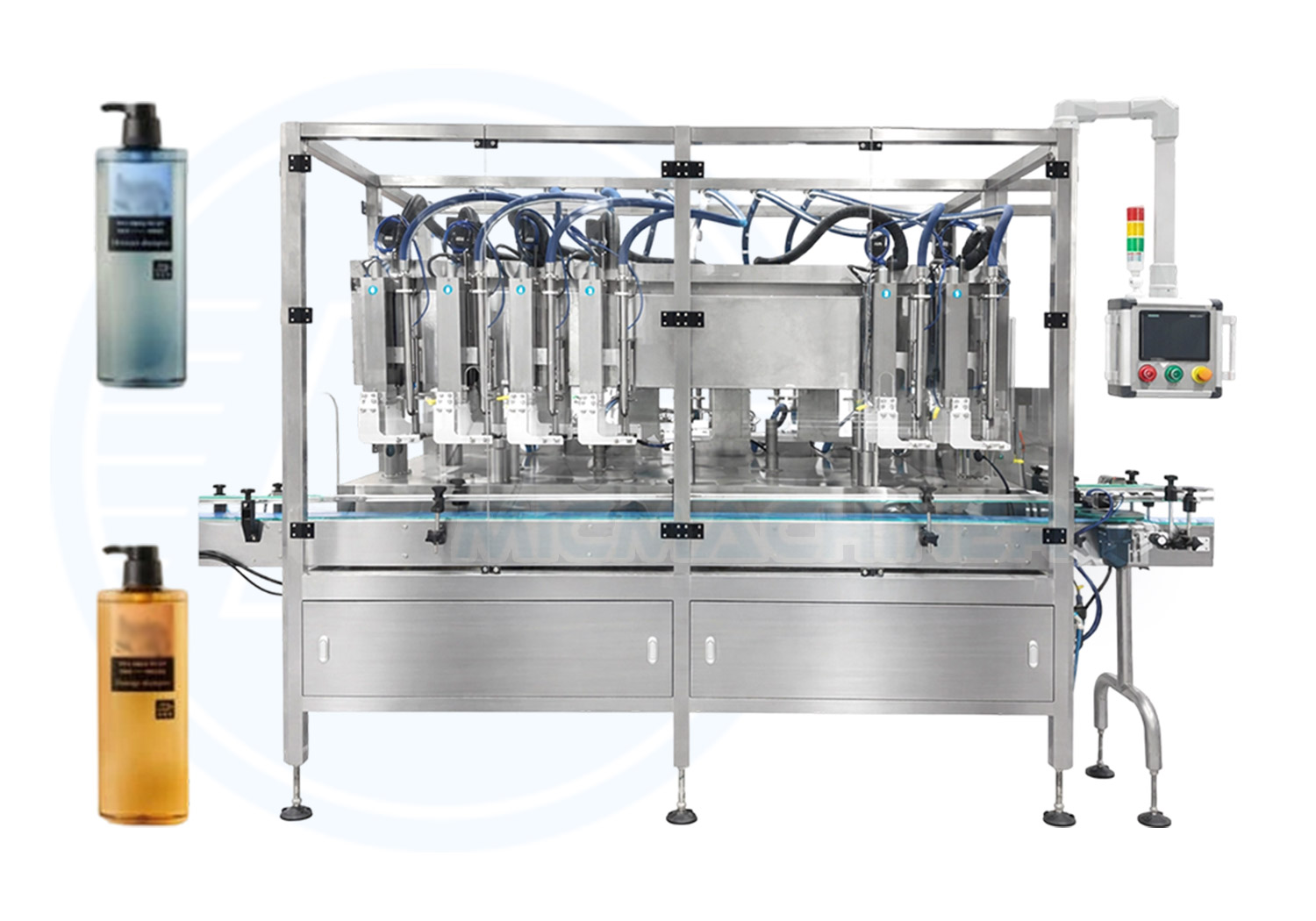
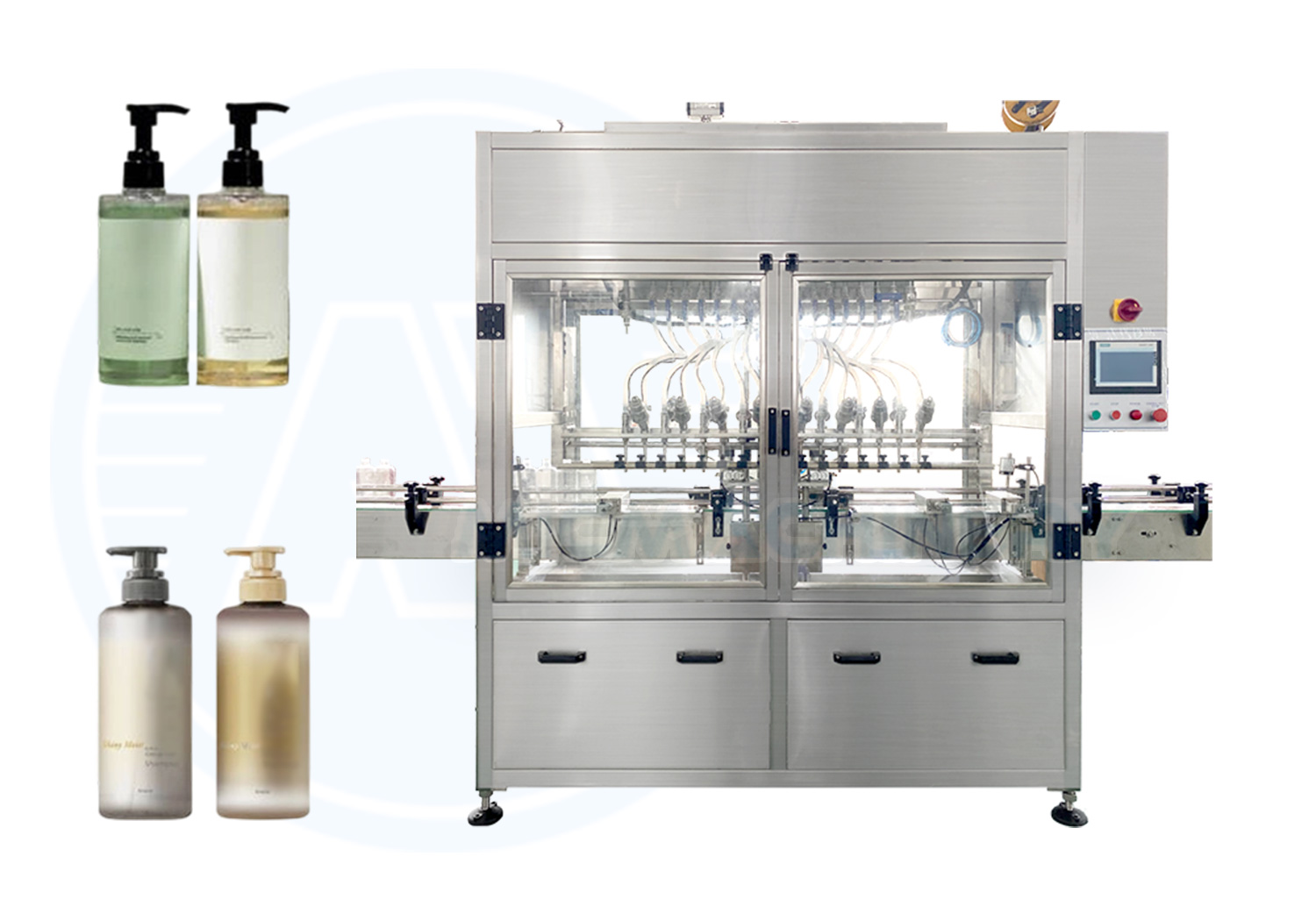
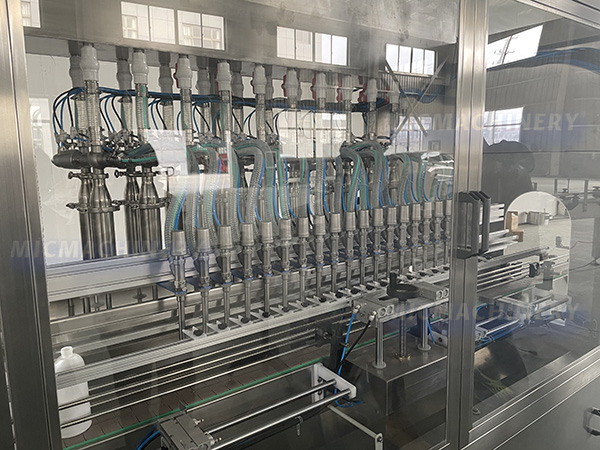
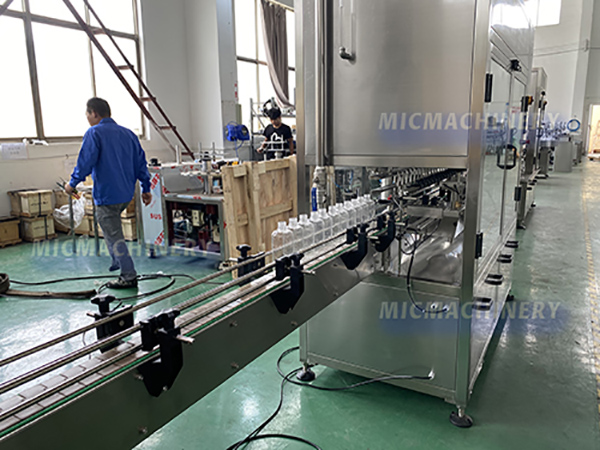
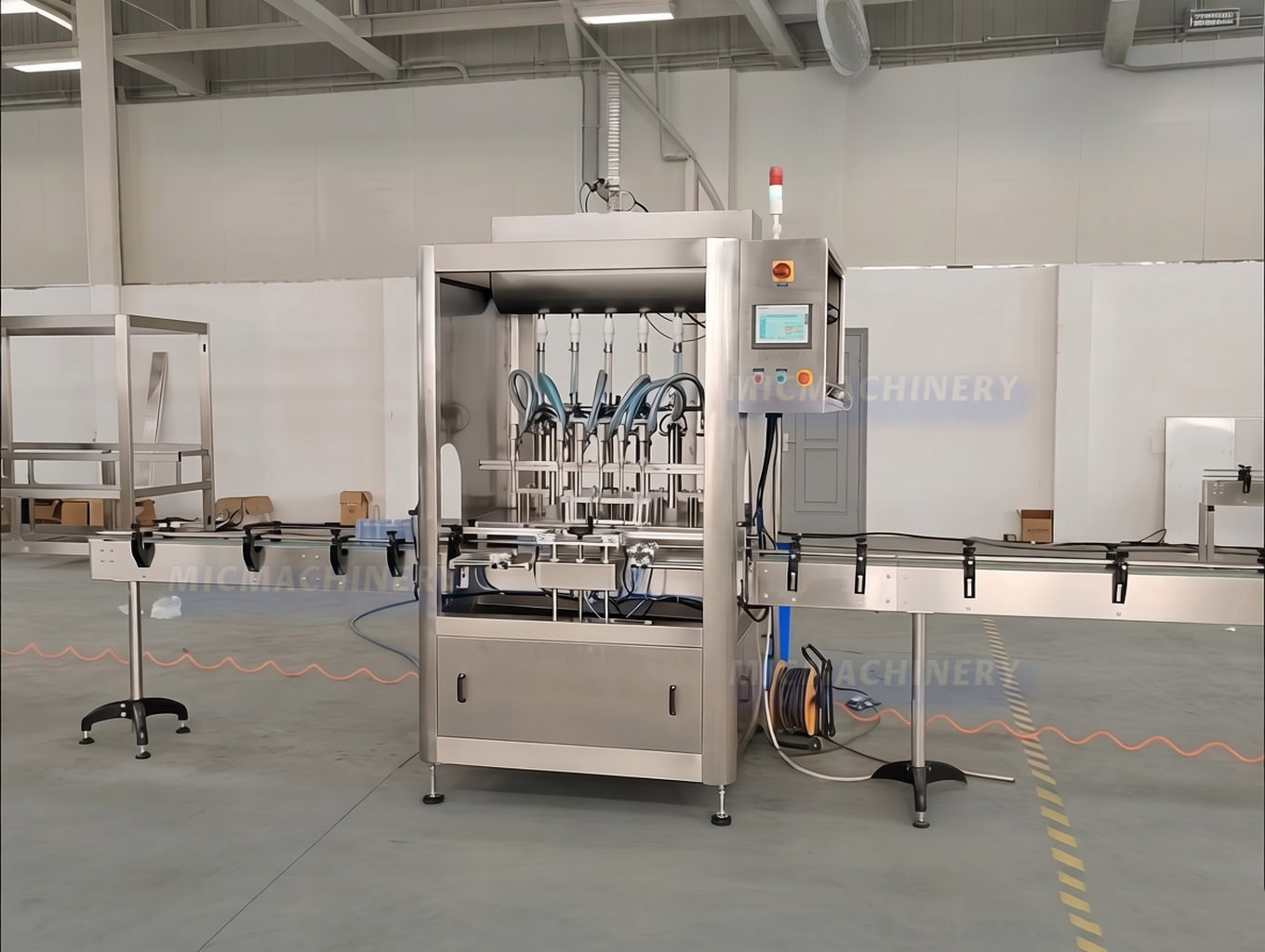
Once bottles are fed into the conveyor system, sensors position them precisely under the filling nozzles. The filling cycle starts when alignment is confirmed. The piston or servo system draws a controlled volume of lotion into the dosing chamber and then dispenses it into each container at a steady speed. This controlled movement is important for preventing foam formation and maintaining a smooth product surface inside the bottle.
Depending on container shape and lotion viscosity, diving nozzles may be used to reduce splashing and ensure clean filling inside narrow-neck bottles. After filling, anti-drip valves ensure a clean cut-off without residue on bottle openings. Filled containers are then transferred to downstream equipment such as capping machines, labeling systems, or sealing units. The entire process is synchronized through PLC control to ensure stable cycle timing and consistent output across all filling heads.
Video Demonstration
Applications
The lotion filling machine is widely used in the cosmetic and personal care industry for packaging a variety of semi-viscous products. Common applications include body lotion, hand cream, moisturizing emulsions, sunscreen lotions, baby lotions, and whitening or repairing skincare products. It is also suitable for hair care emulsions, leave-in conditioners, and specialty cosmetic formulations used in salon or professional markets.
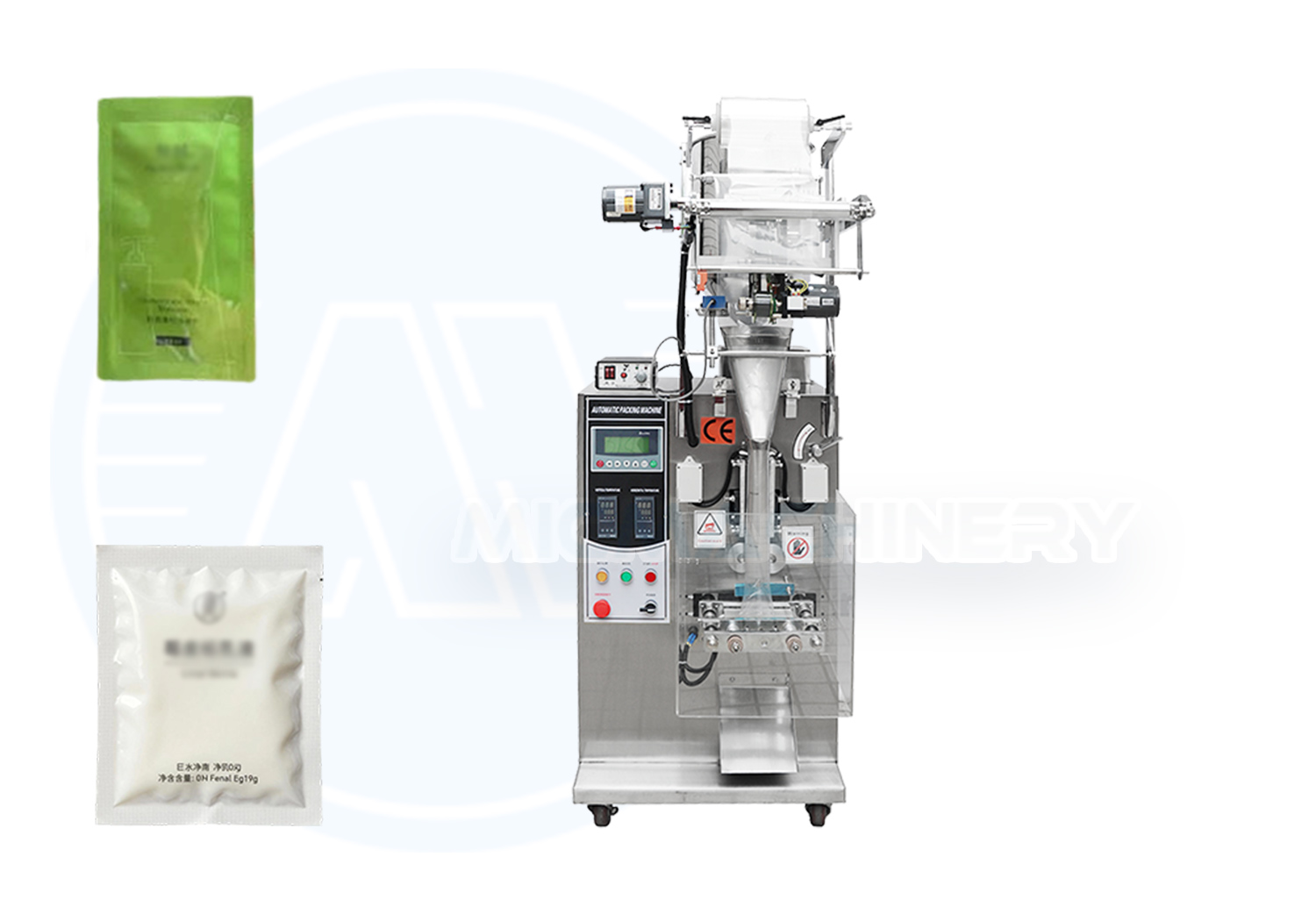
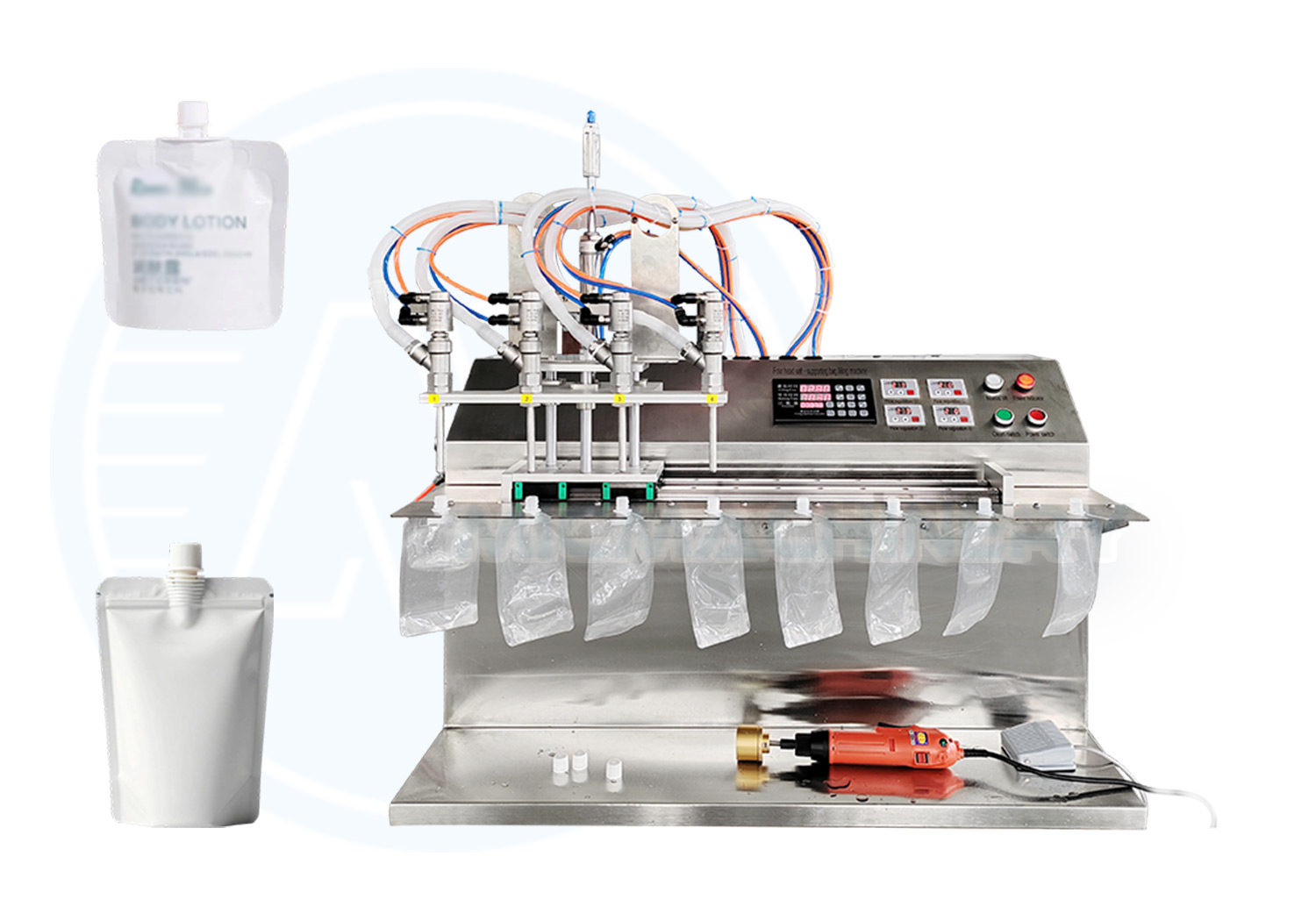
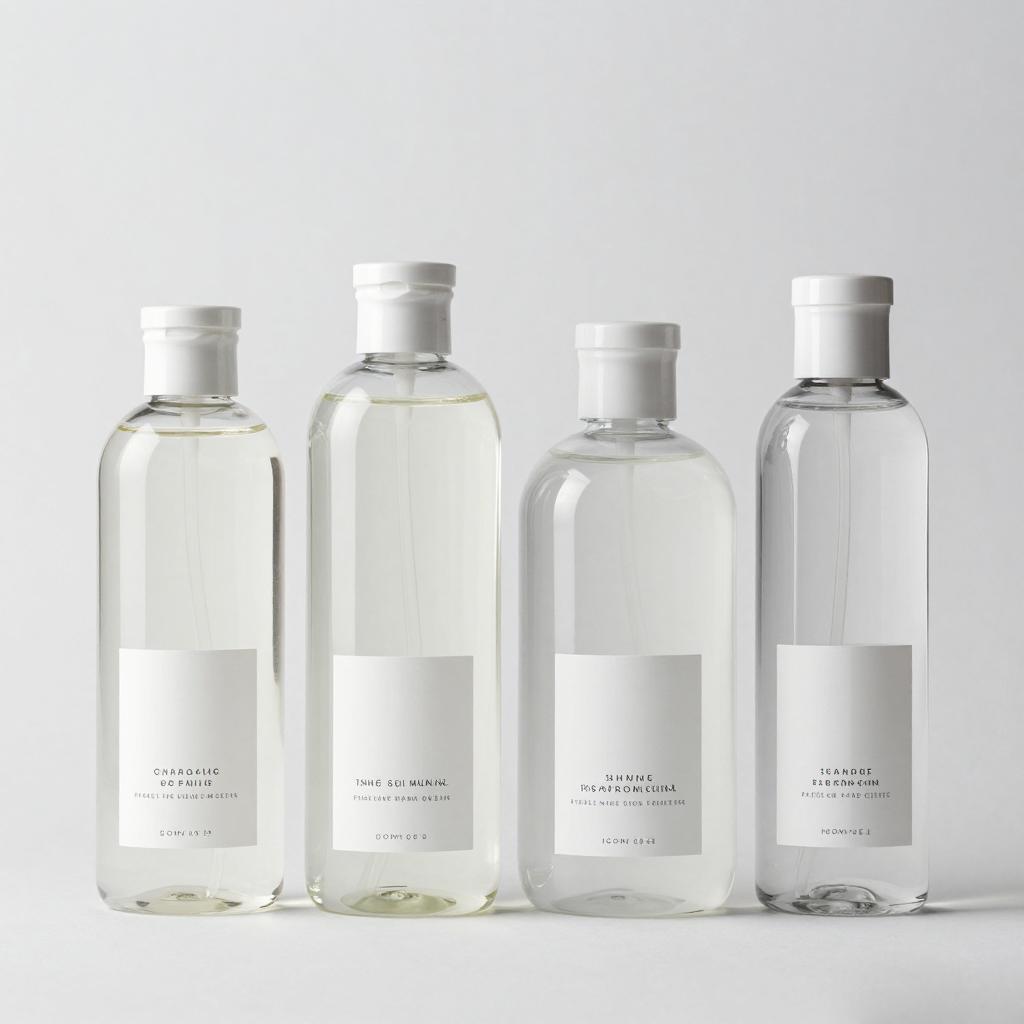
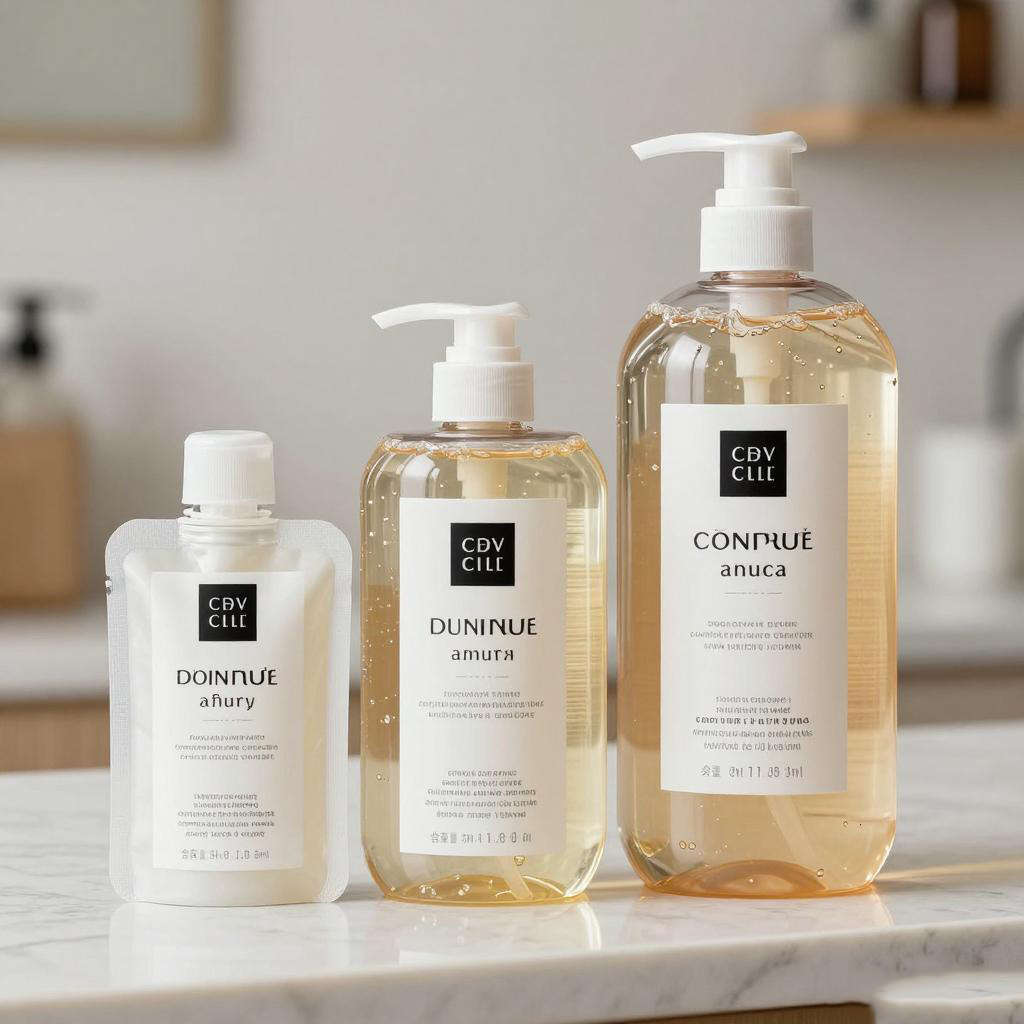
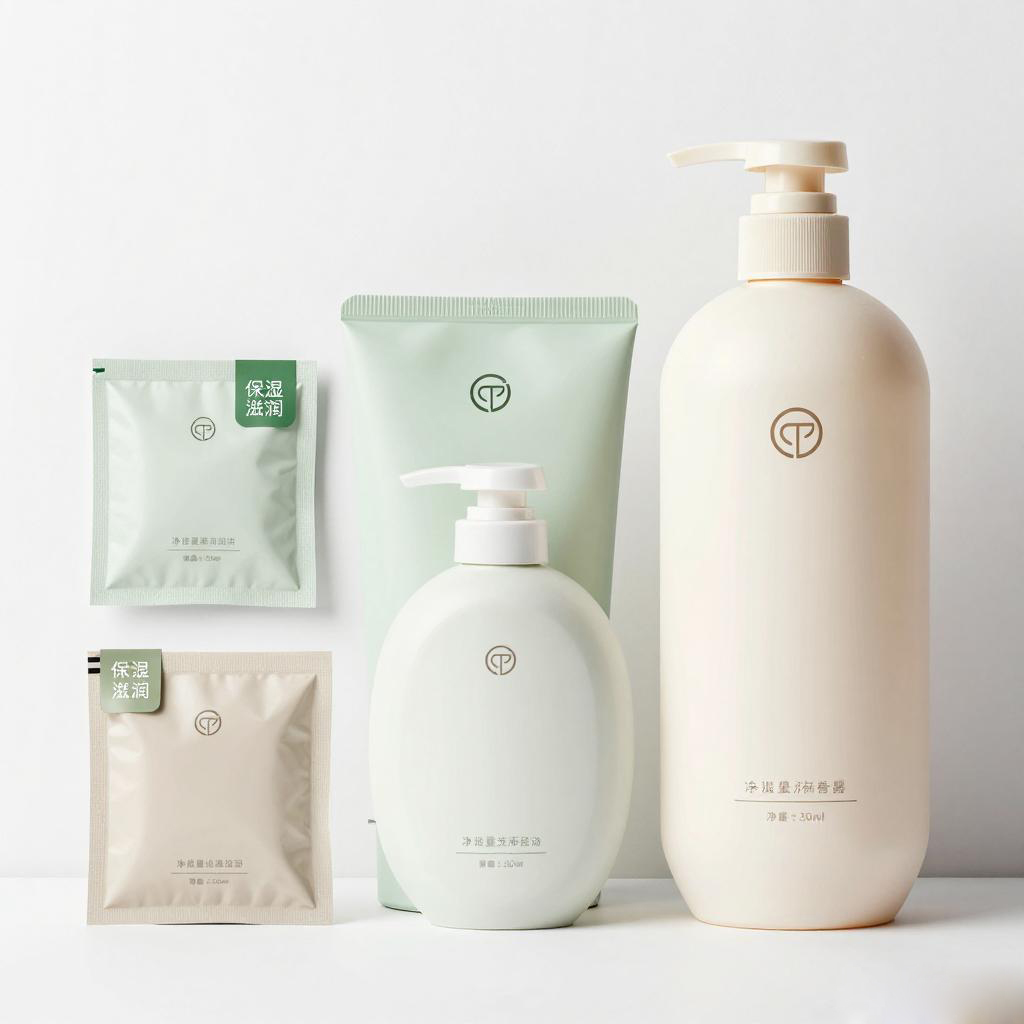
The system supports multiple packaging formats including PET bottles, HDPE bottles, airless pump bottles, squeeze tubes (with appropriate configuration), and cosmetic jars. It is commonly used in OEM and private-label manufacturing where multiple lotion formulations are produced on the same production line with quick changeover requirements.
Customization Options
Lotion production lines vary widely depending on product formulation, packaging design, and production scale. MIC Machinery offers multiple customization options to adapt to different manufacturing requirements. These include heated or insulated hoppers for temperature-sensitive lotions, servo-driven filling systems for higher precision applications, and anti-foam nozzle designs to improve filling quality in high-speed production.
CIP cleaning systems can be integrated to simplify cleaning between product changeovers, especially in facilities producing multiple skincare formulations. For factories requiring flexible production, recipe-based PLC control allows operators to switch between different filling parameters without mechanical adjustment. The system can also be integrated into full cosmetic production lines including bottle unscramblers, capping machines, labeling systems, and carton packaging equipment.
Maintenance and Operation
Regular maintenance is essential to ensure consistent performance, particularly in cosmetic production where emulsions and conditioning agents may leave residues inside the filling system. Daily cleaning typically involves flushing pipelines and filling nozzles with warm water or approved cleaning agents to prevent product buildup and maintain hygiene standards.
Weekly inspection should include checking piston seals, nozzle condition, and sensor alignment to ensure stable operation. Pneumatic systems should be monitored for consistent pressure levels, and servo-driven systems should be checked for synchronization accuracy. In production environments running multiple shifts, preventive maintenance scheduling is recommended to minimize downtime and maintain long-term filling accuracy.
FAQ
Q1: Can the machine handle different lotion viscosities? Yes, the system is designed to handle a wide range of viscosities from light lotions to thick body creams.
Q2: How is foam controlled during filling? Foam is minimized through controlled filling speed and anti-foam diving nozzle design.
Q3: What container types are supported? PET bottles, HDPE bottles, pump bottles, and cosmetic jars are all supported.
Q4: Can it be used for multiple lotion formulations? Yes, recipe-based PLC control allows fast switching between different products.
Q5: Is cleaning difficult between batches? No, CIP systems and quick-clean structures make product changeover efficient.
Q6: Can it be integrated into a full cosmetic production line? Yes, it can be connected with capping, labeling, and packaging systems for full automation.
Industrial Lotion Filling Machine from MIC Machinery
The MIC Machinery Lotion Filling Machine is engineered for stable and precise filling of semi-viscous cosmetic products in real production environments. It focuses on controlled dosing, foam reduction, and seamless integration into automated skincare packaging lines where consistency and product appearance are critical.