Linear Capping Machine——High-Speed Inline Cap Sealing System
In modern liquid and semi-liquid packaging lines, capping is often the final step that determines product integrity during storage and transportation. Even small inconsistencies in torque or alignment can lead to leakage, contamination, or customer complaints, especially in food, cosmetic, and chemical industries where containers travel long supply chains.
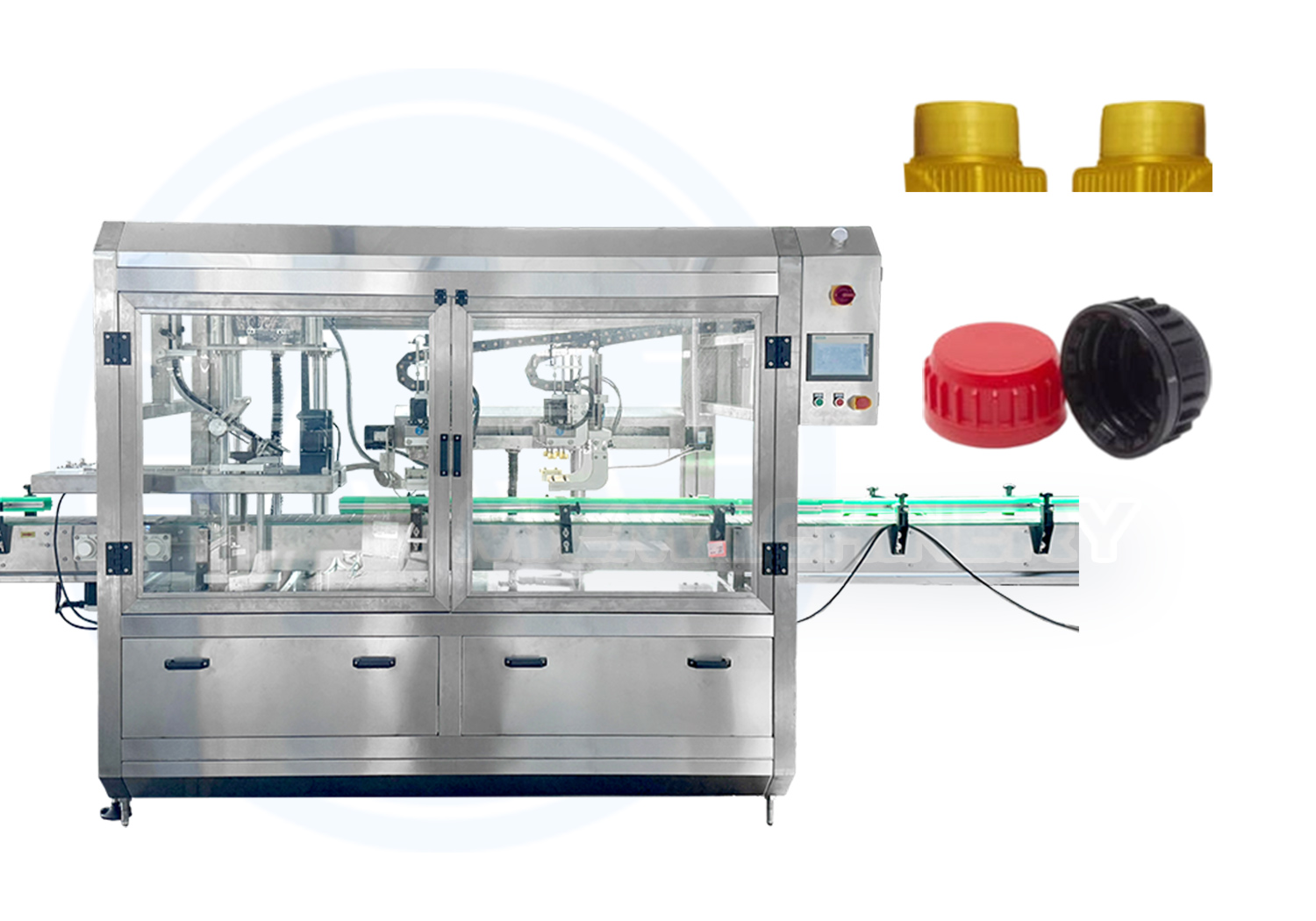
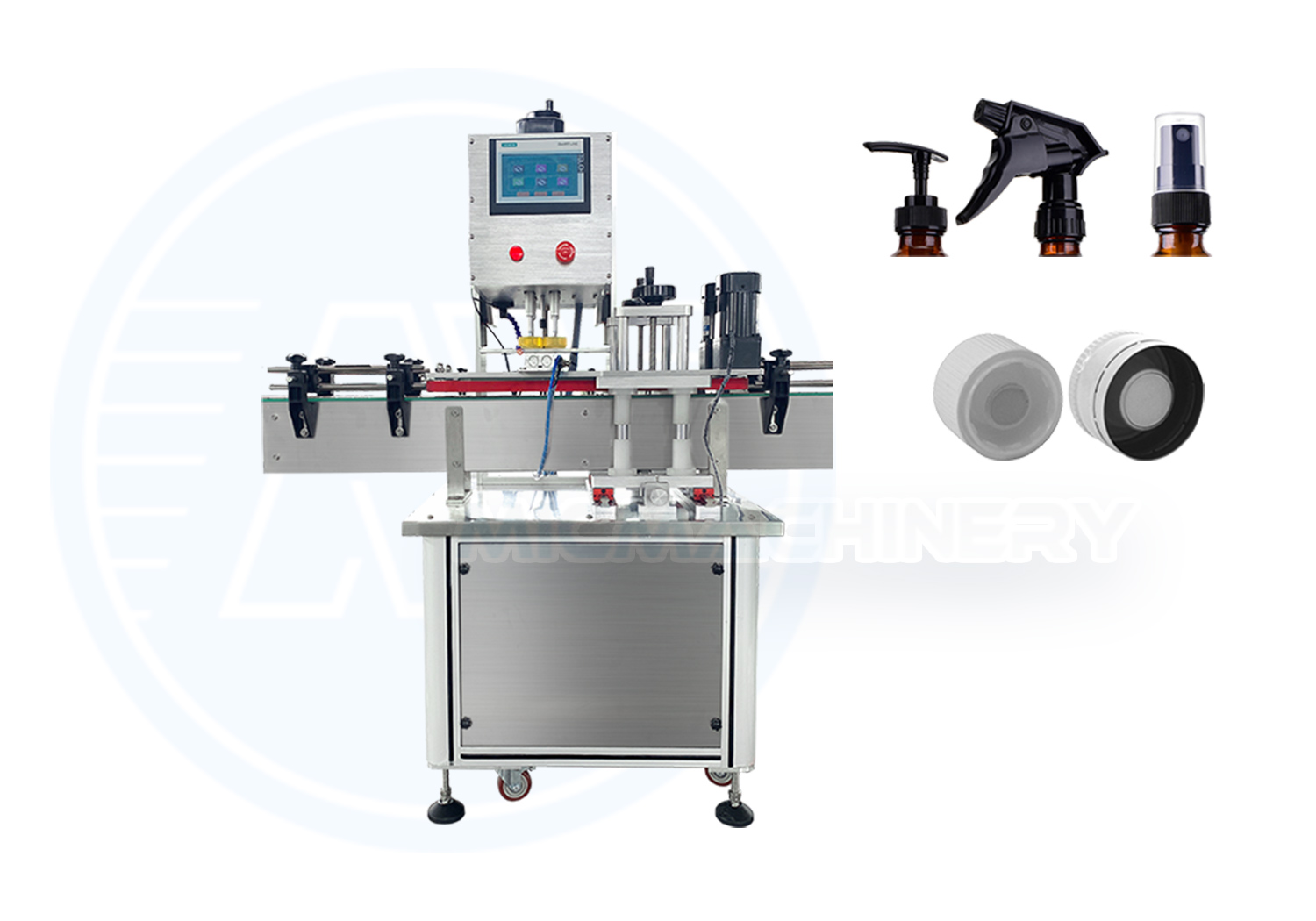
The Linear Capping Machine developed by MIC Machinery is designed for continuous inline cap tightening with stable torque control and high production efficiency. It is widely used in automated bottling lines for beverages, detergents, personal care products, edible oils, and industrial chemicals.
Unlike rotary capping systems, linear machines allow flexible integration into existing conveyor layouts and are easier to scale for different production capacities without major structural changes.
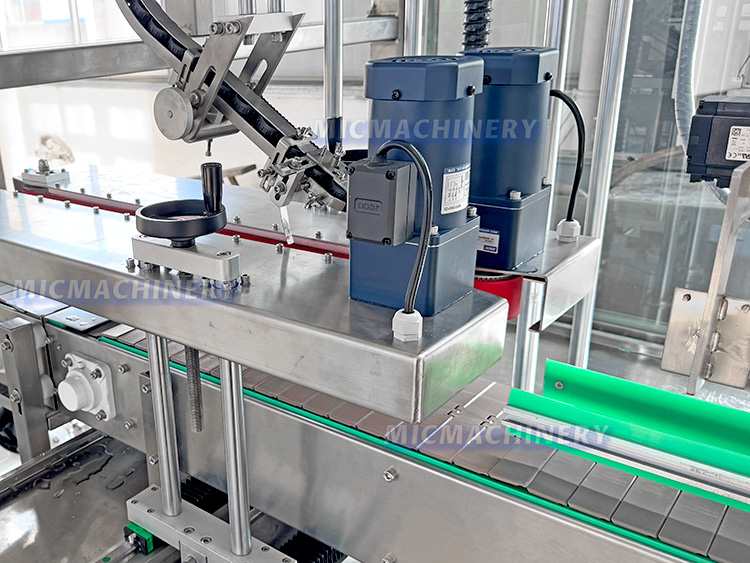
The linear capping process begins after bottles are filled and conveyed into the capping section. A positioning system ensures that each bottle is accurately aligned under the capping head before operation begins.
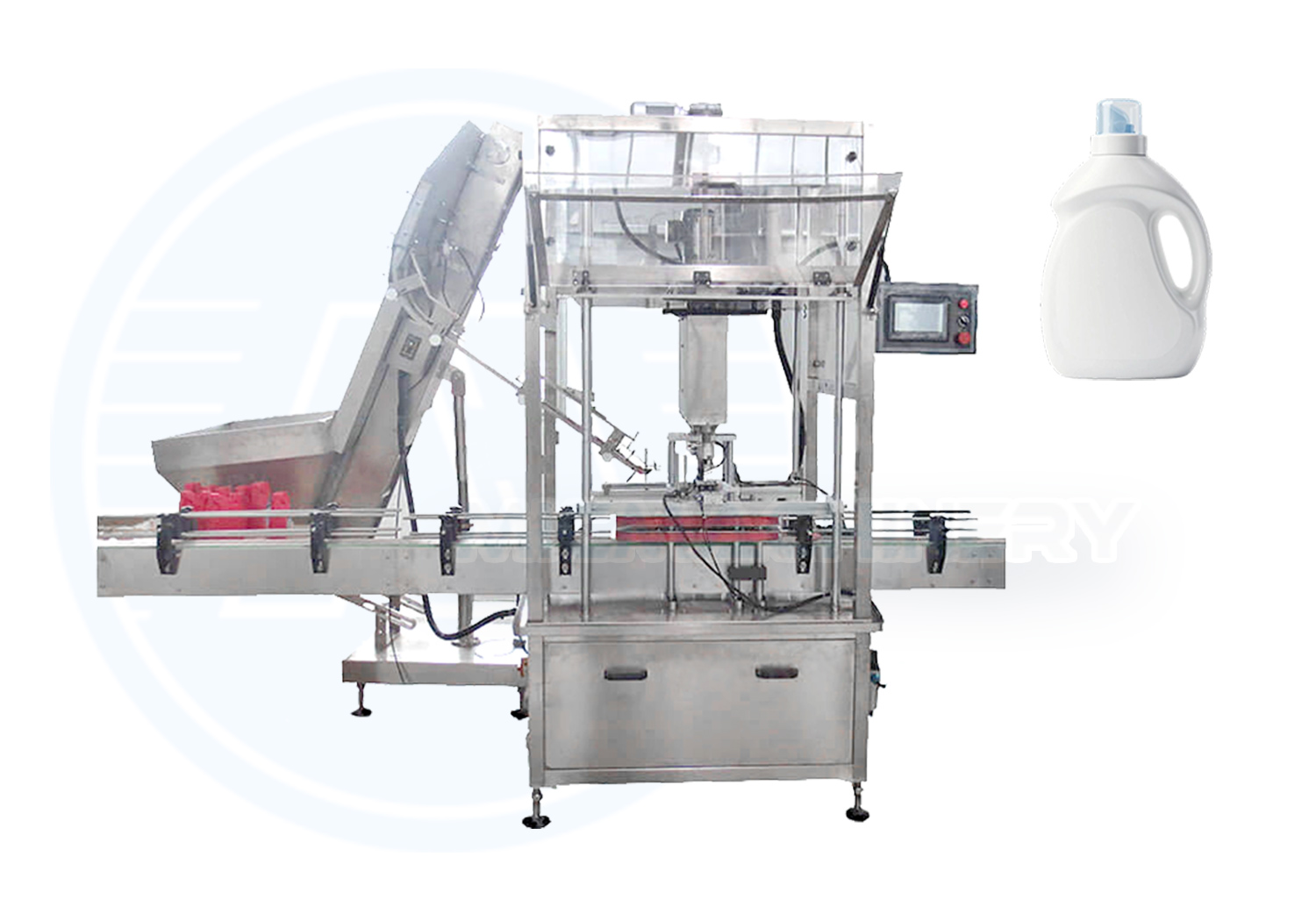
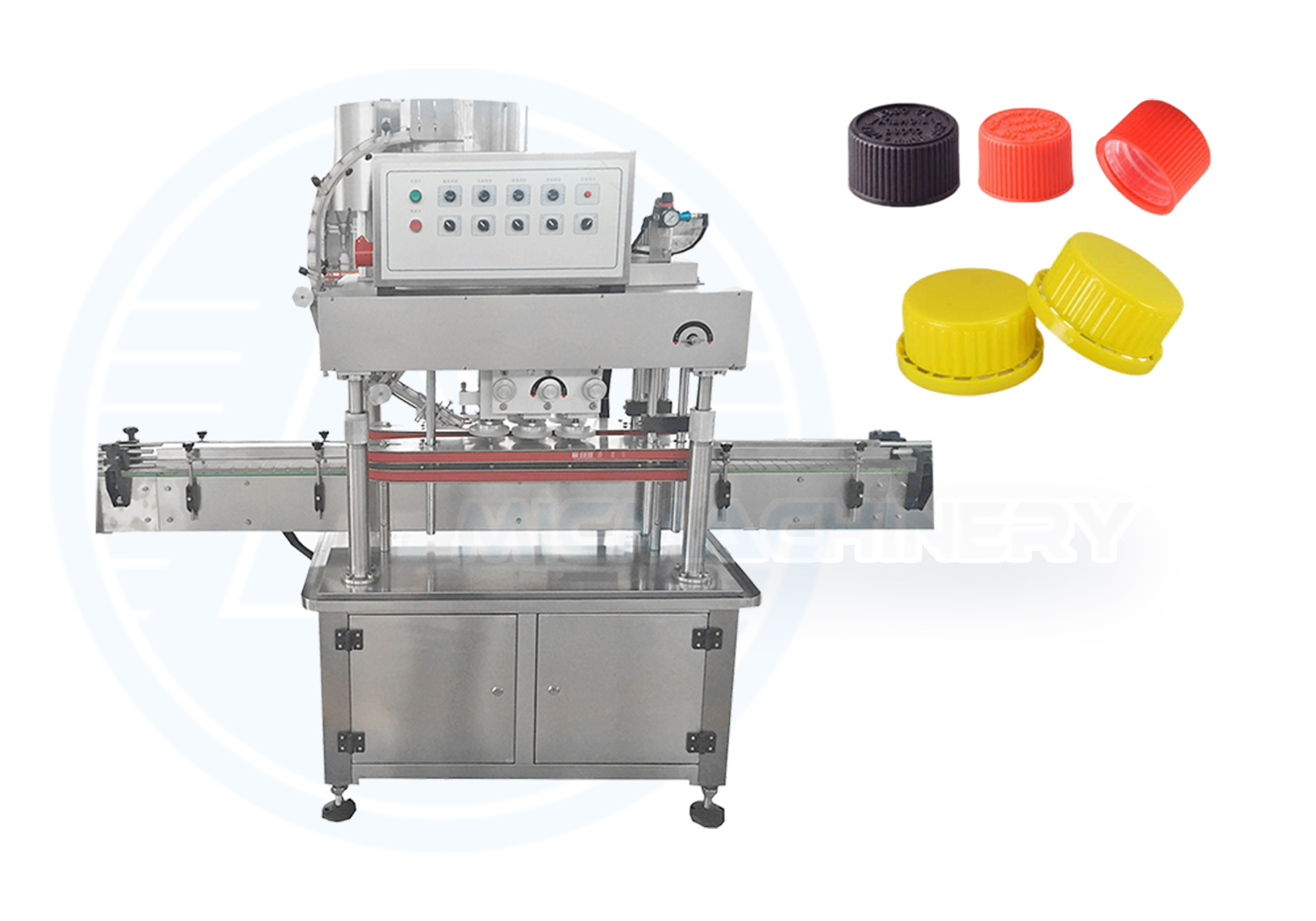
Caps are automatically sorted and oriented by the feeding system. In vibration bowl systems, caps are aligned and delivered in a consistent orientation to ensure smooth placement. Elevator feeders can be used for larger or heavier caps in high-speed applications.
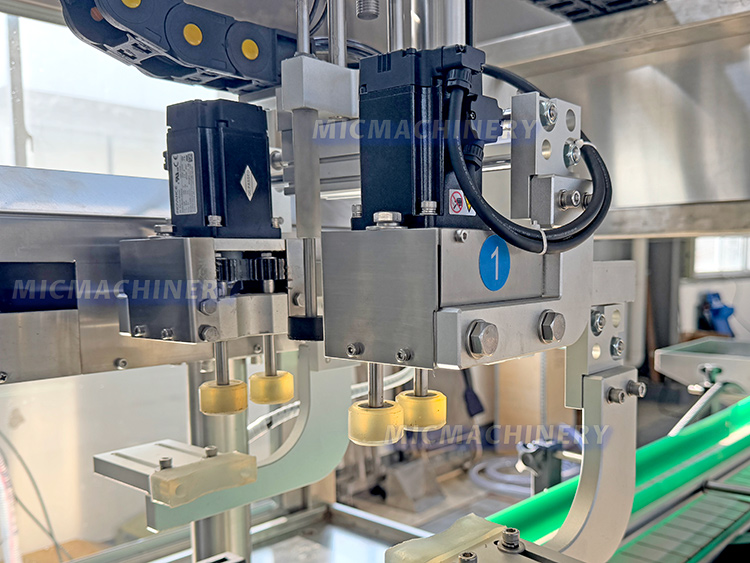
Once a bottle reaches the capping station, a cap is placed onto the bottle opening either automatically or through a guided placement mechanism. The capping head then descends and applies controlled torque while the bottle remains stable on the conveyor.
Servo-controlled systems adjust torque in real time, ensuring each cap is tightened to a consistent specification. This prevents both under-tightening, which may cause leakage, and over-tightening, which may damage threads or deform plastic containers.
For press-on caps, vertical pressure is applied instead of rotation. For screw caps, rotational force is applied until the preset torque is reached. After sealing, bottles continue along the conveyor to downstream processes such as labeling, coding, or packaging.
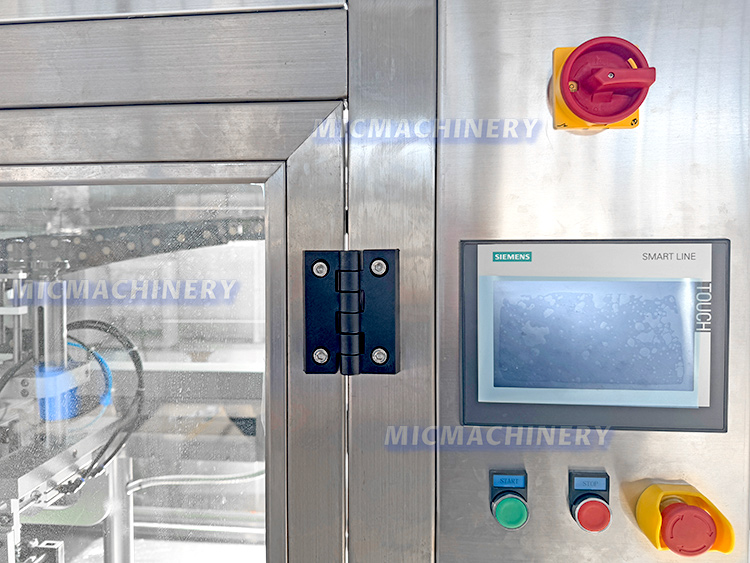
The entire operation is synchronized through a PLC control system that manages conveyor speed, torque settings, and machine safety functions to maintain stable production.
Video Demonstration
Applications
The Linear Capping Machine is widely used in industries requiring high-speed and stable bottle sealing.
Typical applications include:
Edible oil bottles
Beverage and juice containers
Laundry detergent packaging
Dishwashing liquid bottles
Shampoo and conditioner bottles
Cosmetic lotions and creams
Pharmaceutical liquid bottles
Industrial chemical containers
Household cleaning products
OEM bottling production lines
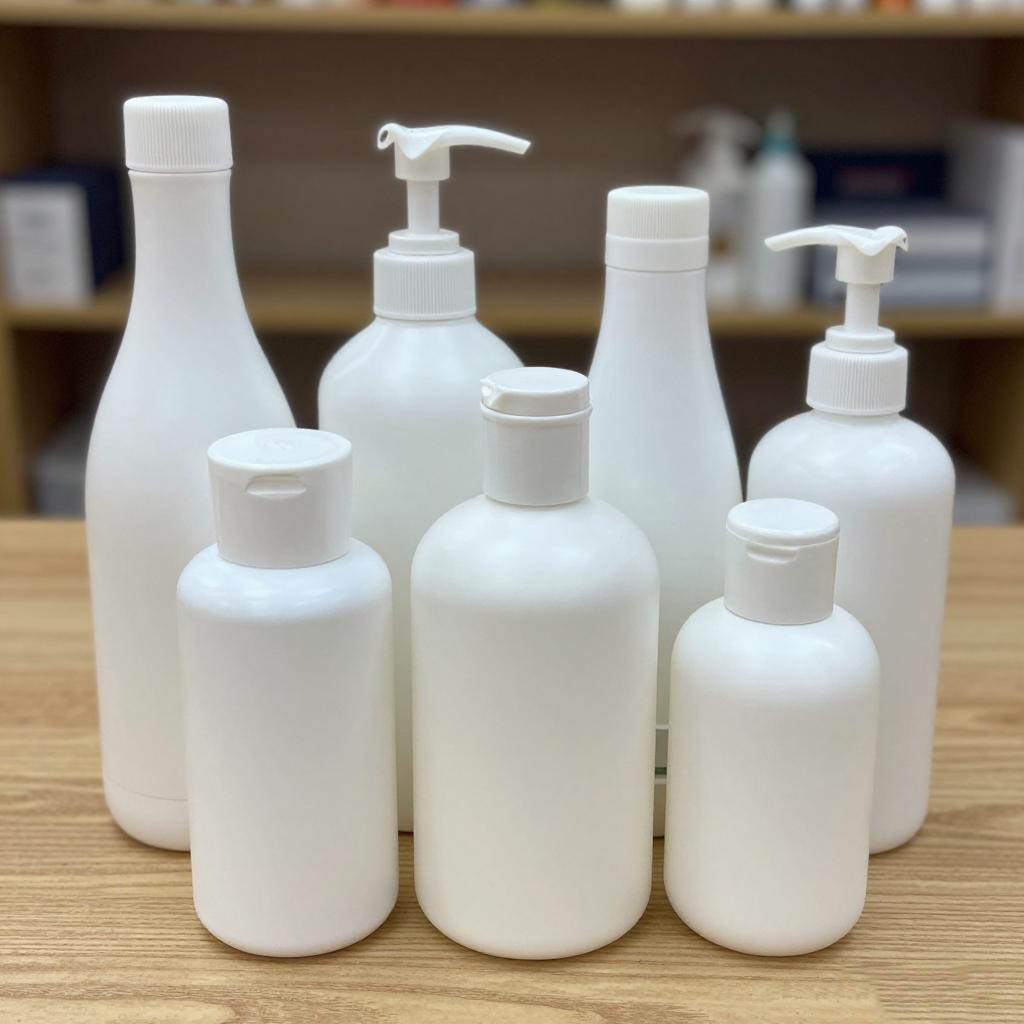
The system is compatible with plastic, glass, and metal containers, making it suitable for a wide range of industrial packaging applications.
Customization Options
Different production environments require flexible machine configurations. MIC Machinery provides multiple customization options for linear capping systems.
Servo Torque Control System
Ensures precise and repeatable tightening force for every bottle.
Multi-Head High-Speed Configuration
Increases production capacity for large-scale manufacturing lines.
Cap Feeding Systems
Vibration bowl or elevator feeders adapted to different cap types and sizes.
Anti-Spill Bottle Stabilization
Improves positioning accuracy during high-speed operation.
Cap Detection System
Ensures correct cap placement and rejects missing or misaligned caps.
Quick Changeover Design
Supports fast switching between different bottle sizes and cap formats.
Full Line Integration
Can be connected with filling machines, labeling systems, and packaging equipment for fully automated production.
Maintenance and Operation
Linear capping machines require routine maintenance to ensure torque stability and mechanical precision. Daily maintenance includes cleaning cap tracks, inspecting conveyor alignment, and checking capping head condition.
Weekly inspections should focus on torque calibration, cap feeding system stability, and sensor accuracy. Worn components in the capping heads or feeding system should be replaced promptly to maintain consistent performance.
Cap feeding systems should be cleaned regularly to prevent blockages or misorientation, especially when working with lightweight plastic caps. Proper lubrication of mechanical parts ensures smooth operation under continuous production loads.
Q1: Can the machine handle different bottle sizes? Yes. It is adjustable for various bottle heights and diameters.
Q2: What types of caps are supported? Screw caps, press caps, pump caps, and flip-top caps.
Q3: How is torque controlled? Servo or magnetic clutch systems ensure consistent tightening force.
Q4: Is it suitable for high-speed production lines? Yes. It can reach up to 8000 bottles/hour depending on configuration.
Q5: Can it be integrated into a full production line? Yes. It works with filling, labeling, and packaging systems.
Q6: Does it support quality inspection? Yes. Optional cap detection and reject systems are available.
Linear Capping Solutions from MIC Machinery
The MIC Machinery Linear Capping Machine is engineered for stable, high-speed, and precise bottle sealing in continuous production environments. It is designed for industries where torque consistency, operational flexibility, and production efficiency are essential for reliable packaging performance.