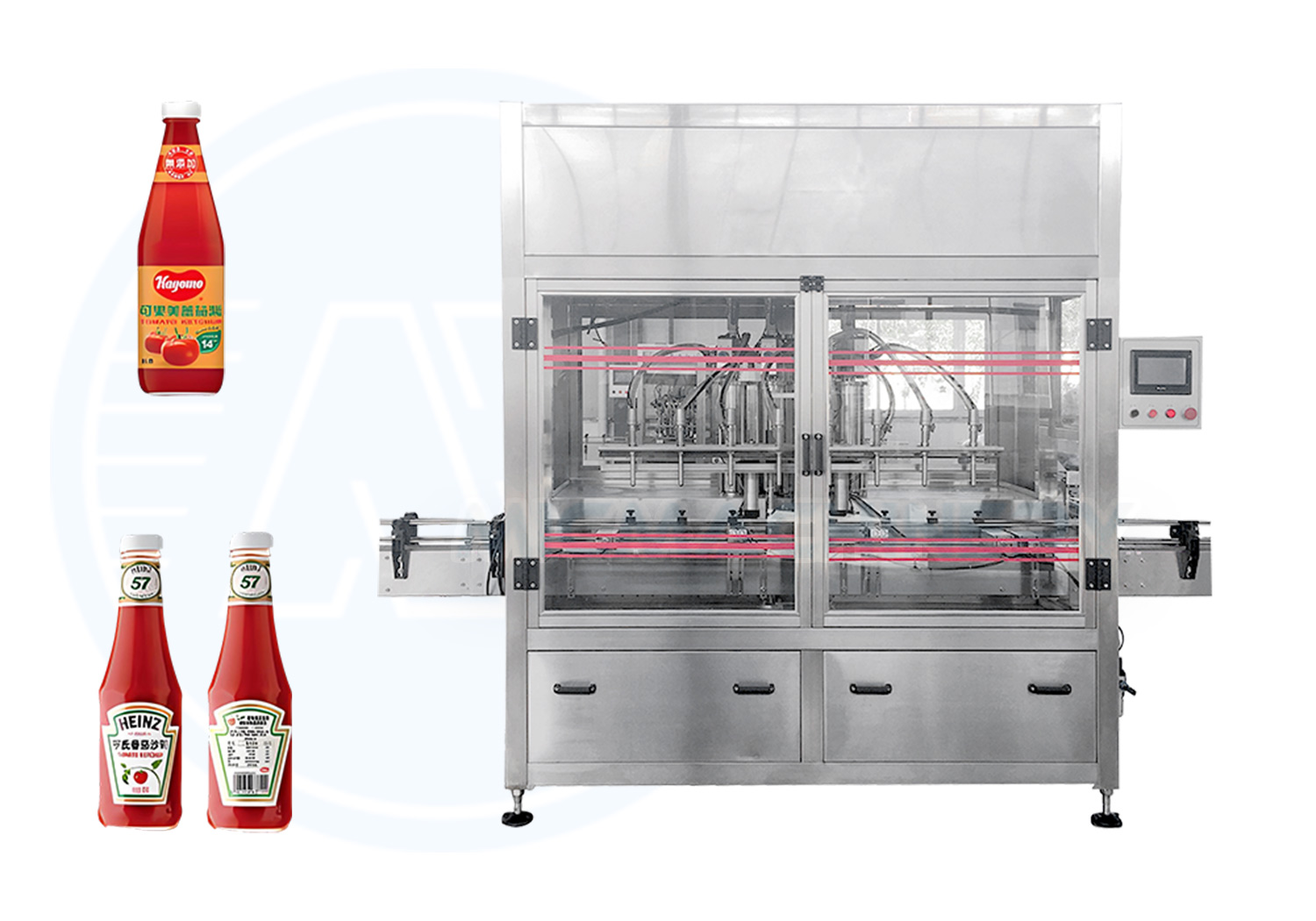
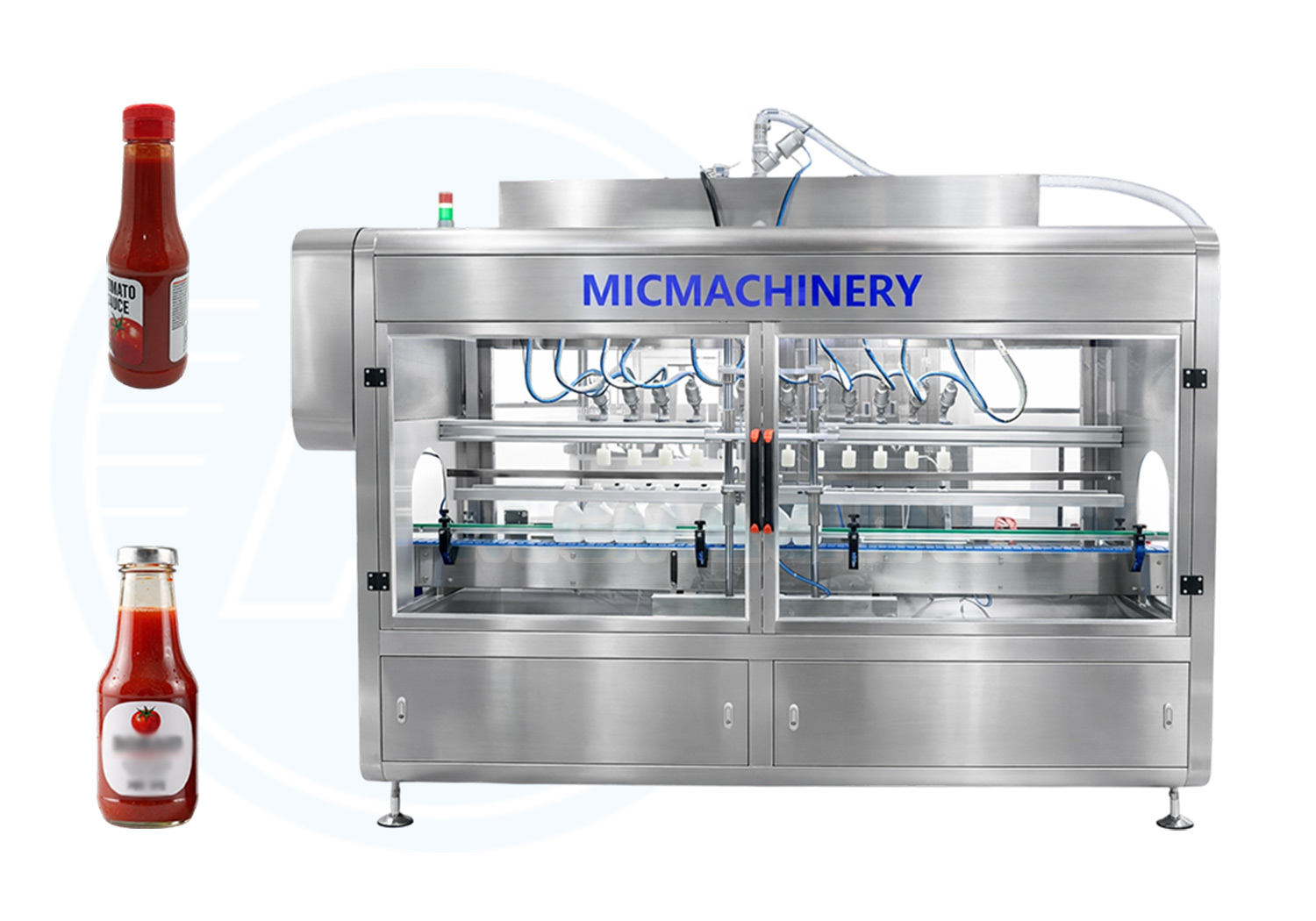
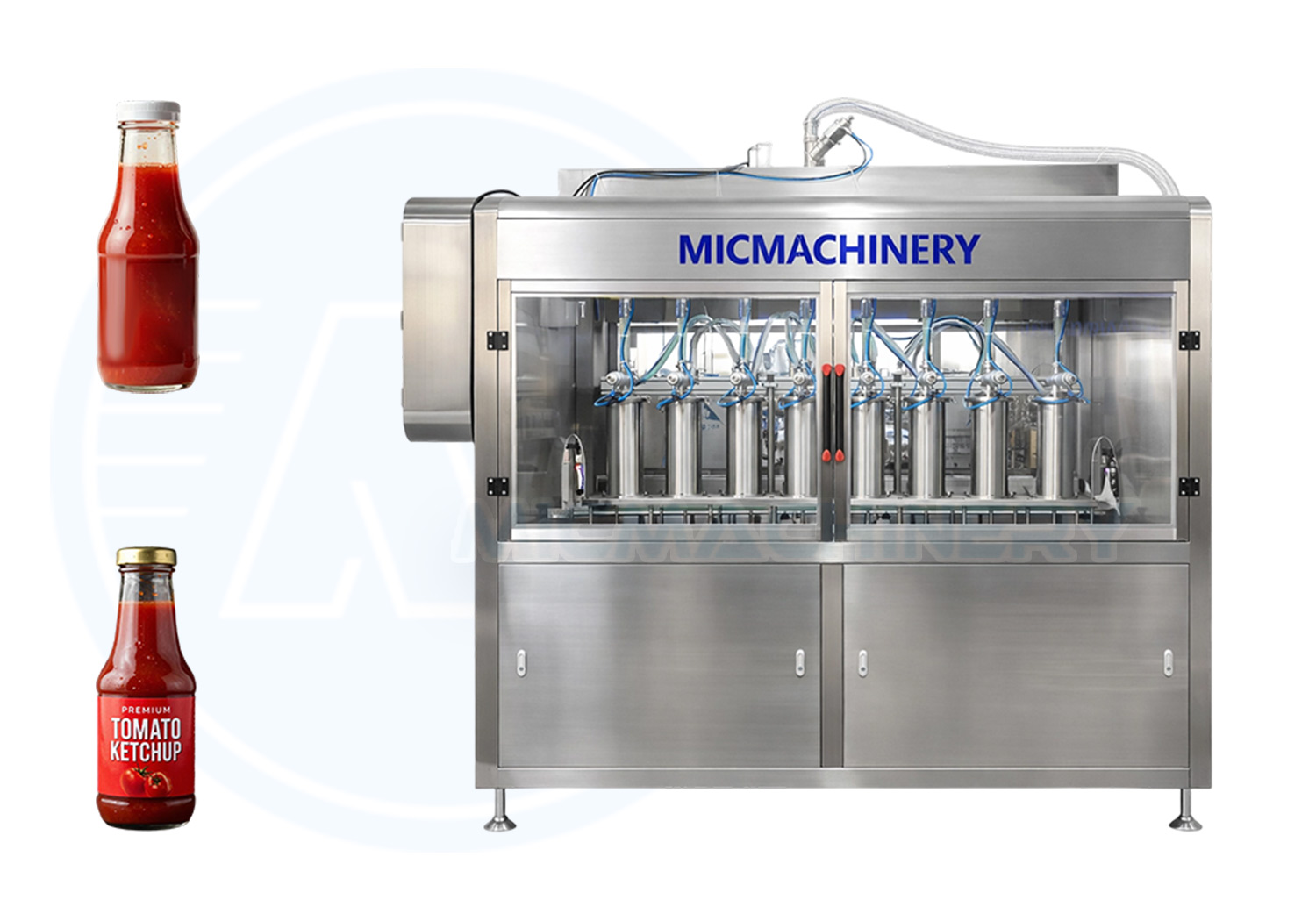
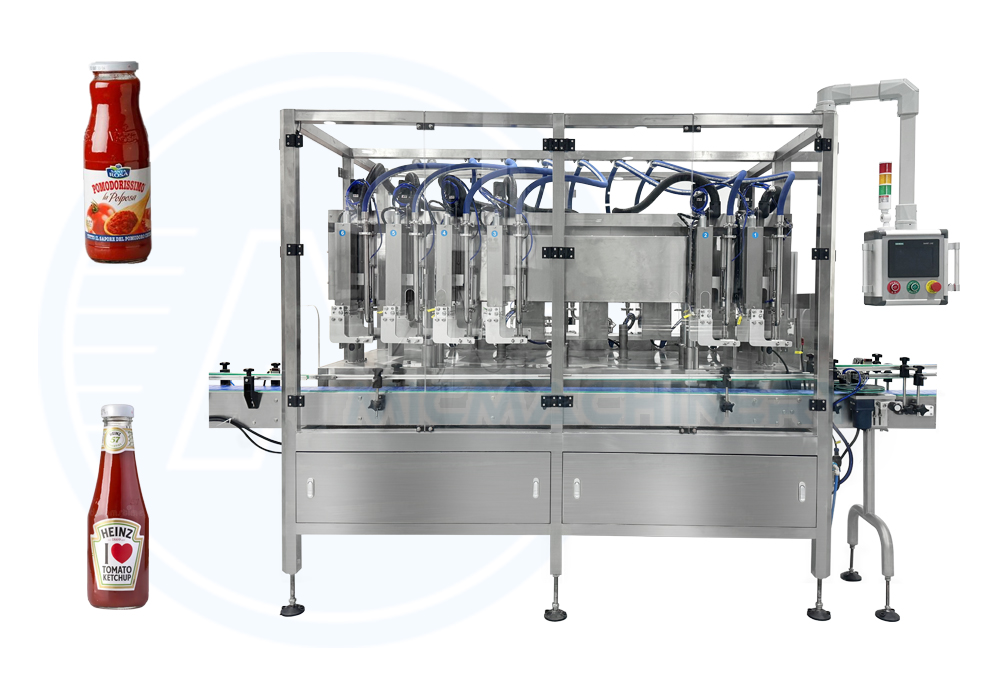
Ketchup Packing Machine——Industrial Sauce Filling & Packaging System
Ketchup is one of the most widely produced condiment products in the global food industry, but it is also one of the more challenging materials to package efficiently. Its high viscosity, tendency to form air bubbles, and sensitivity to temperature changes require a filling system that can maintain stable flow while ensuring accurate dosing and clean container presentation.
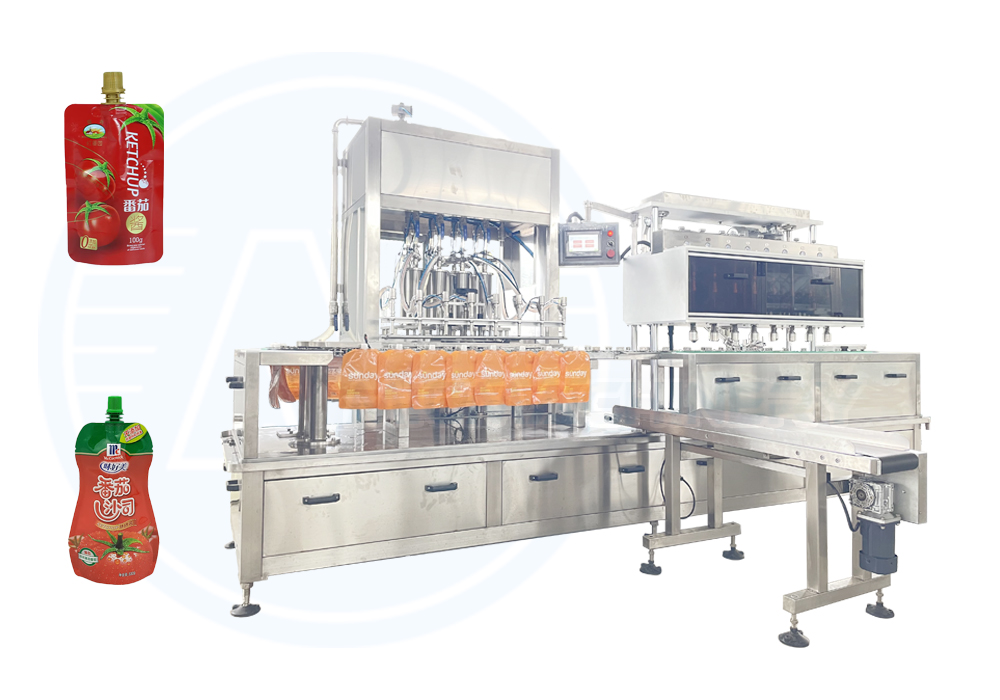
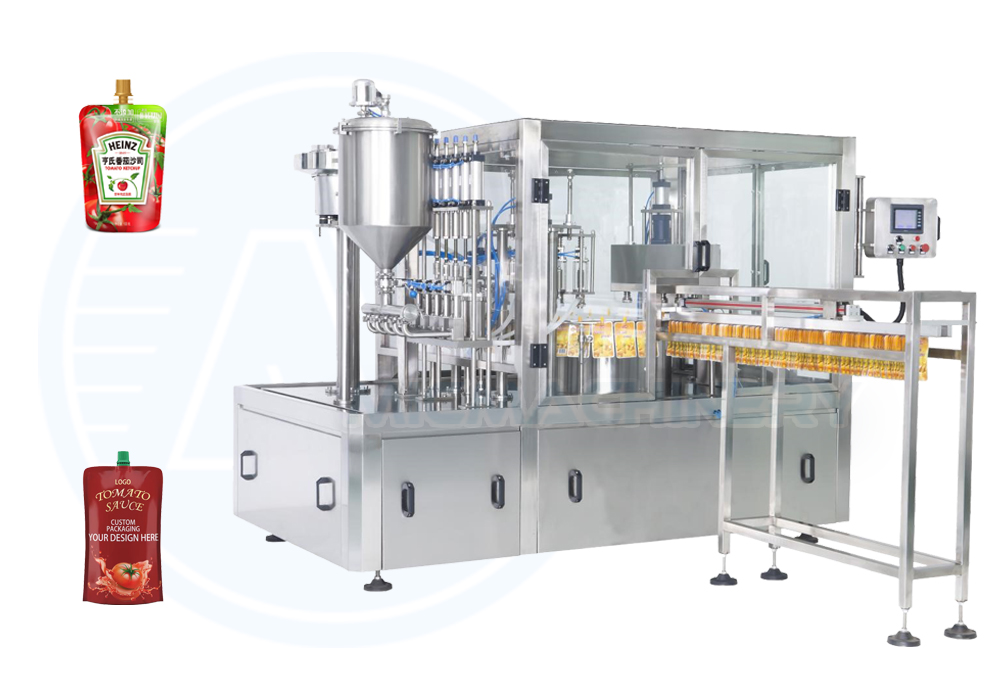
The Ketchup Packing Machine developed by MIC Machinery is designed specifically for industrial-scale ketchup filling and packaging operations. It is widely used in tomato processing plants, condiment factories, fast-food supply chains, and OEM food packaging facilities. The system is engineered to handle continuous production while maintaining consistent fill levels, hygienic operation, and minimal product waste.
Unlike standard liquid fillers, ketchup packing systems must manage slow-flow behavior, particle-free but thick consistency, and precise cut-off control to avoid stringing or residue at the nozzle.
The ketchup packing process begins with preparation in a mixing or holding tank where tomato paste, stabilizers, and seasoning ingredients are blended into a uniform consistency. In many production environments, ketchup is kept under slow agitation to prevent separation and maintain stable texture.
Once ready, the product is transferred into a buffer hopper connected to the filling system. In advanced configurations, the hopper includes a gentle stirring mechanism to keep the ketchup evenly distributed and prevent sedimentation, especially in products containing tomato solids.
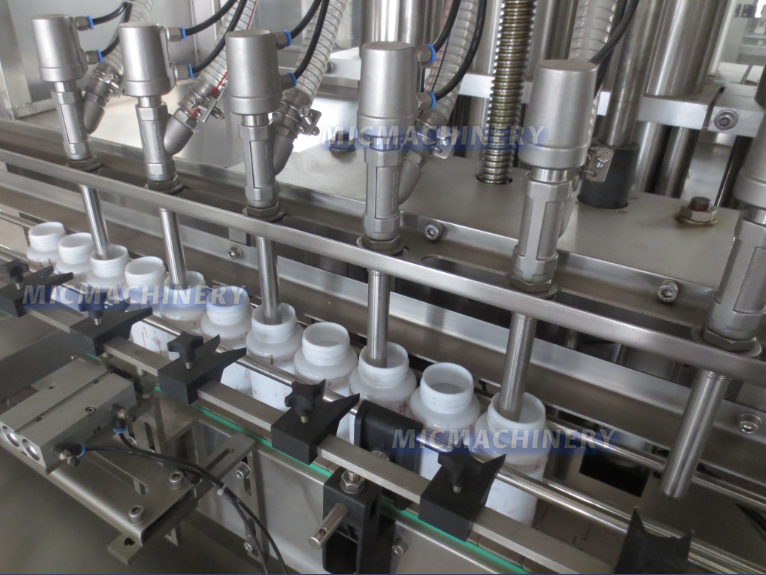
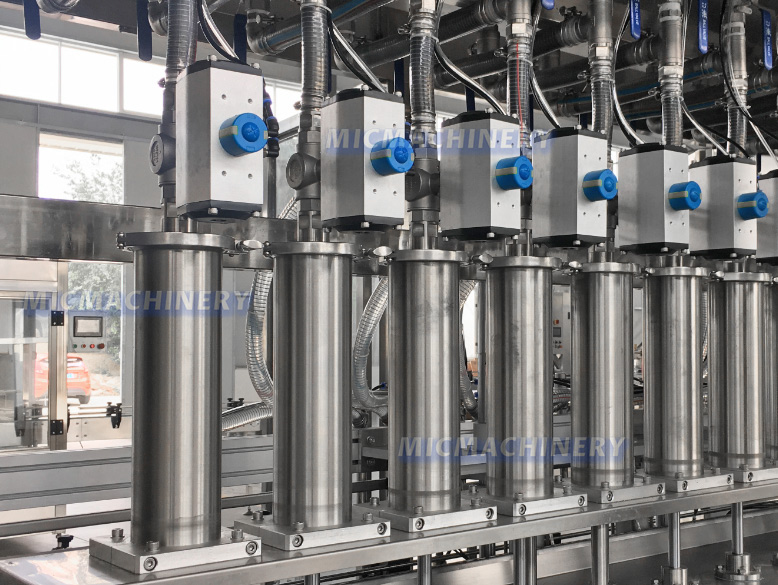
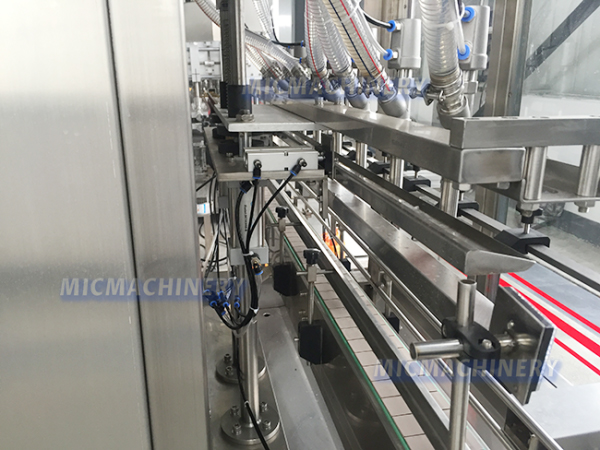
Empty containers are automatically conveyed into position under the filling heads. Sensor-based alignment ensures precise positioning before the filling cycle begins. The piston system then draws ketchup from the hopper and dispenses a controlled volume into each container.
Due to the viscous nature of ketchup, anti-stringing nozzles are essential. These nozzles ensure that the flow is cut cleanly at the end of each cycle, preventing residue buildup on bottle mouths and maintaining a clean packaging appearance. Bottom-up filling can also be used to reduce air bubbles and improve filling consistency.
After filling, containers move to downstream systems such as capping machines, induction sealing units, labeling machines, and final packaging stations. The entire process is coordinated by a PLC control system that synchronizes movement, filling speed, and safety checks.
Video Demonstration
Applications
The Ketchup Packing Machine is widely used in food manufacturing and condiment packaging industries.
Typical applications include:
Tomato ketchup bottles
Chili ketchup blends
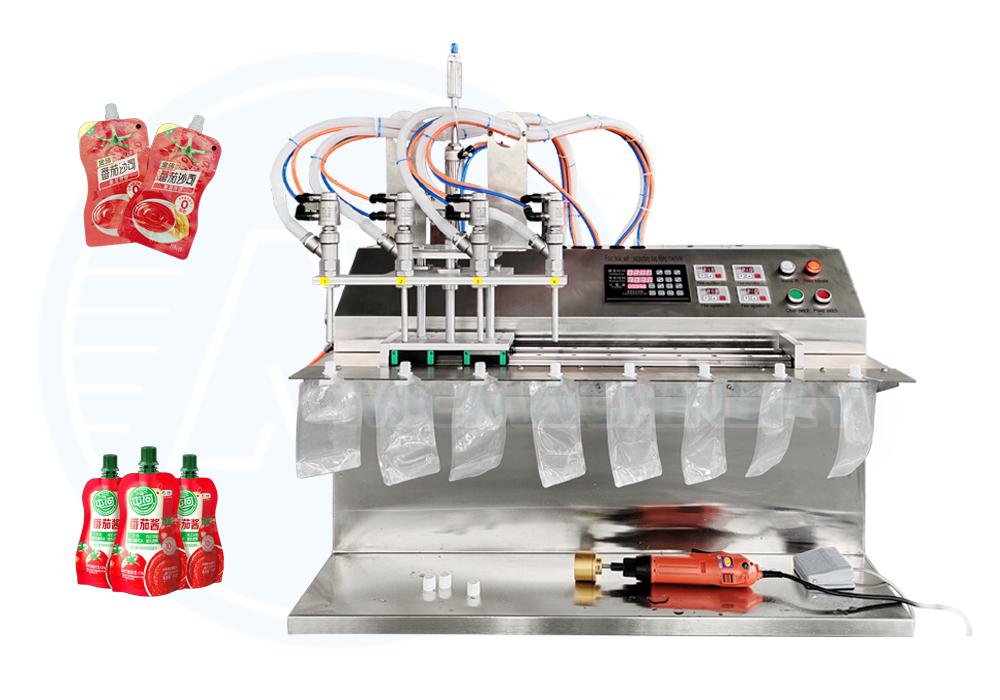
Fast-food condiment sachets
Sandwich and burger sauce packaging
Food service bulk ketchup containers
OEM condiment production
Restaurant supply packaging
Industrial food processing plants
Export-ready ketchup packaging lines
Retail supermarket ketchup products
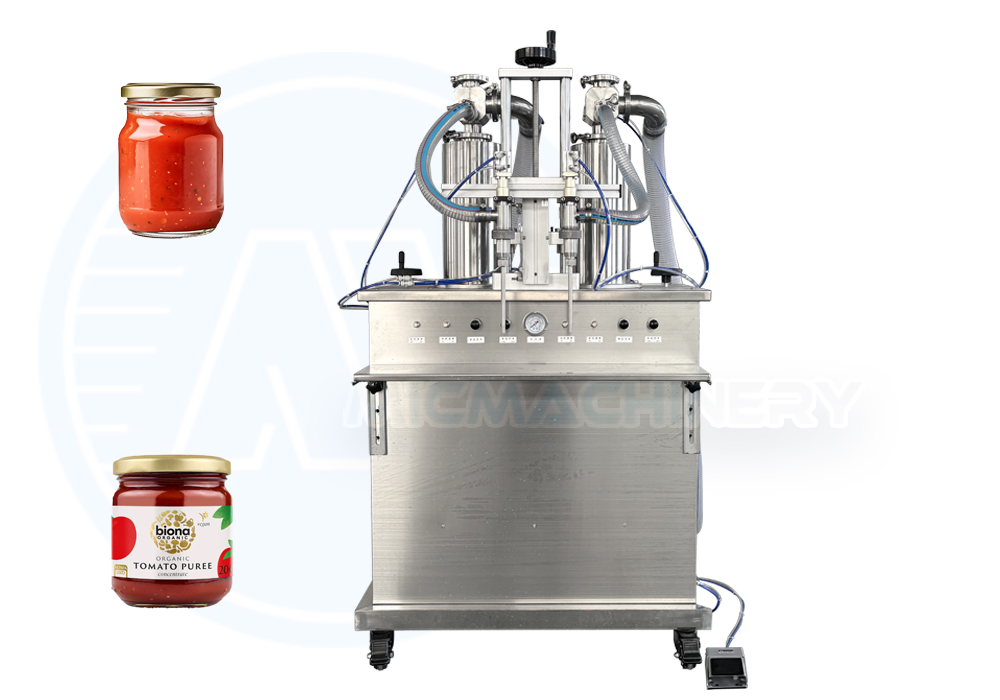
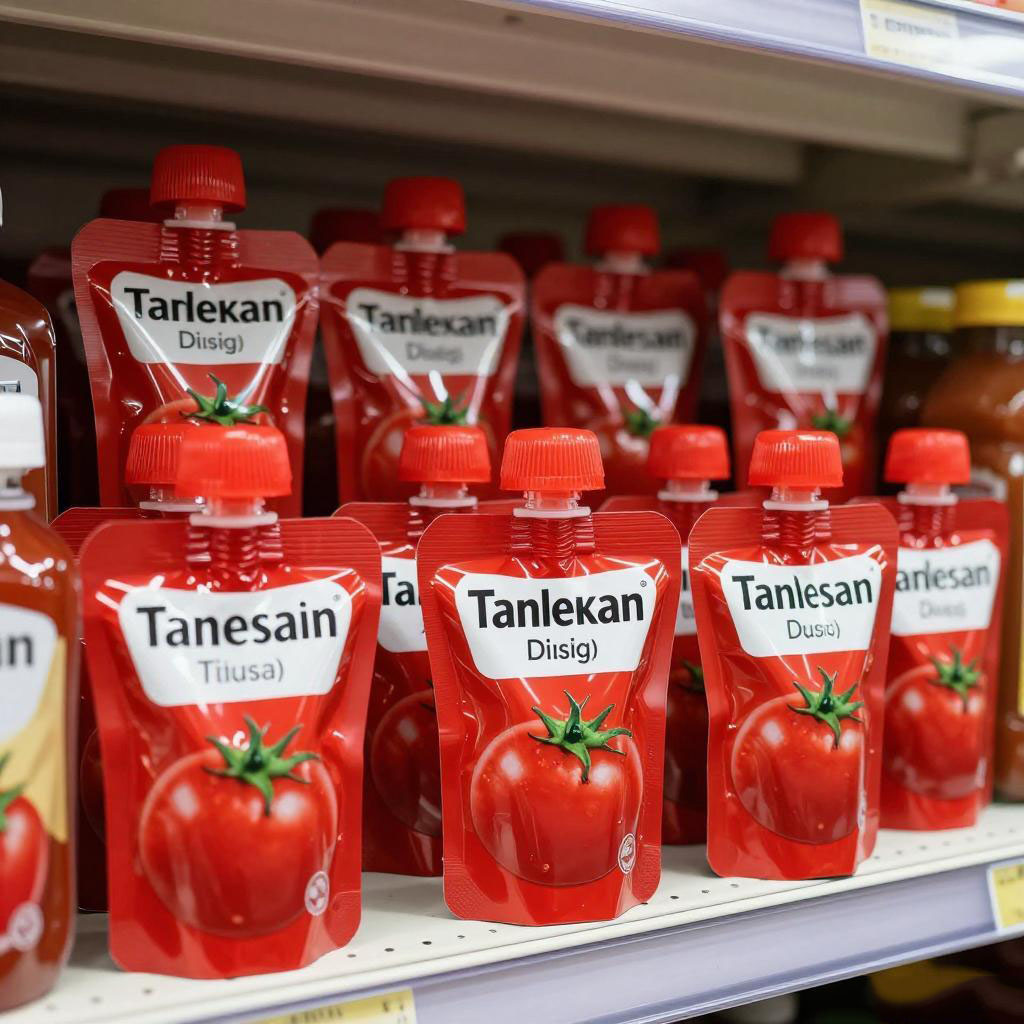
The system supports glass bottles, plastic squeeze bottles, jars, and sachet packaging, making it suitable for both retail and industrial distribution channels.
Customization Options
Ketchup production requirements vary depending on viscosity, recipe composition, and packaging style. MIC Machinery offers several customization options to adapt to different production environments.
Servo Piston Filling System
Provides high-precision volumetric control for thick ketchup formulations.
Agitated Hopper Design
Maintains uniform consistency and prevents separation of tomato solids.
Heated Filling System
Suitable for hot-fill ketchup production lines requiring controlled temperature maintenance.
Anti-Stringing Nozzle Technology
Ensures clean cut-off and prevents residue formation on container necks.
Multi-Format Container Support
Allows quick adjustment between bottles, jars, and sachets.
Bottom-Up Filling System
Reduces air bubbles and improves final product appearance.
Full Line Integration
Can be connected with sterilization systems, capping machines, labeling units, and packaging equipment.
Maintenance and Operation
Ketchup filling systems require regular cleaning due to the sticky and residue-prone nature of tomato-based products. Daily maintenance includes flushing pipelines, cleaning hopper walls, and removing buildup from filling nozzles.
Weekly inspections should focus on piston sealing performance, valve operation, and nozzle condition. Any worn sealing components should be replaced promptly to maintain hygienic operation and prevent leakage.
For hot-fill systems, temperature control components should be checked regularly to ensure stable product viscosity. Proper lubrication of mechanical parts helps maintain smooth piston movement during continuous operation.
Effective maintenance ensures consistent filling accuracy, hygienic production standards, and long-term equipment stability.
FAQ
Q1: Can the machine handle thick ketchup without clogging? Yes. It uses piston systems and wide-channel anti-clog nozzles.
Q2: Is it suitable for hot-fill ketchup? Yes. Heated hopper and temperature control options are available.
Q3: How is clean cut-off achieved? Anti-stringing nozzles prevent residue and dripping after filling.
Q4: What packaging types are supported? Bottles, jars, squeeze packs, and sachets.
Q5: Can it handle ketchup with pulp or solids? Yes. Agitated hoppers ensure uniform consistency.
Q6: Can it be integrated into a full production line? Yes. It supports full automation with capping, labeling, and packing systems.
Industrial Ketchup Packing Machine from MIC Machinery
The MIC Machinery Ketchup Packing Machine is engineered for stable, accurate, and hygienic filling of high-viscosity condiment products. It is designed for modern food manufacturing environments where consistency, cleanliness, and production efficiency directly impact commercial performance.