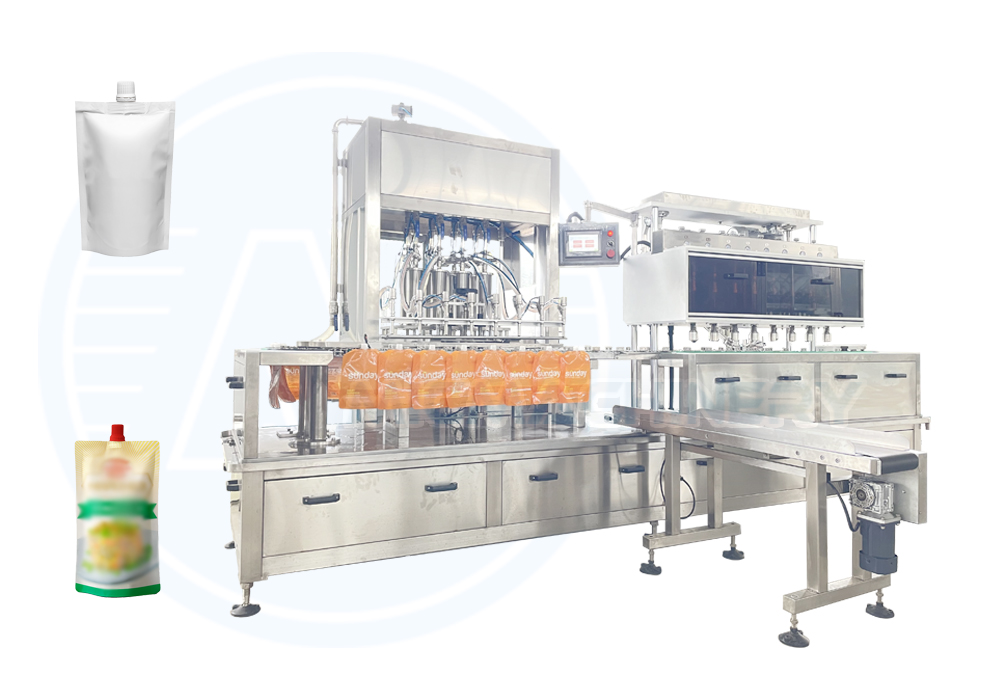
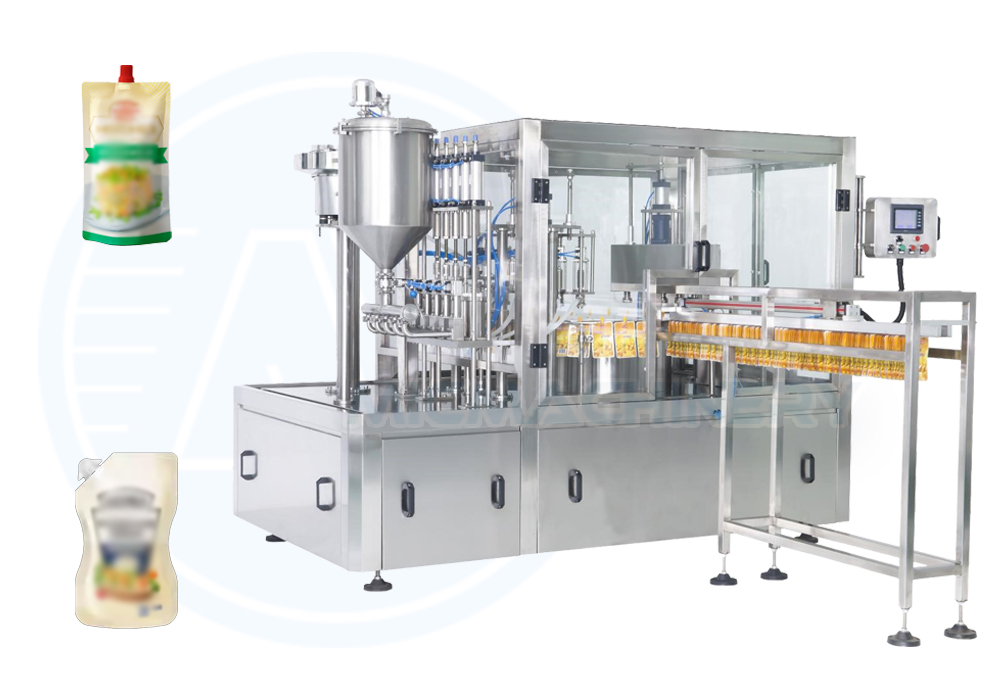
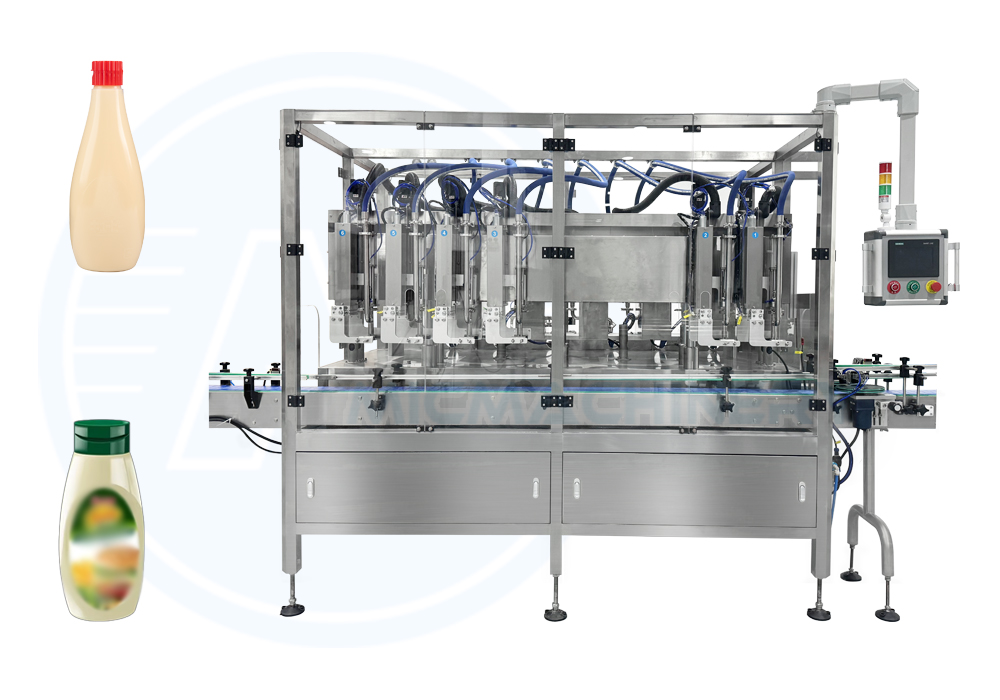
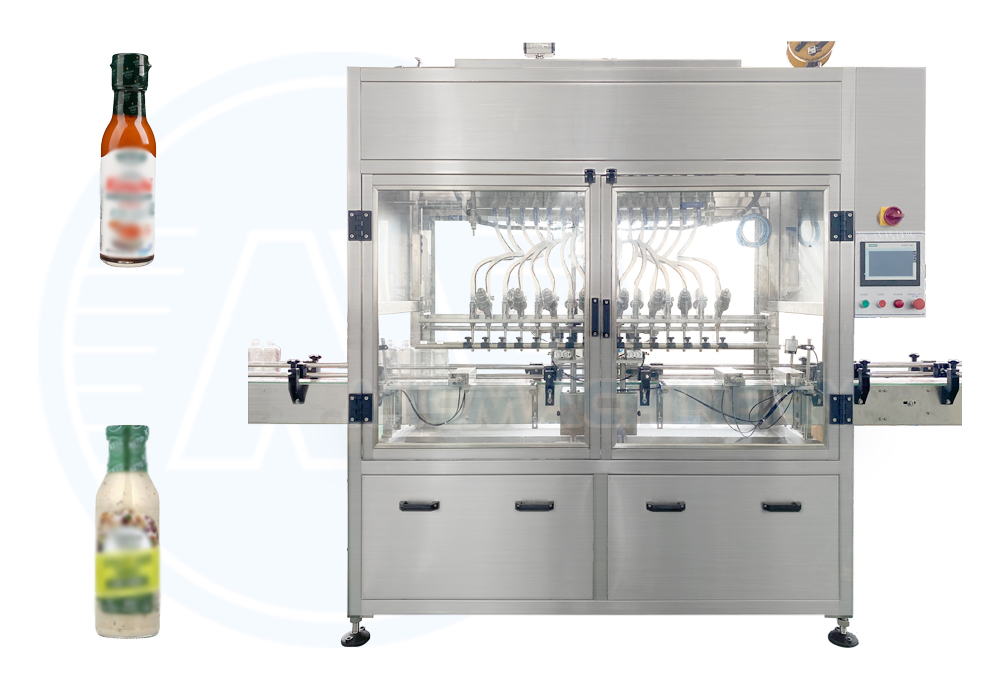
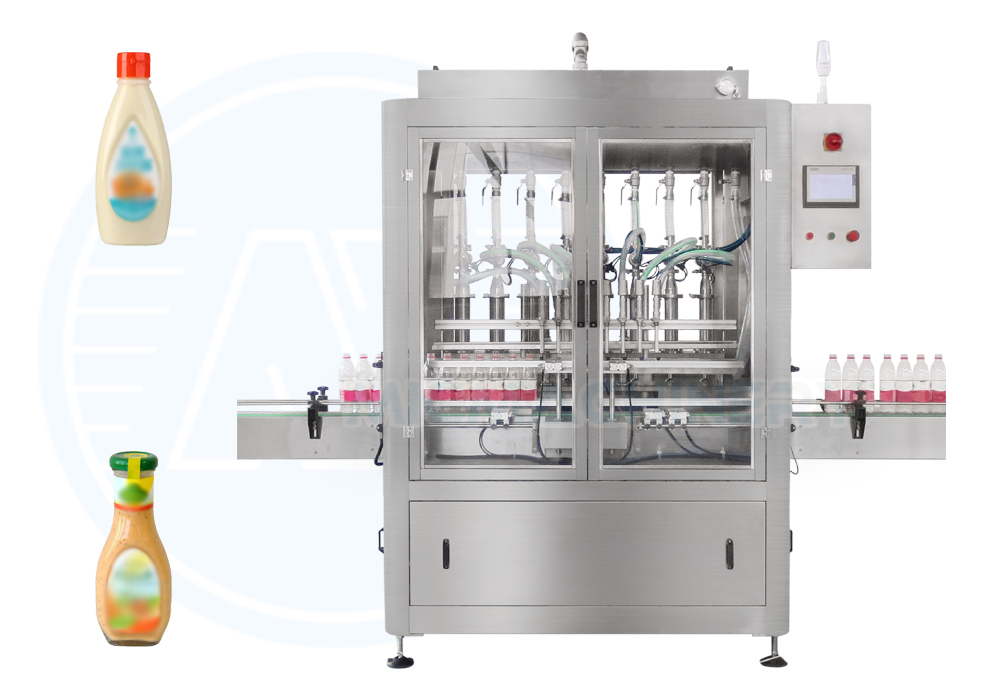
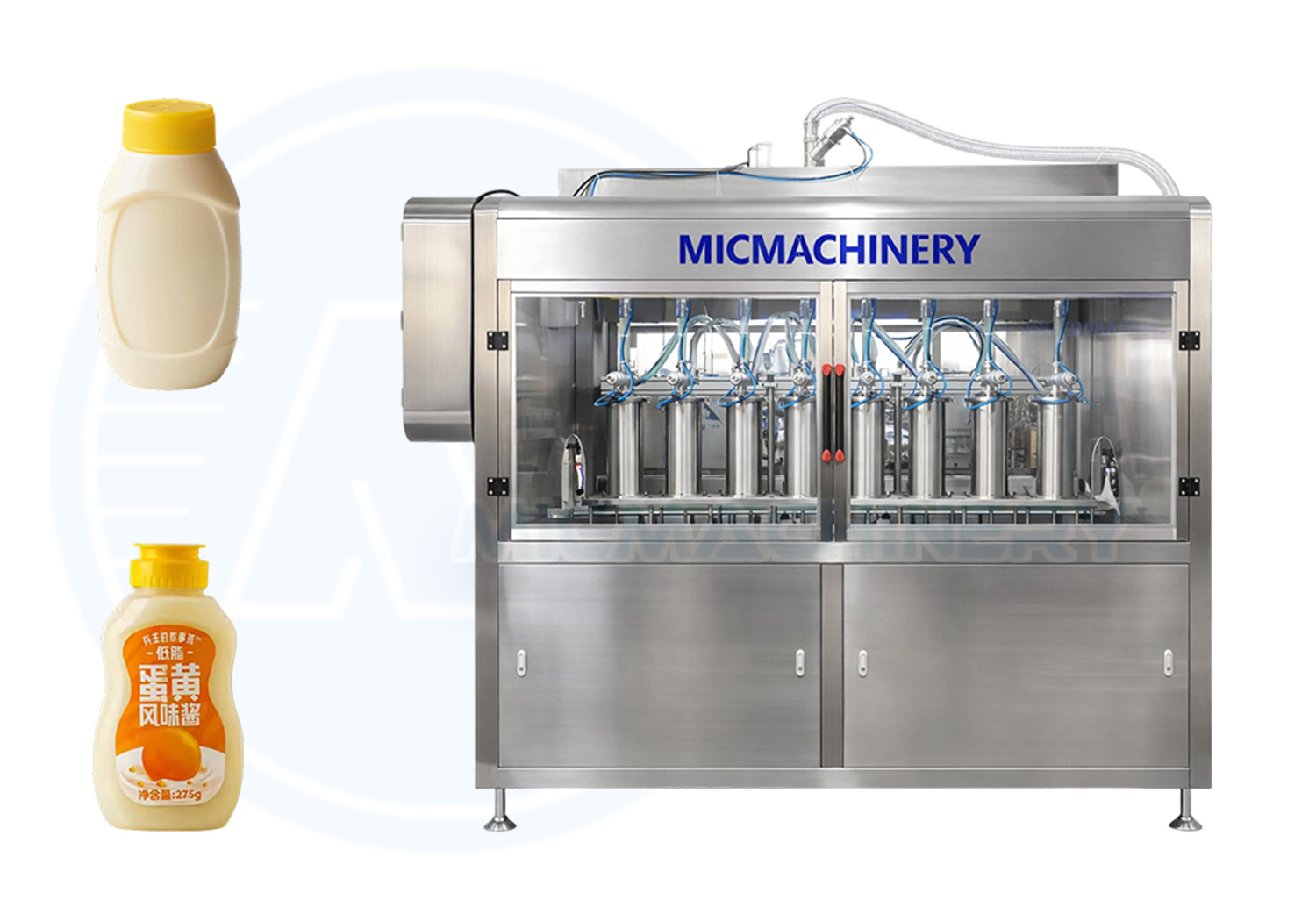
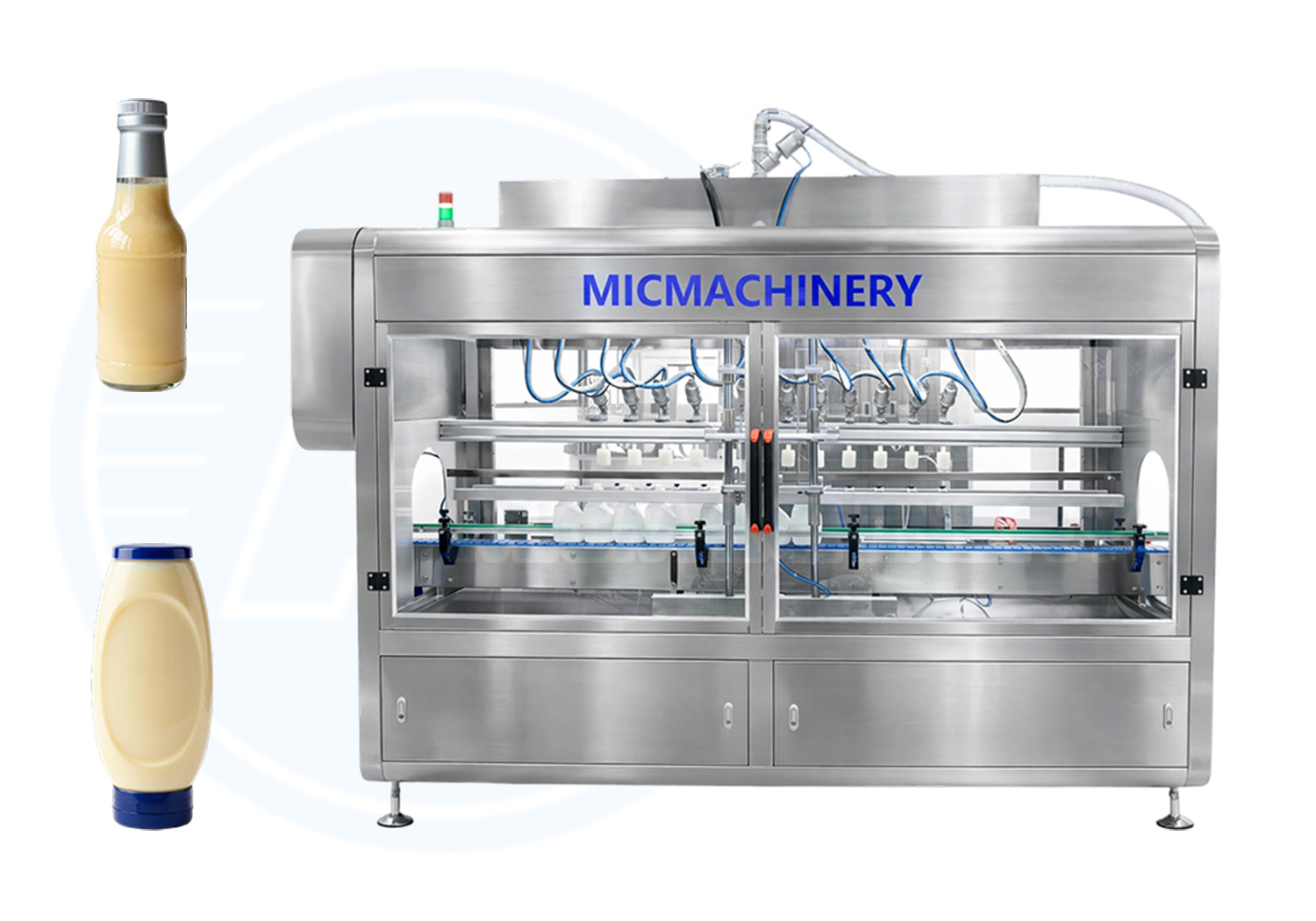
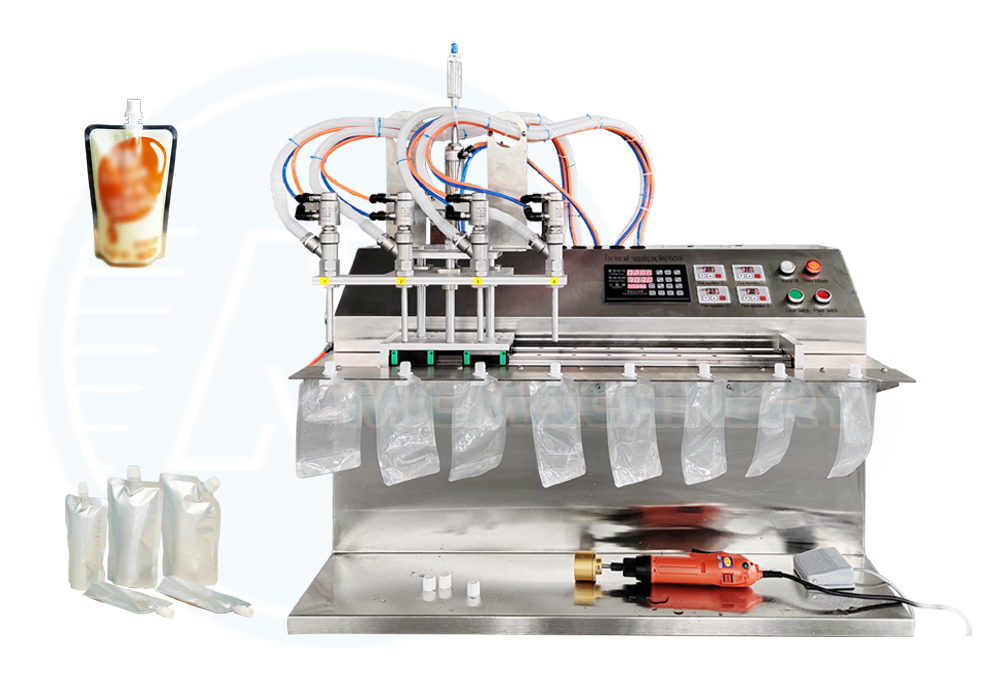
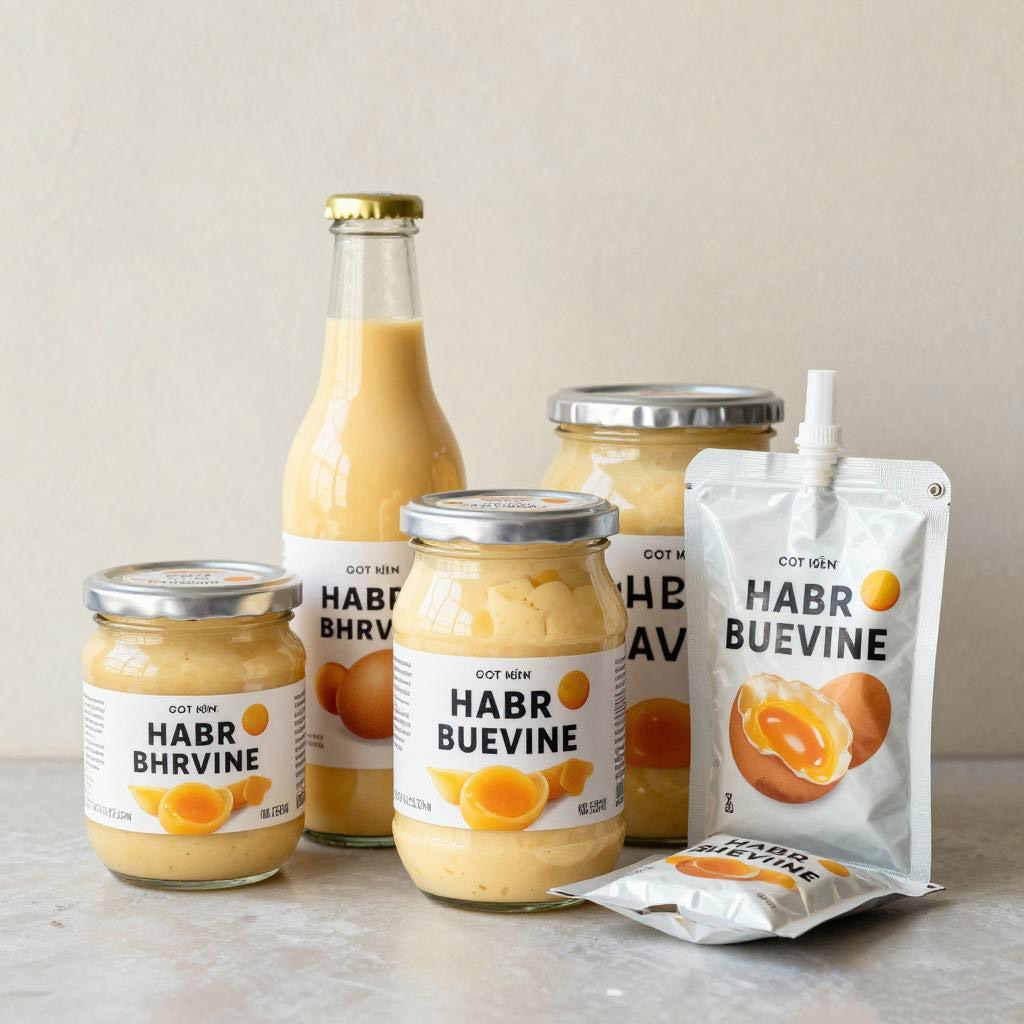
Mayonnaise Filling Machine——Industrial Filling Solution for Viscous Food Products
Mayonnaise is a difficult product to package well. Its viscosity changes with temperature, it traps air easily, and many formulations are sensitive to mechanical shear. In a production line, those factors affect filling accuracy, product appearance, and overall line stability. A machine that works for water-thin liquids will not perform properly on mayonnaise.
MIC Machinery designs the Mayonnaise Filling Machine for these conditions. The system is built for stable dosing, clean cut-off, and reliable continuous operation in food processing plants. It can handle standard mayonnaise, egg-based dressings, garlic mayonnaise, sandwich spreads, and similar emulsified products that require careful handling during packaging.
For manufacturers, the main priority is not only speed. It is consistency across every jar, bottle, or pouch, especially when the product is thick, sticky, or prone to separation.
The filling cycle is designed to maintain product integrity while keeping the process stable and repeatable.
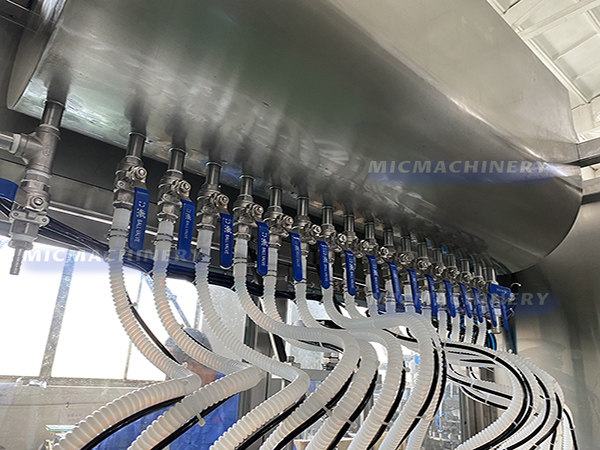
First, prepared mayonnaise is transferred from the storage or mixing tank into the hopper. If the formula is sensitive to temperature, an optional jacketed hopper can help maintain flow consistency. An agitator may also be added to prevent separation and keep the product uniform during production.
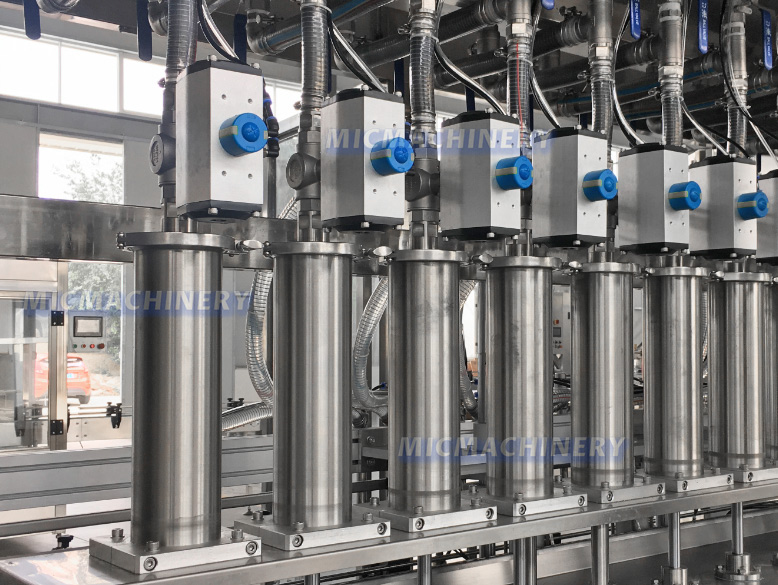
Next, the machine draws a preset amount of mayonnaise into the dosing chamber. In a piston system, this volume is determined by cylinder stroke. In a servo system, the filling amount is controlled electronically through the PLC.
Once the container is positioned beneath the nozzle, the filling cycle begins. The nozzle may be fixed or diving type, depending on the product and container shape. Diving nozzles are often preferred for mayonnaise because they reduce air entrapment and help keep the filling surface clean.
After the target volume is reached, the product cut-off is controlled to avoid dripping or stringing. Filled containers then move to the next station for capping, sealing, coding, or labeling.
This sequence sounds simple, but in practice the control of flow speed, nozzle timing, and cut-off precision is what separates a stable filling system from a troublesome one.
Video Demonstration
Applications
The Mayonnaise Filling Machine is used in food production facilities where viscous emulsions need to be packaged with controlled volume and clean presentation.
Typical applications include:
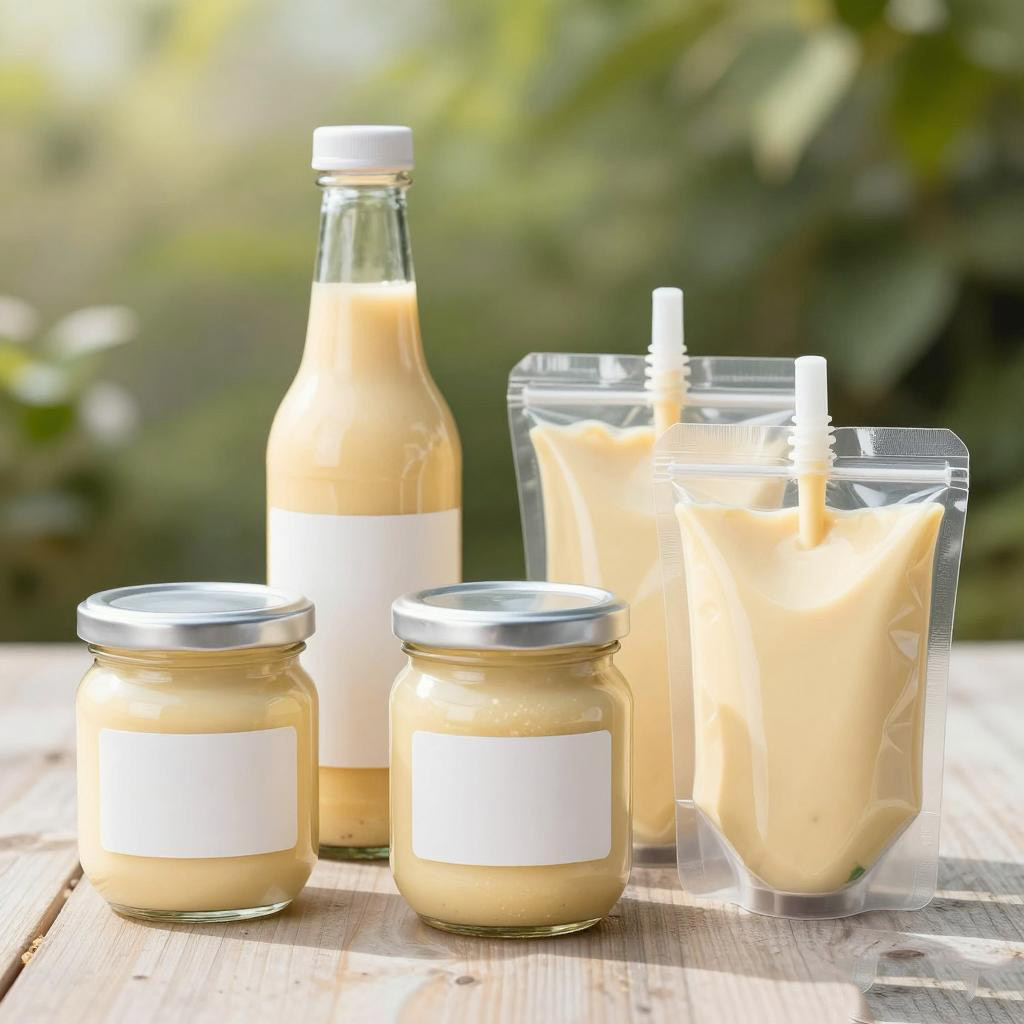
mayonnaise in glass jars
mayonnaise in plastic squeeze bottles
salad dressing packaging
sandwich spread filling
garlic mayonnaise production
egg-based emulsified sauces
creamy condiment packaging
industrial foodservice containers
The machine is also suitable for related products with similar rheology, including tartar sauce, Caesar dressing, creamy chili sauce, and some blended sandwich spreads. For exporters and private-label manufacturers, this flexibility is often important because one production line may need to handle several product types.
Customization Options
No two mayonnaise production lines are exactly the same. Filling equipment should be matched to product behavior, container format, and factory layout rather than sold as a fixed standard unit.
MIC Machinery offers several customization options:
Heated or Jacketed Hopper
Useful for products that become too thick at lower temperatures or need stable flow during long shifts.
Agitation System
Helps prevent separation and keeps the mayonnaise consistent when stored in the hopper.
Servo Filling Upgrade
Provides finer control over filling volume and is useful for high-value products or strict weight requirements.
Multi-Nozzle Layout
Improves throughput for medium and high-capacity lines.
Special Nozzle Design
Different nozzle shapes can be selected for jars, bottles, or narrow-neck containers.
CIP Cleaning Support
Recommended for factories that need faster sanitation and reduced downtime between production runs.
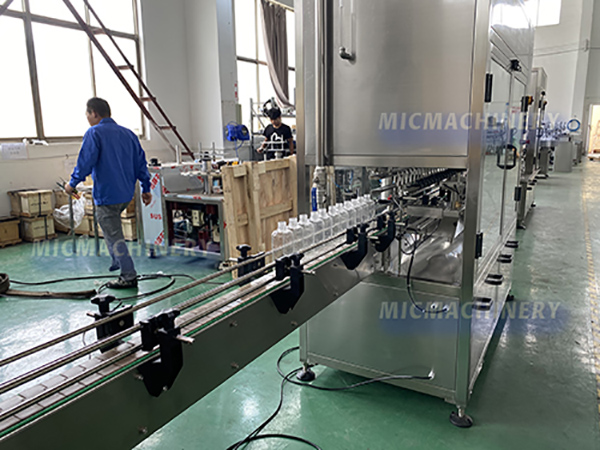
Full Line Integration
The filler can be connected with bottle unscramblers, cappers, induction sealers, labelers, and case packing equipment.
This flexibility allows the machine to fit both small condiment workshops and larger automated food plants.
Maintenance
Mayonnaise is sticky and can leave residue if the machine is not cleaned properly. Good maintenance practice is essential for stable operation and hygiene.
Daily cleaning should focus on the hopper, filling nozzles, valves, and product-contact tubing. Leftover sauce can harden and affect the next production cycle if it is not removed promptly.
Weekly inspection should include piston seals, nozzle wear, sensor alignment, and pneumatic pressure stability. If the machine uses a jacketed hopper or heating system, temperature control should also be checked regularly.
The PLC system provides a simple operating interface, which makes adjustment and troubleshooting easier for production staff. With routine cleaning and inspection, the equipment can maintain consistent performance over long service periods.
FAQ
Q1: Can the machine fill thick mayonnaise without clogging? Yes. The system is designed for viscous emulsified products and can be equipped with suitable nozzles and agitators to maintain stable flow.
Q2: Is it suitable for squeeze bottles and jars? Yes. The machine can be configured for different container types, including jars, bottles, and custom packaging formats.
Q3: How is filling accuracy controlled? Accuracy is controlled by piston displacement or servo-driven volume control, coordinated through PLC automation.
Q4: Can the machine handle products with small particles? Yes, within a reasonable particle size range. The filling system can be adjusted for certain creamy sauces and textured dressings.
Q5: Is cleaning difficult? No. The machine is built with sanitary design principles, and optional CIP systems can reduce manual cleaning time.
Q6: Can it be added to an existing packaging line? Yes. MIC Machinery can configure the filler to work with existing conveyors, capping machines, and labeling systems.
Industrial Mayonnaise Filling Machinefrom MIC Machinery
MIC Machinery’s Mayonnaise Filling Machine is built for the realities of viscous food packaging. It focuses on steady dosing, hygienic operation, and practical integration into real production lines. For manufacturers handling mayonnaise and similar emulsified products, the right filling system makes a direct difference in product quality, line efficiency, and long-term operating stability.