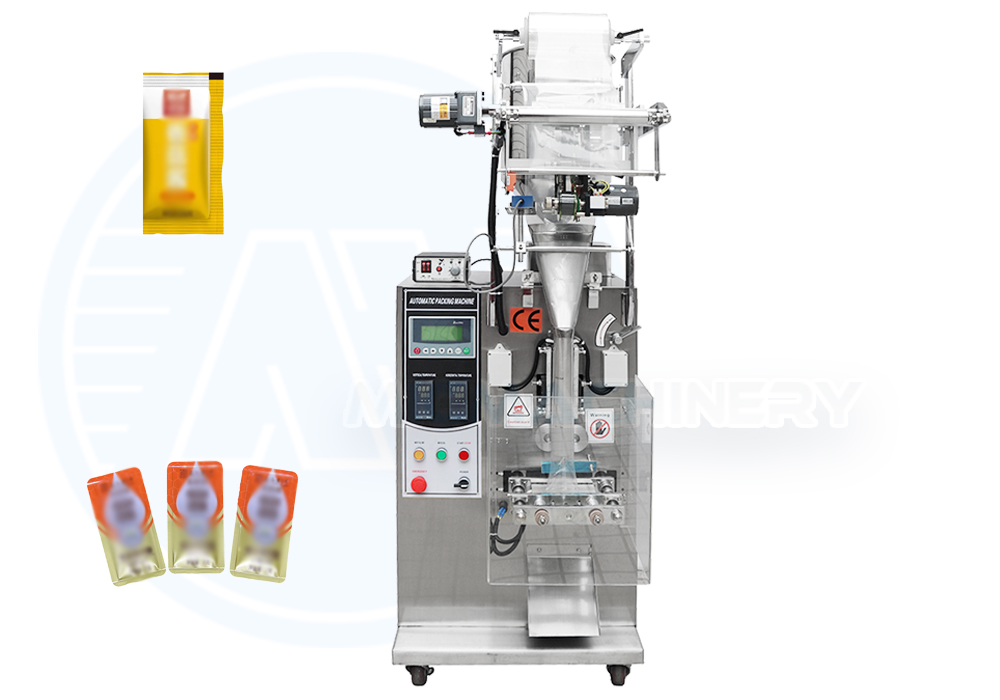
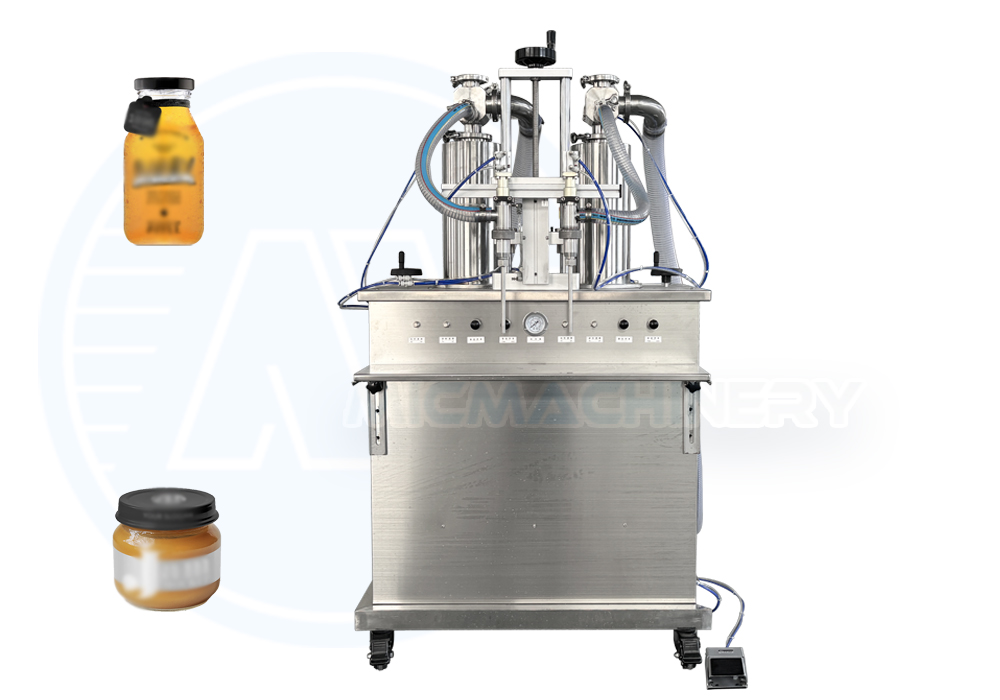
Jam Filling Machine——Industrial Filling System for Fruit and Viscous Products
Jam production sits in a category where filling equipment must handle more than just viscosity. Fruit content, pulp distribution, and temperature-dependent flow behavior all influence how the product moves through a filling system. A slight mismatch in machine design can lead to uneven jar weights, blocked nozzles, or damaged fruit pieces.
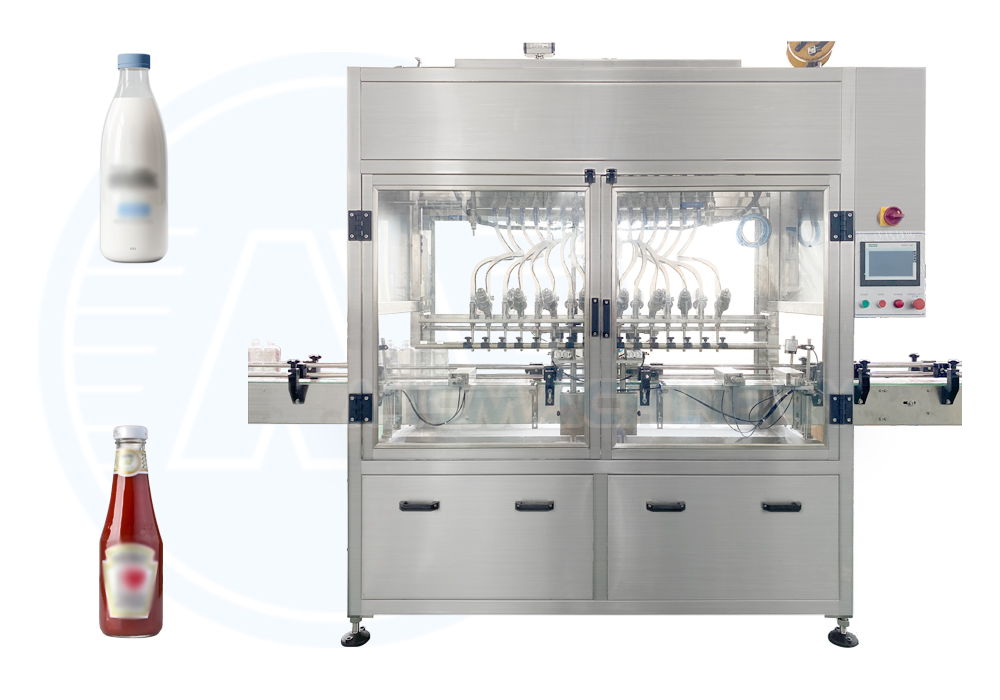
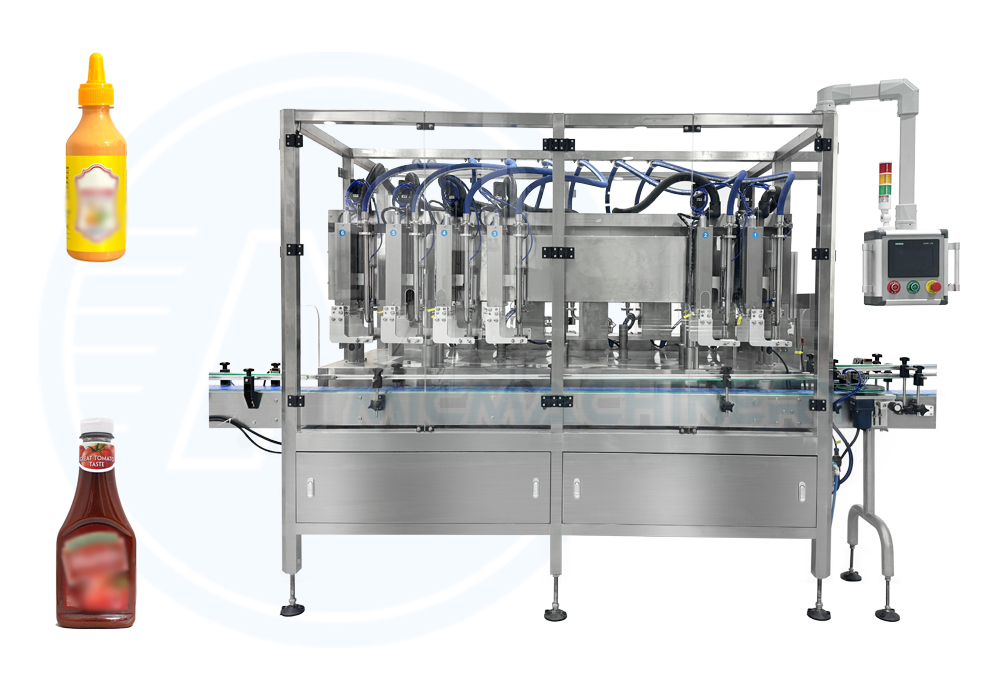
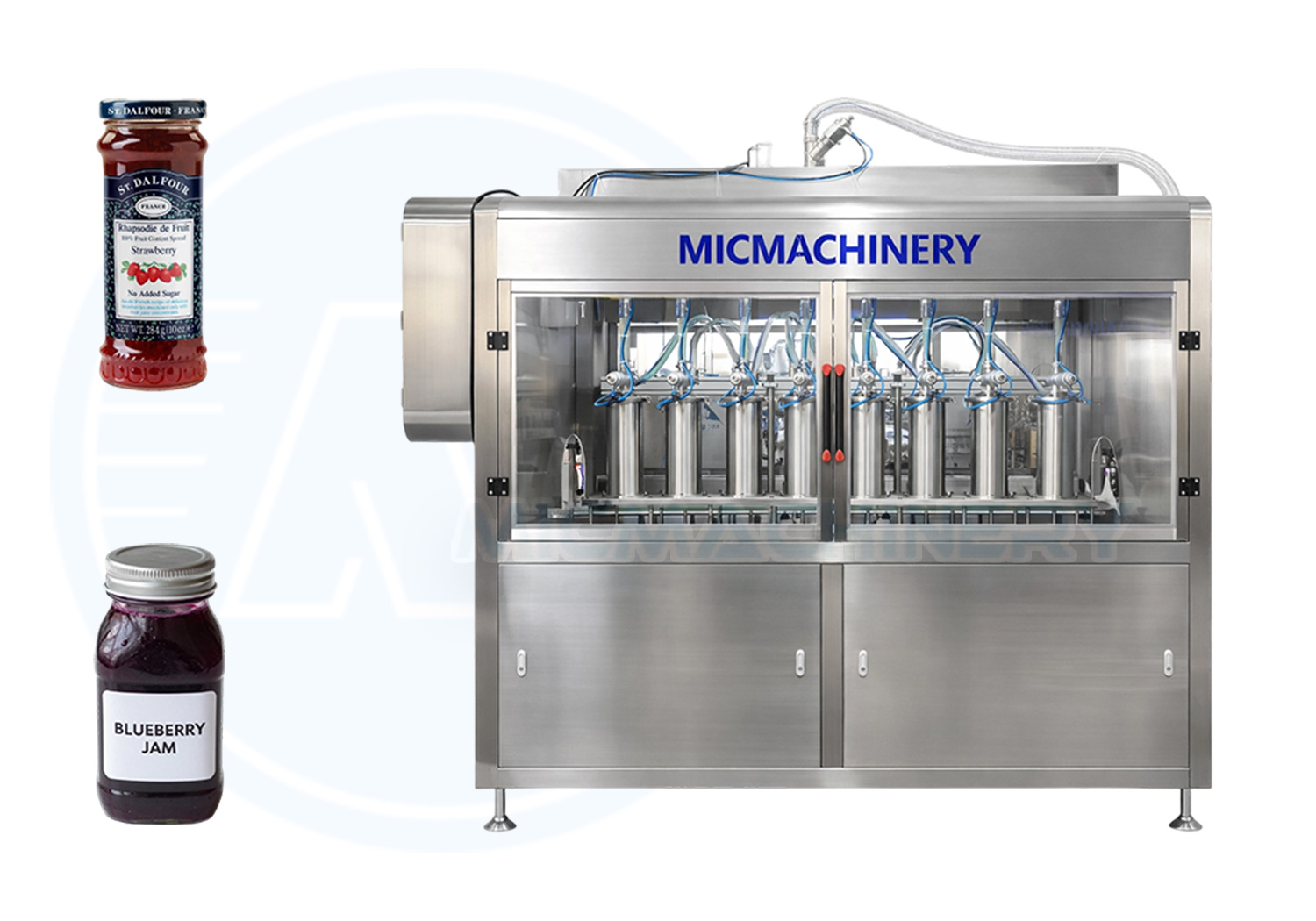
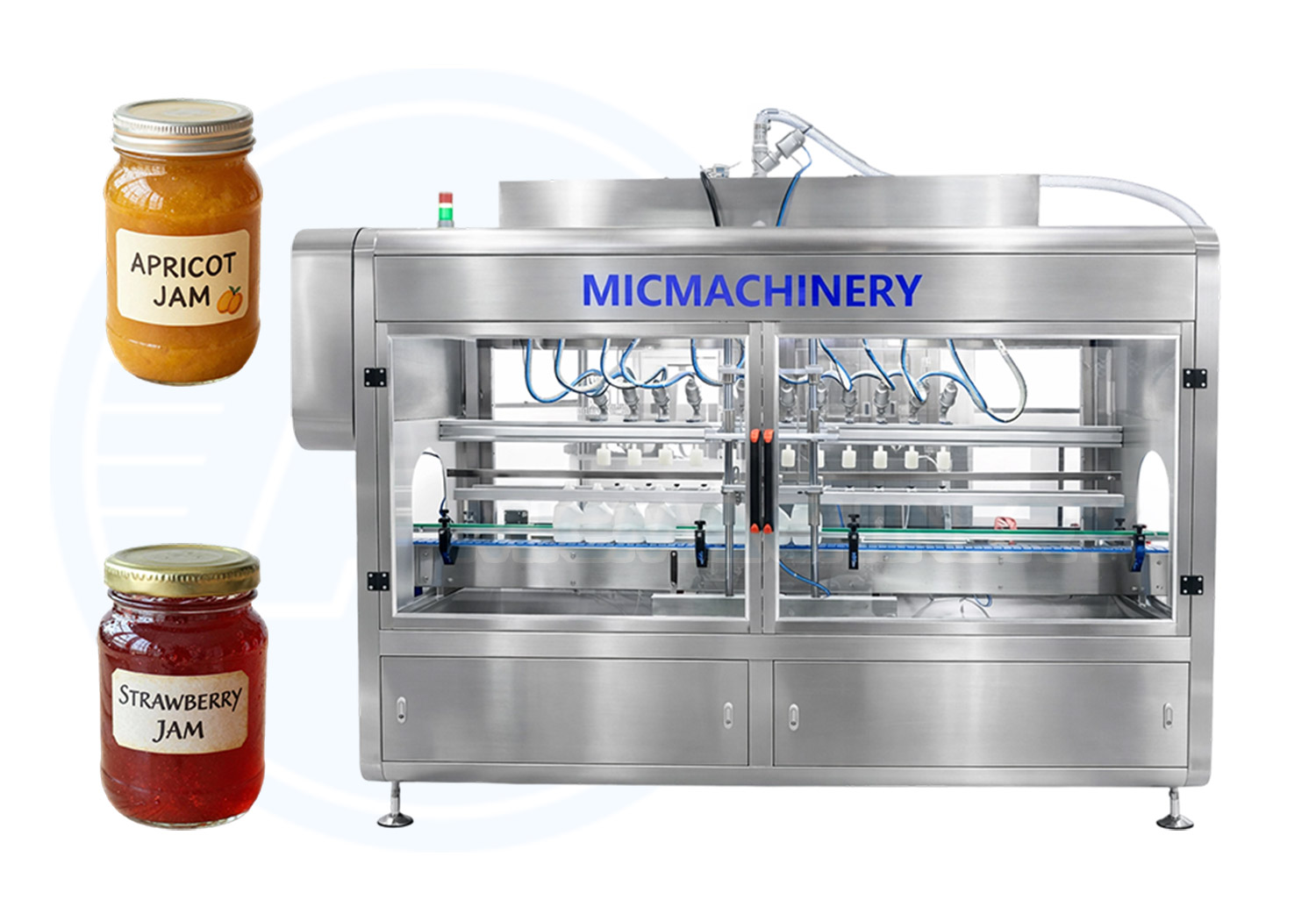
The Jam Filling Machine developed by MIC Machinery is designed specifically for these challenges. It provides controlled metering for thick fruit-based products while maintaining particle integrity and consistent filling volume. The system is widely used in fruit jam plants, bakery supply factories, and industrial food packaging lines where repeatability and hygiene are critical.
Unlike standard liquid fillers, jam filling equipment must balance pressure, flow stability, and gentle handling of solid inclusions. That balance defines the performance of the entire production line.
The filling process is designed to maintain both accuracy and product integrity, especially when dealing with fruit particles.
First, prepared jam is transferred from the cooking or storage tank into the machine hopper. In many production setups, the jam is still warm at this stage, so a heated hopper system can be used to maintain flow stability and prevent early solidification.
Next, the servo piston system draws a measured volume of jam into the dosing chamber. Unlike water-like liquids, jam requires controlled suction speed to avoid separating fruit particles from the syrup base.
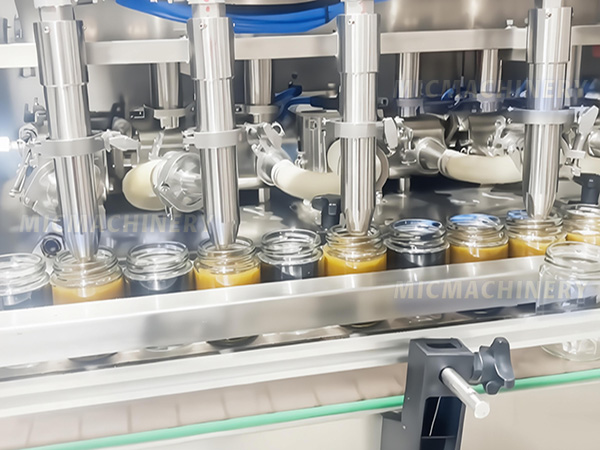
Once containers are positioned under the filling nozzles, the filling cycle begins. The machine dispenses the product at a controlled speed to ensure fruit pieces are evenly distributed in each jar. For products with larger fruit chunks, nozzle diameter and filling pressure are adjusted to prevent crushing or blockage.
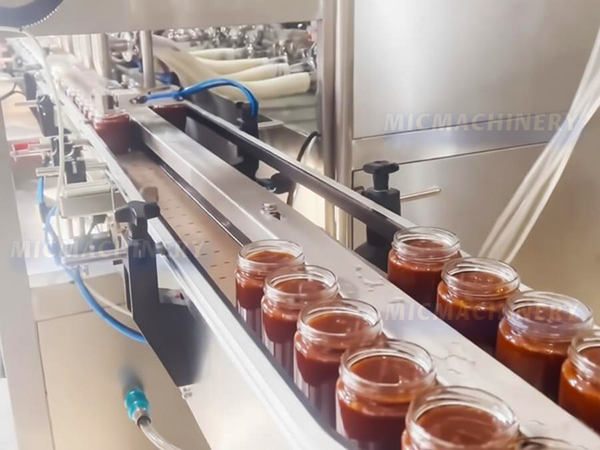
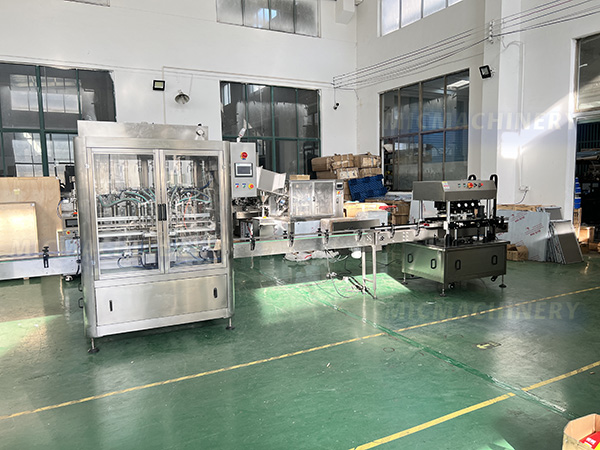
After filling, the nozzle closes with a fast cut-off mechanism to reduce dripping. Filled jars are then transferred to downstream equipment such as capping machines or vacuum sealing systems, depending on packaging requirements.
This process is fully synchronized through PLC control, ensuring stable timing across all filling heads during continuous operation.
Video Demonstration
Applications
The Jam Filling Machine is used across a wide range of fruit-based and viscous food production environments.
Common applications include:
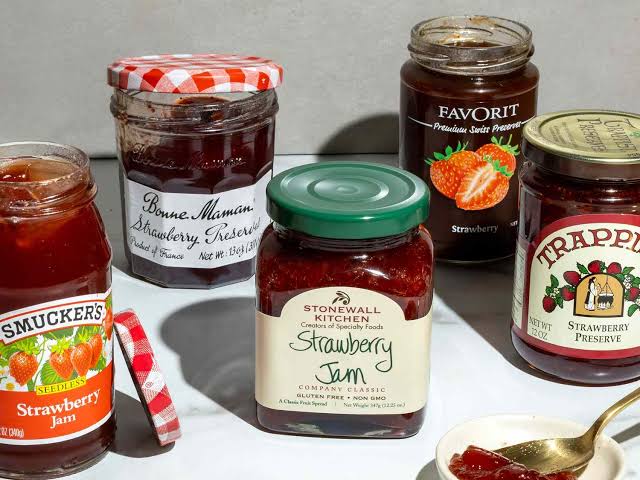
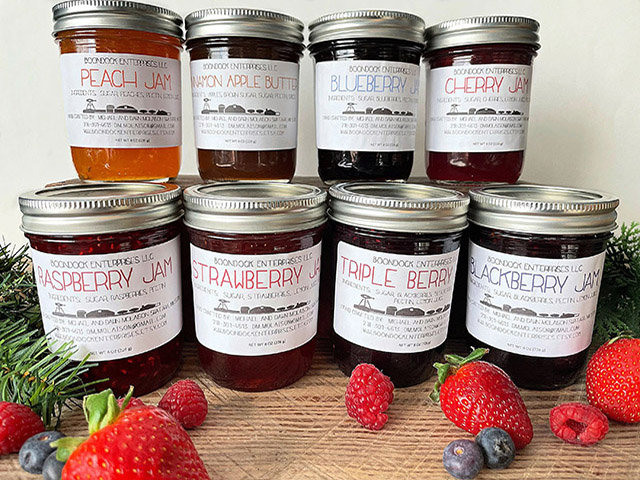
strawberry jam
blueberry jam
apricot jam
orange marmalade
raspberry jam
mixed fruit jam
honey blends with fruit pulp
bakery fillings
dessert sauces
fruit spreads for foodservice packaging
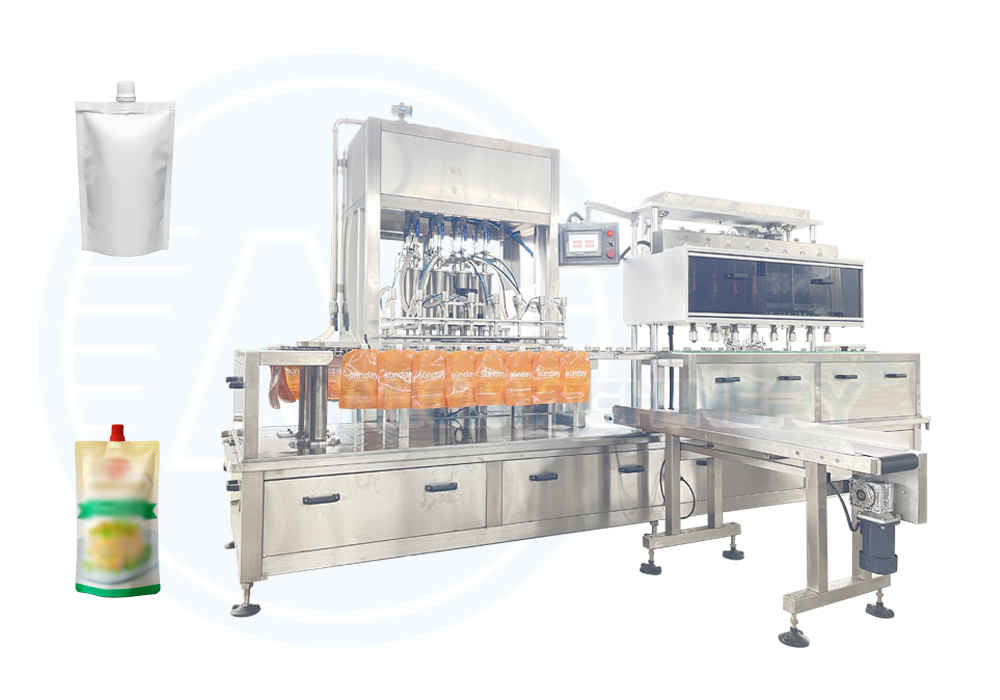
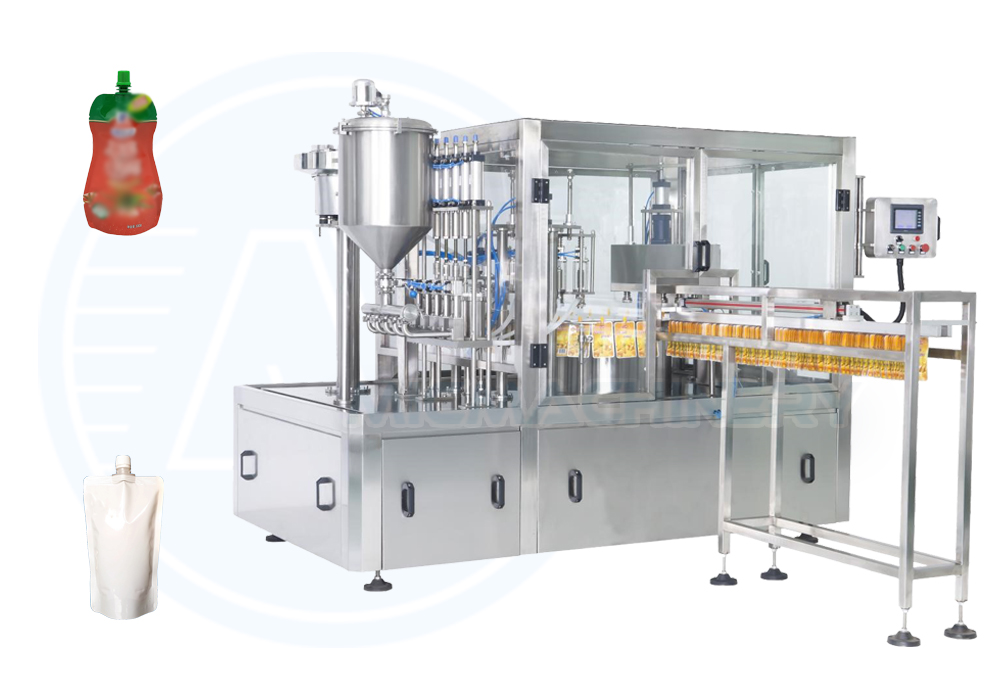
The system supports different container formats such as glass jars, PET jars, and wide-mouth packaging commonly used in retail and export markets.
For factories producing multiple flavors, quick-clean design and recipe-based parameter switching help reduce downtime between production batches.
Customization Options
Jam production varies significantly depending on fruit content, sugar concentration, and target packaging format. For this reason, MIC Machinery provides multiple customization options.
Heated Hopper System
Maintains product temperature during production to ensure stable flow and prevent early solidification.
Fruit Agitation System
Keeps fruit pieces evenly distributed in the hopper, reducing sedimentation and improving filling consistency.
Servo Control Upgrade
Provides higher precision for premium jam products where consistent net weight is important.
Enlarged Nozzle Design
Designed for jams containing larger fruit pieces to reduce clogging and mechanical damage.
CIP Cleaning System
Allows automated cleaning cycles, reducing manual labor and improving sanitation efficiency between batches.
Multi-Format Capability
Supports different jar sizes with adjustable guides and quick-change settings.
Full Line Integration
Can be connected with cooking kettles, sterilization systems, capping machines, labeling machines, and carton packing lines.
Maintenance
Jam is sticky, high in sugar content, and prone to residue buildup if not cleaned properly. Regular maintenance is essential for stable long-term performance.
Daily cleaning should focus on nozzles, hopper walls, and product pipelines. Warm water flushing is commonly used to remove sugar residue before it hardens.
Weekly maintenance includes checking piston seals, valve operation, and nozzle alignment. Any buildup inside the filling chamber should be removed to avoid volume inconsistency.
For heated systems, temperature sensors and jacket performance should also be inspected regularly to ensure stable flow conditions.
Because jam often contains natural fruit particles, wear on sealing components should be monitored more frequently than in standard liquid filling applications.
FAQ
Q1: Can the machine handle jam with large fruit pieces? Yes. The system can be equipped with enlarged valves and custom nozzles to handle fruit chunks without blockage.
Q2: Does jam need to be heated before filling? In most cases, yes. Heating improves flow consistency and reduces filling resistance.
Q3: How is fruit distribution controlled during filling? An agitation system in the hopper helps maintain uniform fruit distribution during operation.
Q4: What container types are supported? Glass jars, plastic jars, and wide-mouth containers are all compatible.
Q5: Is it suitable for small production batches? Yes. The machine can be configured for low-speed operation or high-capacity industrial lines.
Q6: Can it be integrated with a full jam production line? Yes. It can connect with cooking, sterilization, capping, labeling, and packaging systems.
Industrial Jam Filling Machinefrom MIC Machinery
The MIC Machinery Jam Filling Machine is designed for manufacturers that require stable, repeatable performance when handling fruit-based, high-viscosity products. With reinforced dosing systems, gentle product handling, and flexible line integration, it provides a practical solution for modern jam production environments where consistency and product appearance are equally important.