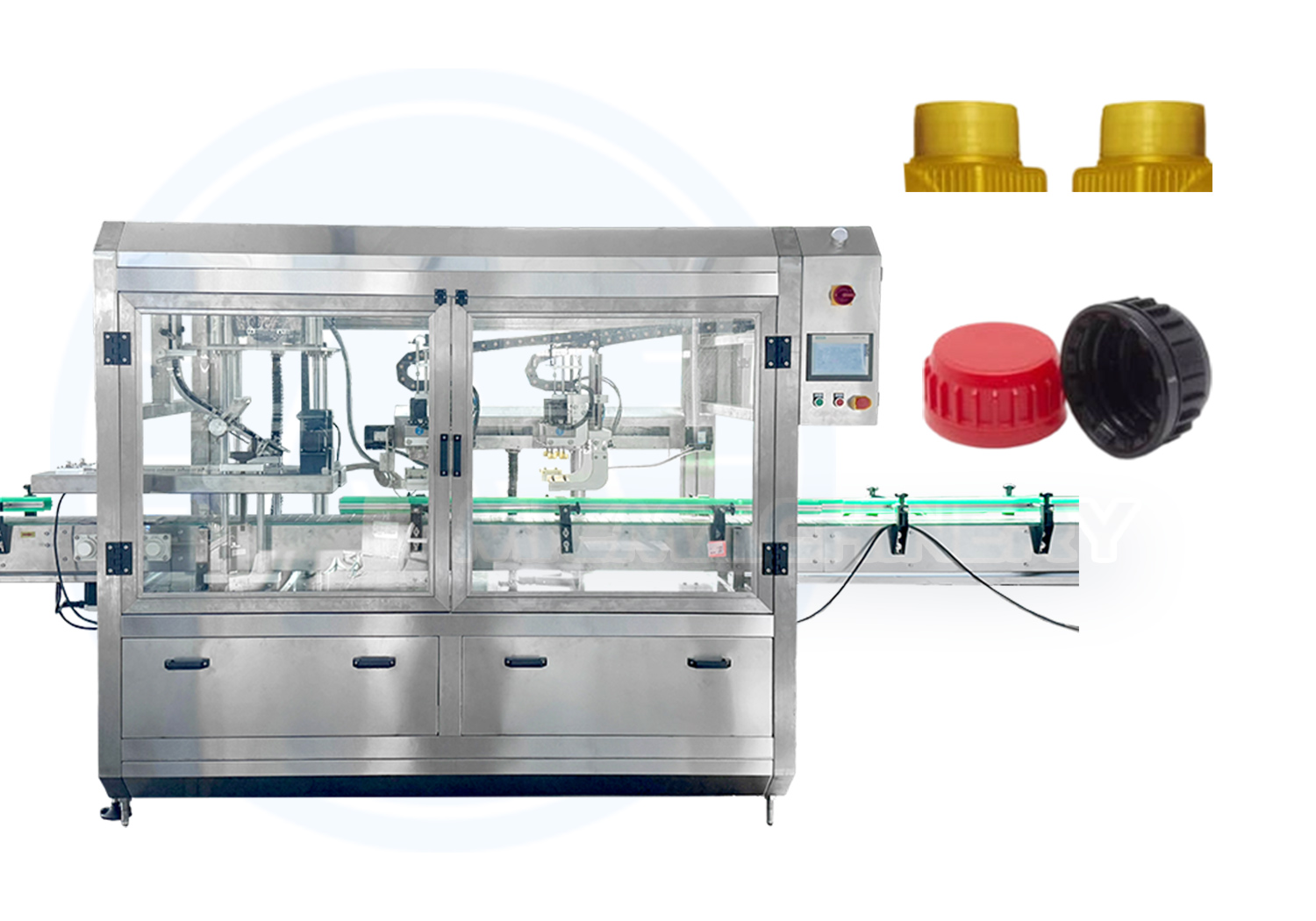
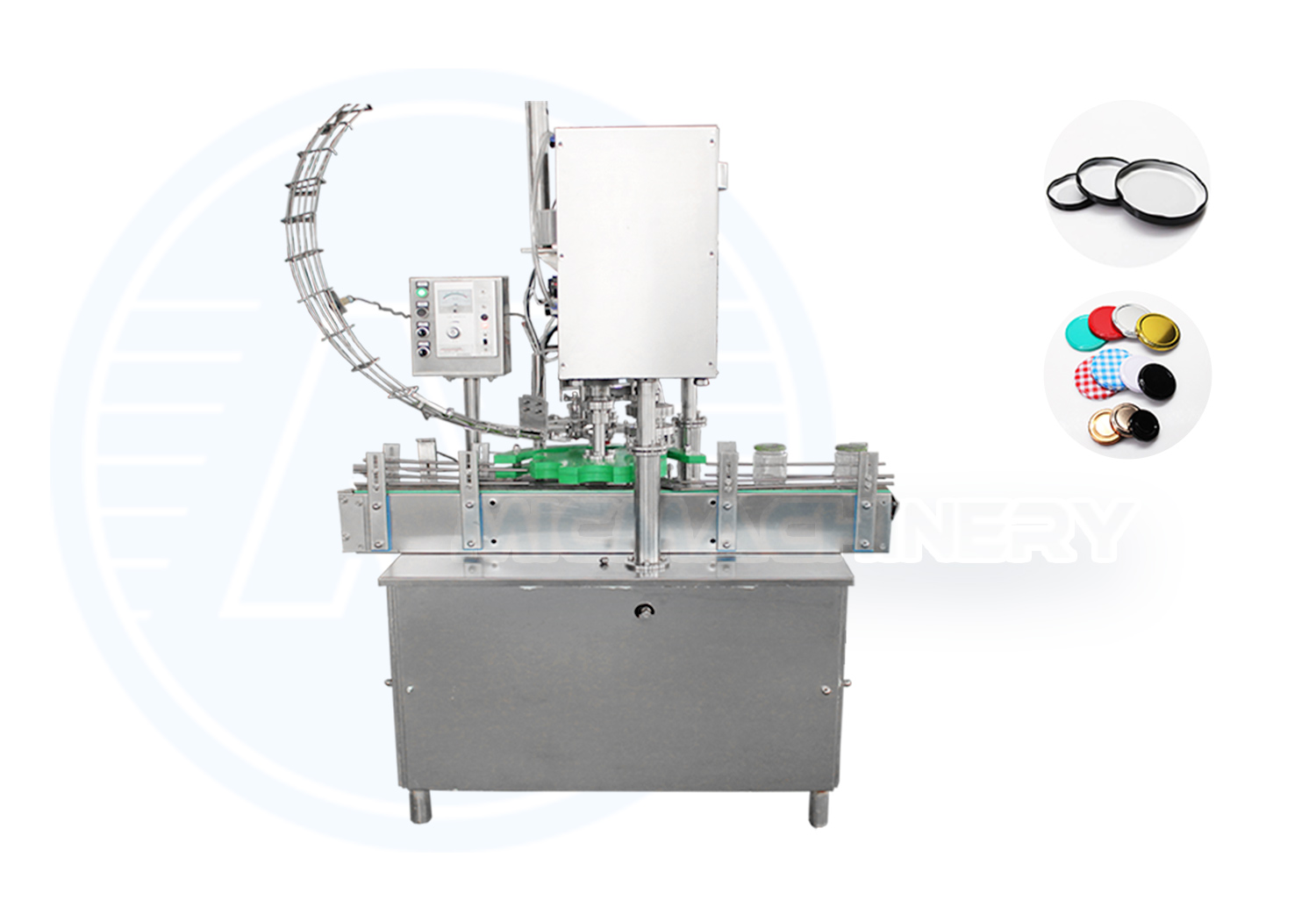
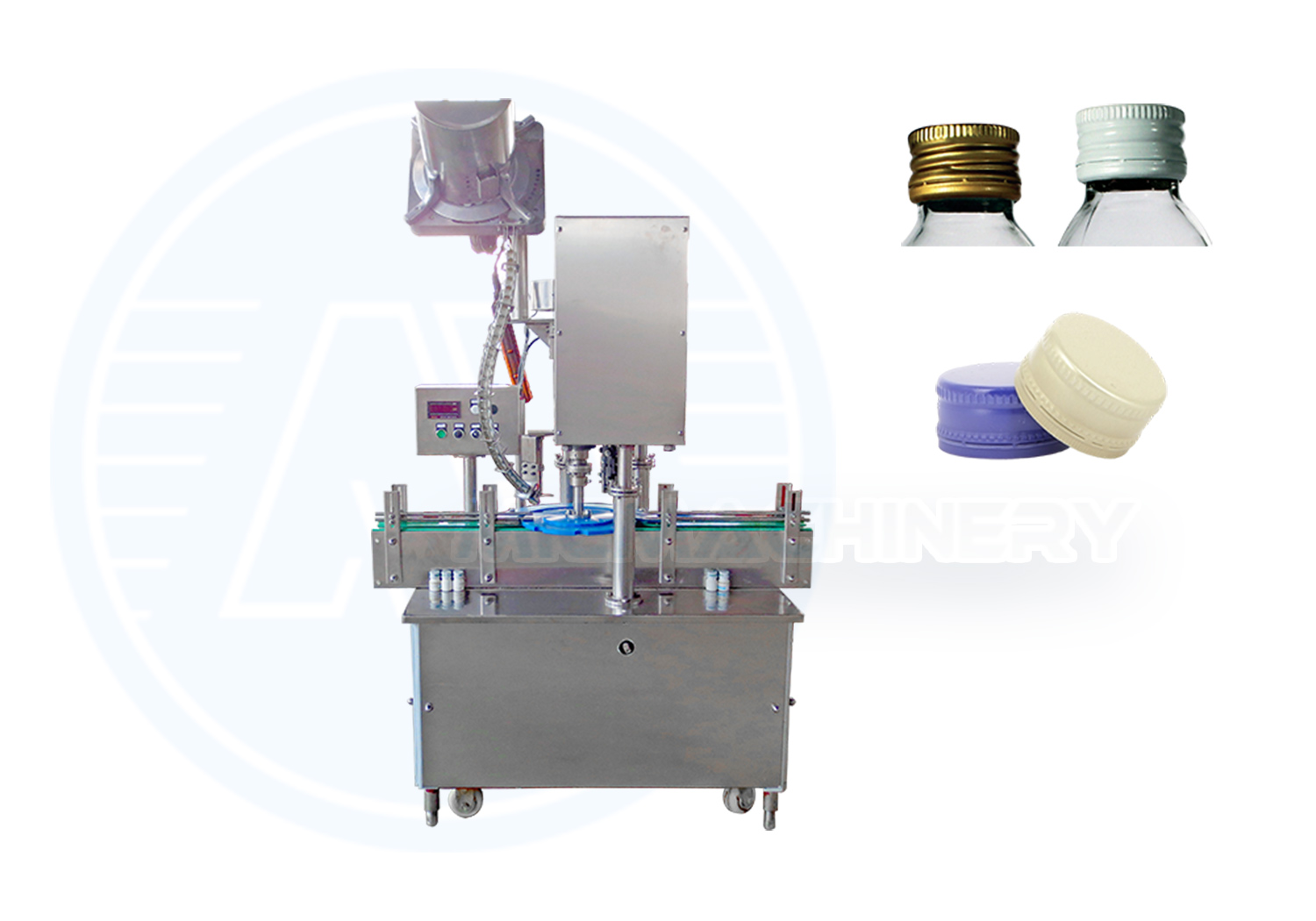
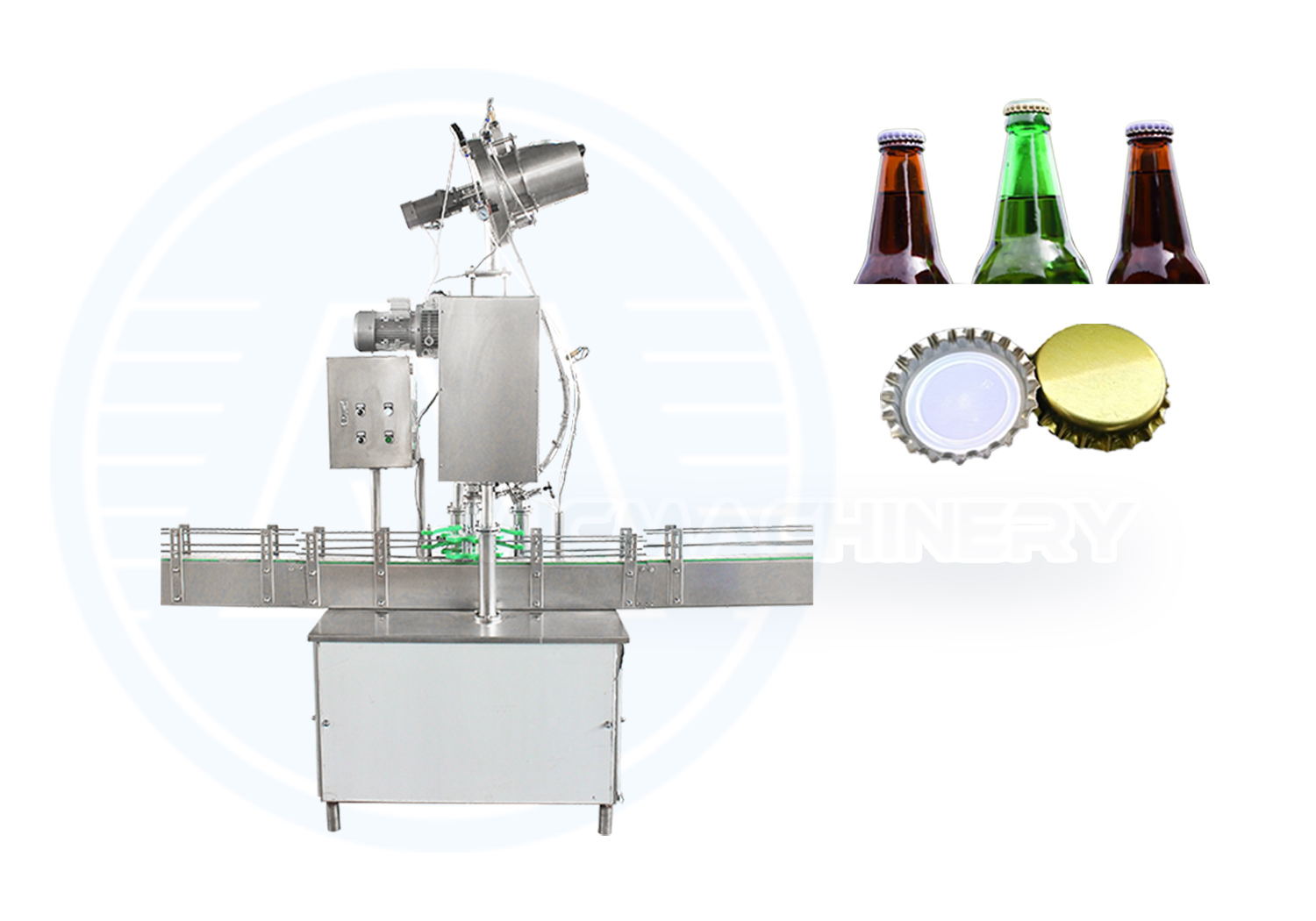
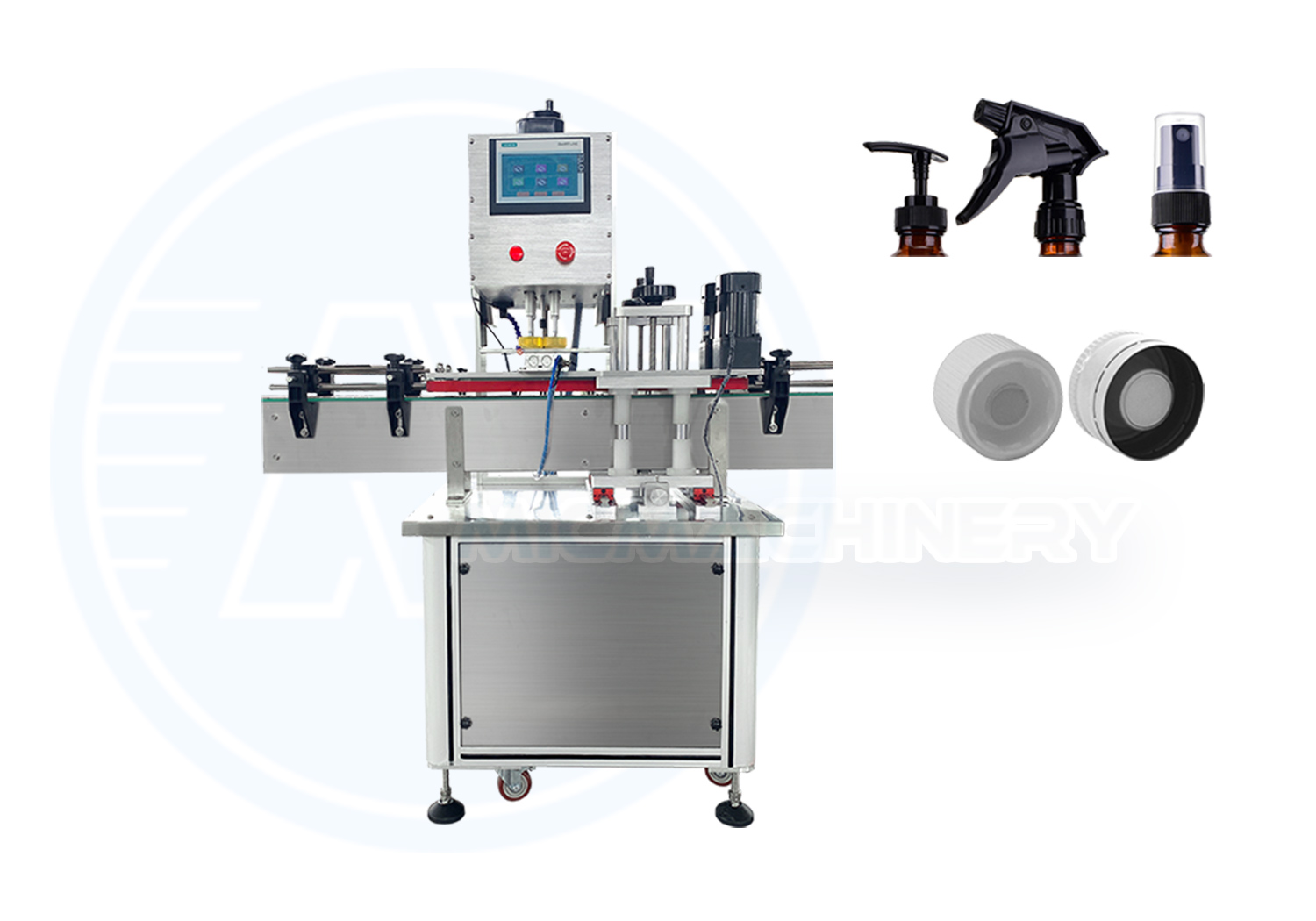
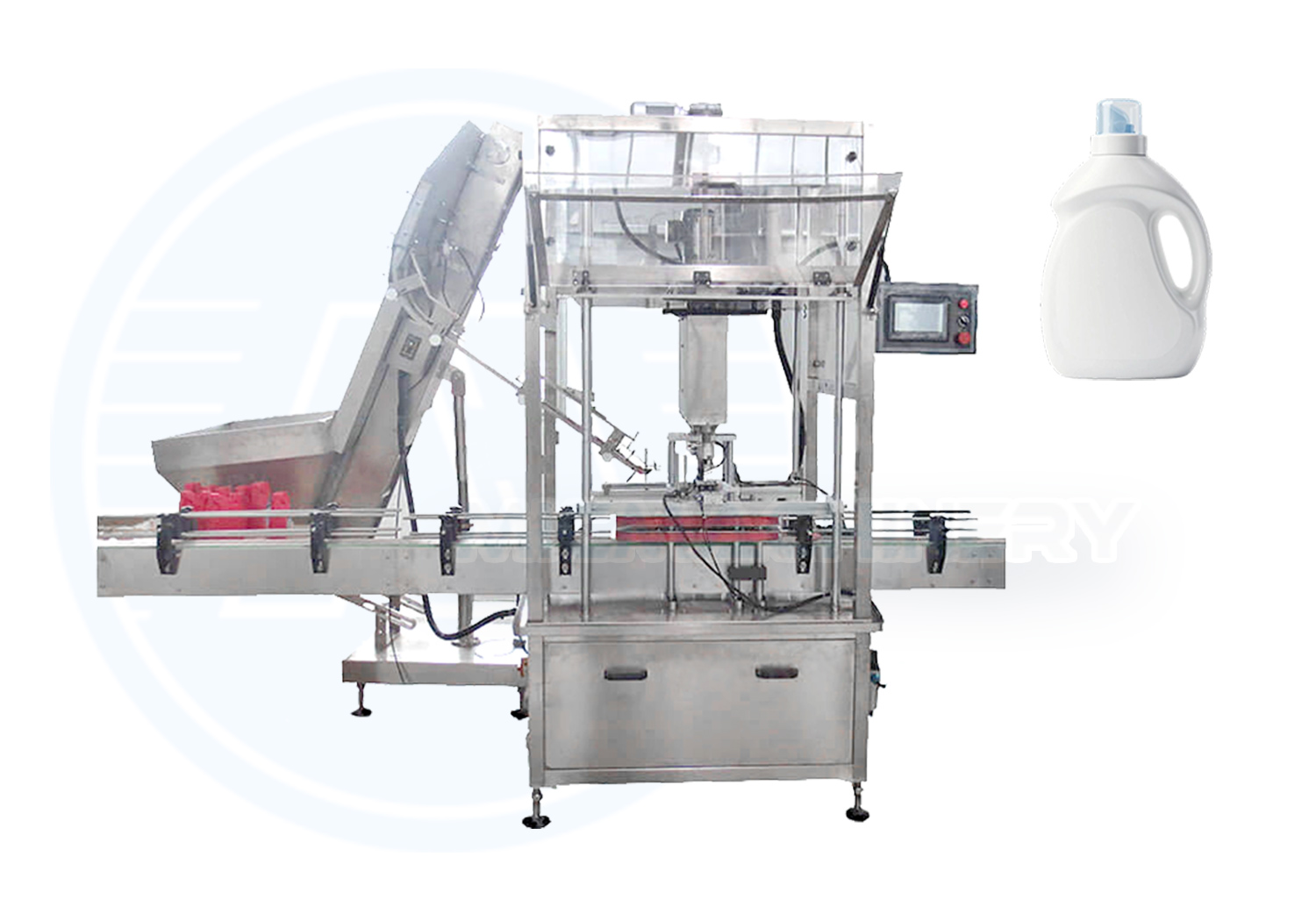
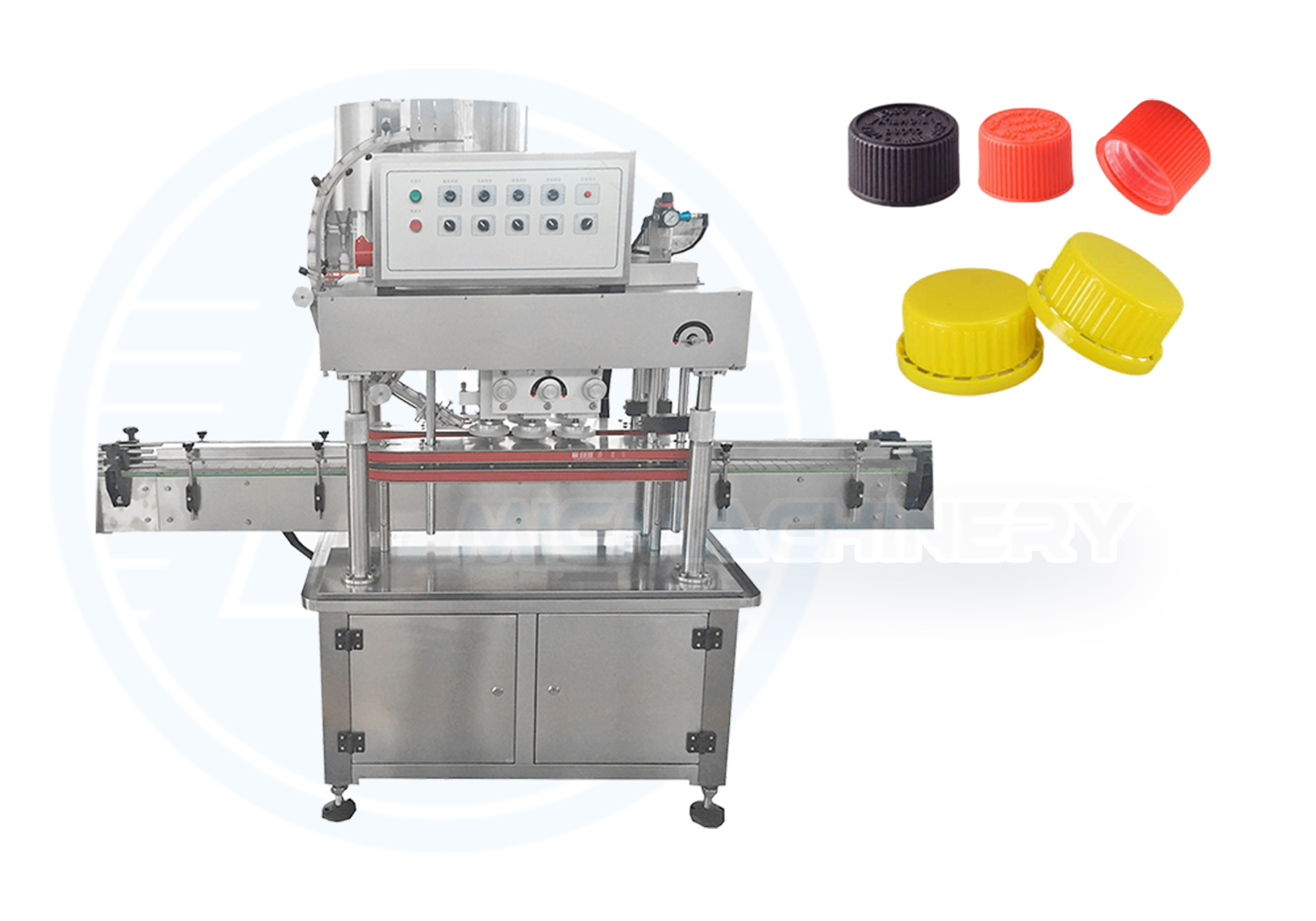
Inline Capping Machine——Continuous Bottle Capping for Production Lines
In automated packaging operations, the capping stage is responsible for ensuring product security, preventing leakage, and maintaining package integrity throughout transportation and storage. The Inline Capping Machine is designed to apply and tighten caps while bottles move continuously along a conveyor system, making it an efficient solution for medium- and high-volume production environments.
MIC Machinery develops inline capping solutions that combine reliable torque control, flexible adjustment, and easy integration with existing filling and packaging systems.
inline capping machines operate in a straight-line configuration, offering greater flexibility for handling multiple bottle formats. This design makes them particularly suitable for manufacturers that frequently change container sizes or produce a variety of products on the same line.
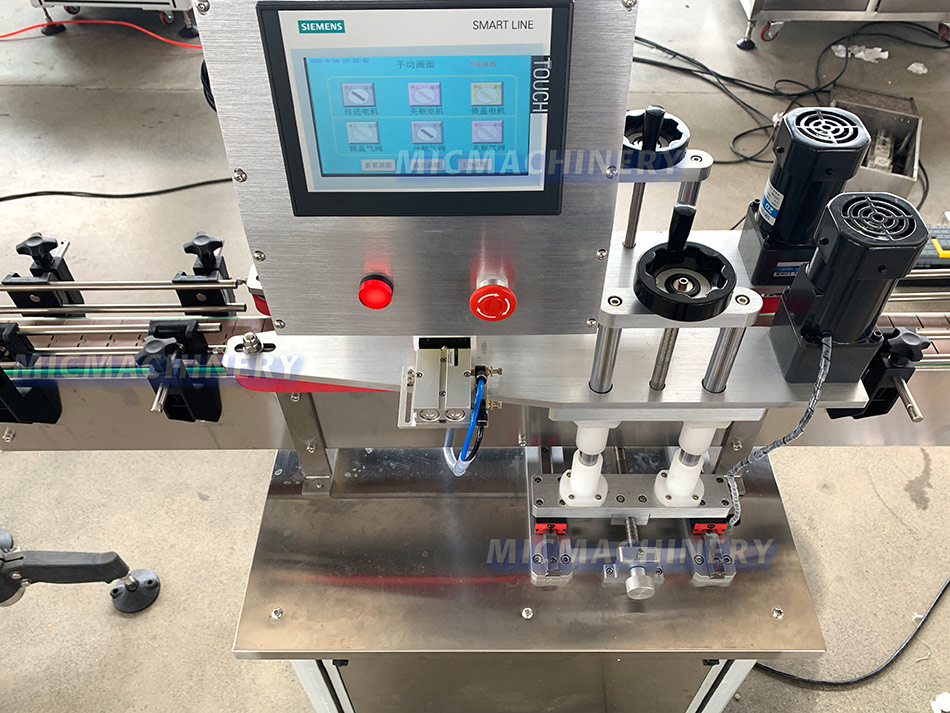
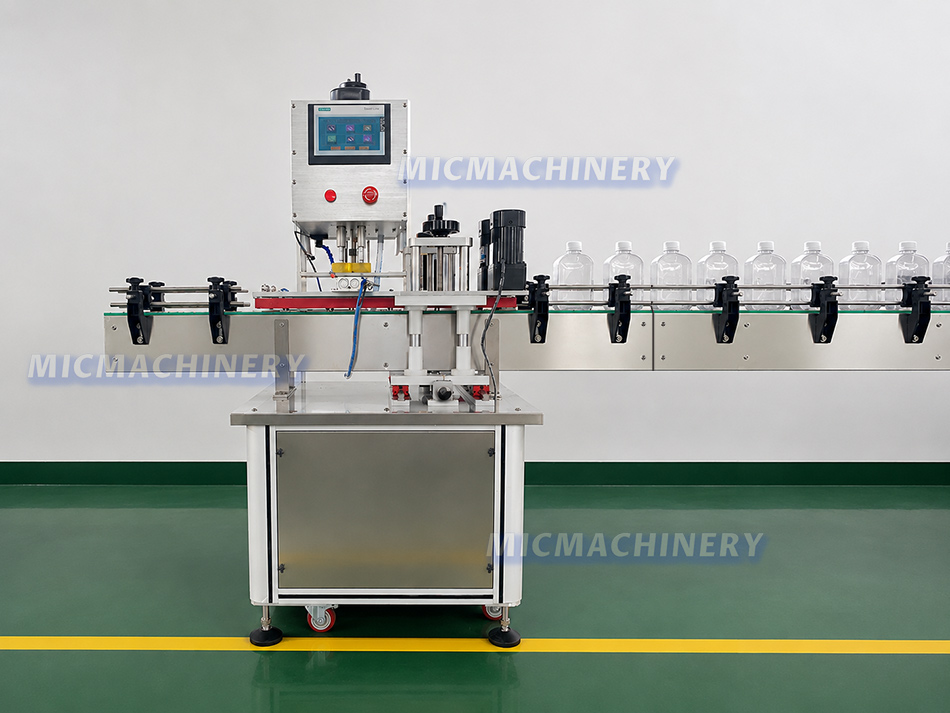
The Inline Capping Machine is designed to perform continuous capping without interrupting product flow.
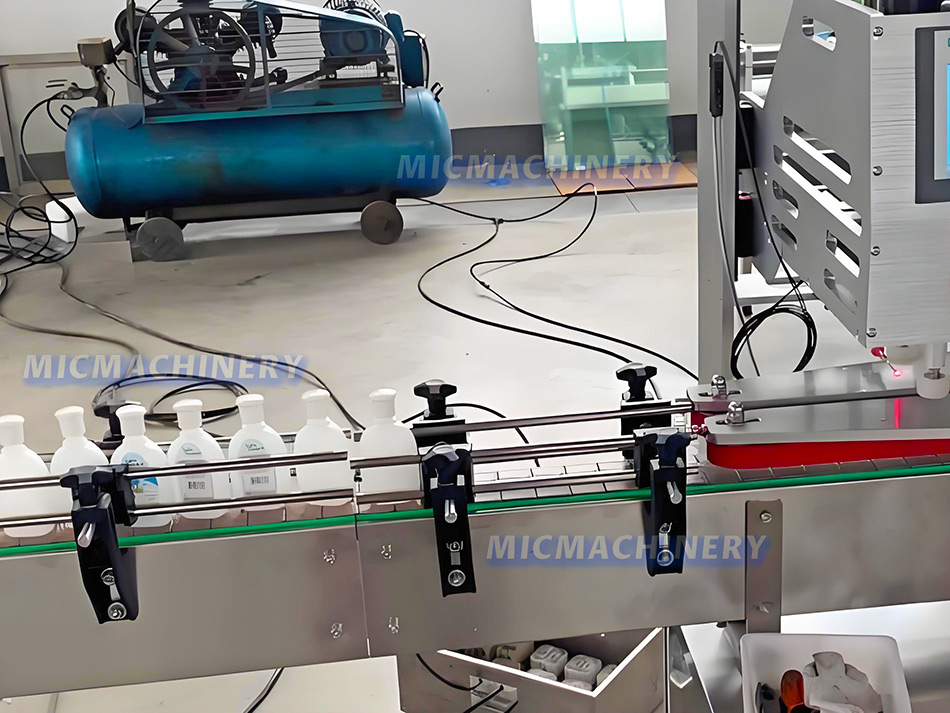
Filled bottles enter the machine through the conveyor system and are guided into the capping area. Side belts or bottle stabilization devices hold the containers securely during the capping process to prevent movement.
Caps are automatically sorted and delivered through a cap feeding system. Once positioned on the bottle neck, the capping head engages the closure and applies controlled torque to tighten the cap according to preset specifications.
Multiple capping wheels or servo-driven heads may work simultaneously to ensure uniform sealing. The machine automatically adjusts pressure and torque to accommodate slight variations in bottle or cap dimensions.
After capping, containers continue directly to labeling, coding, inspection, or packaging stations. The continuous-flow design eliminates unnecessary stops and contributes to stable production efficiency.
Video Demonstration
Applications
Inline capping machines are widely used across industries requiring reliable bottle closure and efficient packaging operations.
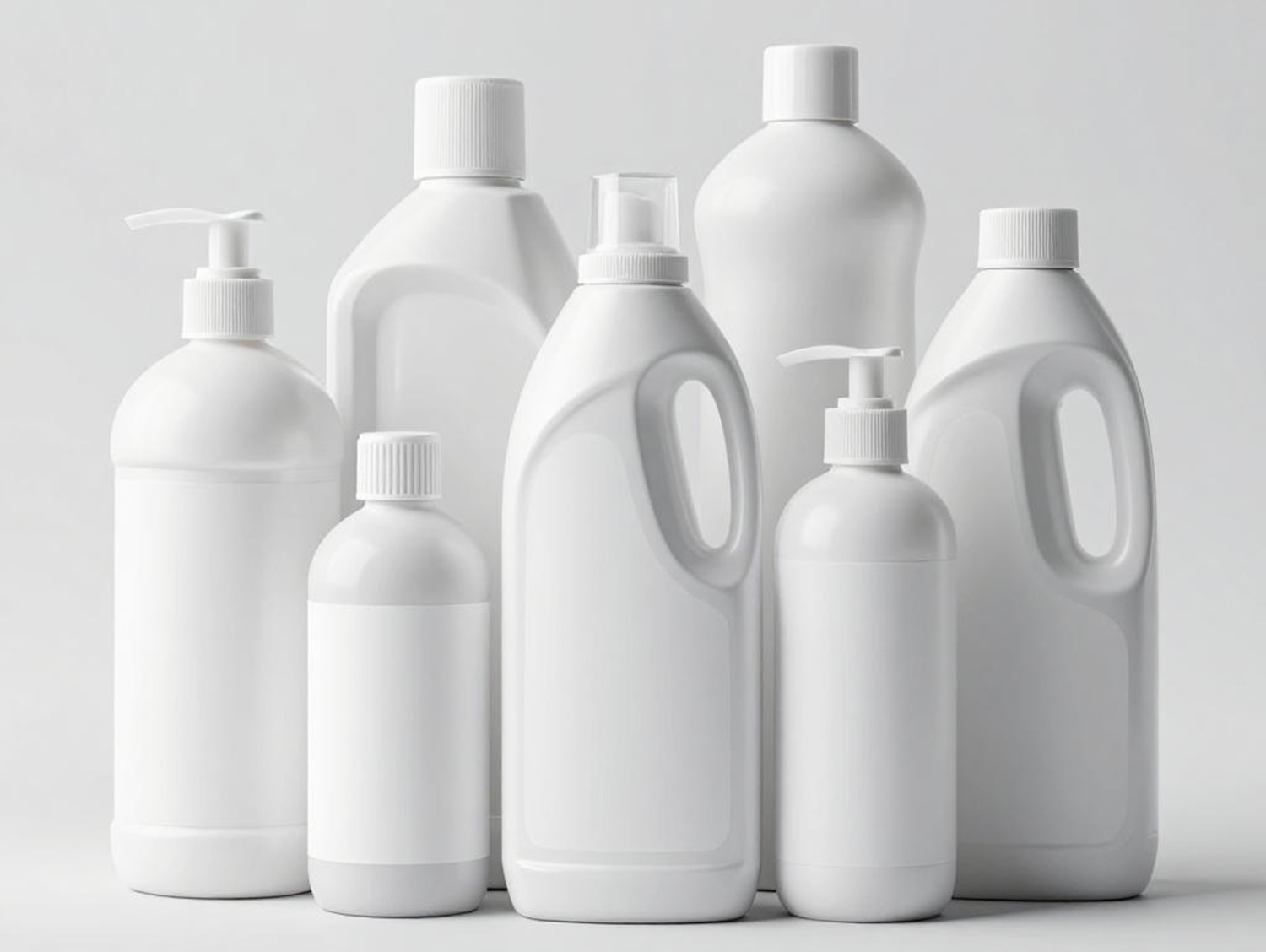
In the chemical industry, the machine is commonly used for detergents, industrial cleaners, solvents, lubricants, automotive fluids, and agricultural chemicals. Reliable capping helps prevent leakage while protecting product quality during distribution.
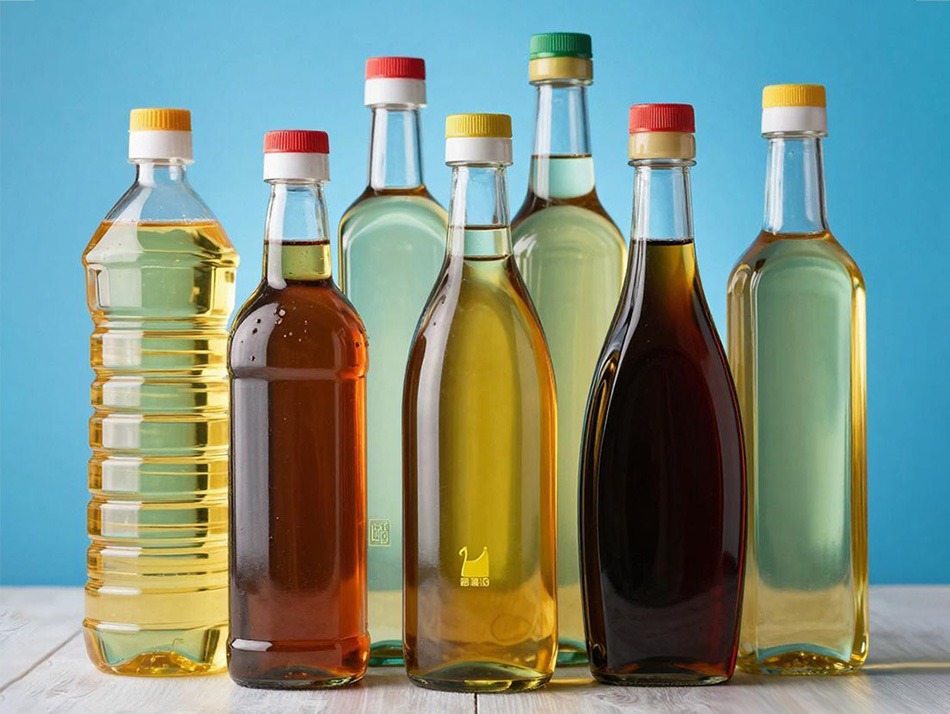
Food and beverage manufacturers use inline capping systems for sauces, edible oils, syrups, liquid seasonings, beverages, and nutritional supplements. Consistent cap application supports product freshness and package security.
Pharmaceutical packaging lines utilize inline capping equipment for medical liquids, disinfectants, syrups, and healthcare formulations where package integrity and contamination prevention are essential.
Cosmetic and personal care companies employ these machines for shampoo, lotion, liquid soap, skincare products, and fragrances. The ability to handle multiple container formats makes inline cappers particularly useful in this sector.
Household product manufacturers also use inline capping systems for cleaning solutions, fabric care products, and specialty liquid formulations.
Customization Options
Production requirements vary significantly between industries, making customization an important consideration when selecting capping equipment.
Item
Description
Servo-driven or pneumatic sealing systems
Ensures stable and precise sealing performance for different production requirements
Torque-controlled screw sealing heads
Provides accurate tightening force for consistent sealing quality
Induction sealing modules
Supports airtight and tamper-evident packaging applications
Multi-head rotary sealing structure
Designed for high-capacity production lines with continuous operation
Automatic cap feeding system
Equipped with vibration or elevator-type cap sorting and feeding
Conveyor and bottle handling customization
Adjustable conveyor height and bottle transfer system design
Corrosion-resistant version
Suitable for chemical production environments and corrosive applications
System configuration
Each system is customized based on bottle type, cap type, and production capacity
Customization helps ensure the machine matches specific production goals while maintaining operational efficiency.
Maintenance and Operation
Proper maintenance contributes significantly to long-term machine reliability and sealing consistency.
Routine maintenance should include:
· Inspecting capping wheels and gripping components
· Cleaning cap feeding systems
· Checking conveyor alignment
· Verifying torque calibration
· Inspecting pneumatic and electrical systems
· Lubricating moving components according to maintenance schedules
· Monitoring cap feeder performance
Operators should periodically verify cap tightness and alignment to ensure product packaging meets quality standards.
FAQ
1)What types of caps can it handle?
Depending on configuration, the machine can process screw caps, pump caps, trigger caps, flip-top caps, child-resistant caps, and specialty closures.
2)Can it handle different bottle sizes?
Yes. Adjustable guide rails, capping heads, and bottle stabilization systems allow the machine to accommodate a wide range of container sizes.
3)Is the machine suitable for chemical products?
Yes. Corrosion-resistant configurations are available for chemical, industrial, and agricultural liquid packaging applications.
4)How is capping torque controlled?
Torque can be adjusted mechanically or through servo-driven systems, depending on the machine configuration and application requirements.
5)What production speeds are available?
Production speed depends on bottle dimensions, cap type, and machine configuration, with capacities ranging from small-batch production to high-output industrial packaging lines.
Inline Capping Solutions from MIC Machinery
MIC Machinery provides Inline Capping Machines designed for flexible bottle handling, reliable torque control, and stable continuous production. These systems offer efficient capping performance while supporting seamless integration into automated manufacturing environments.