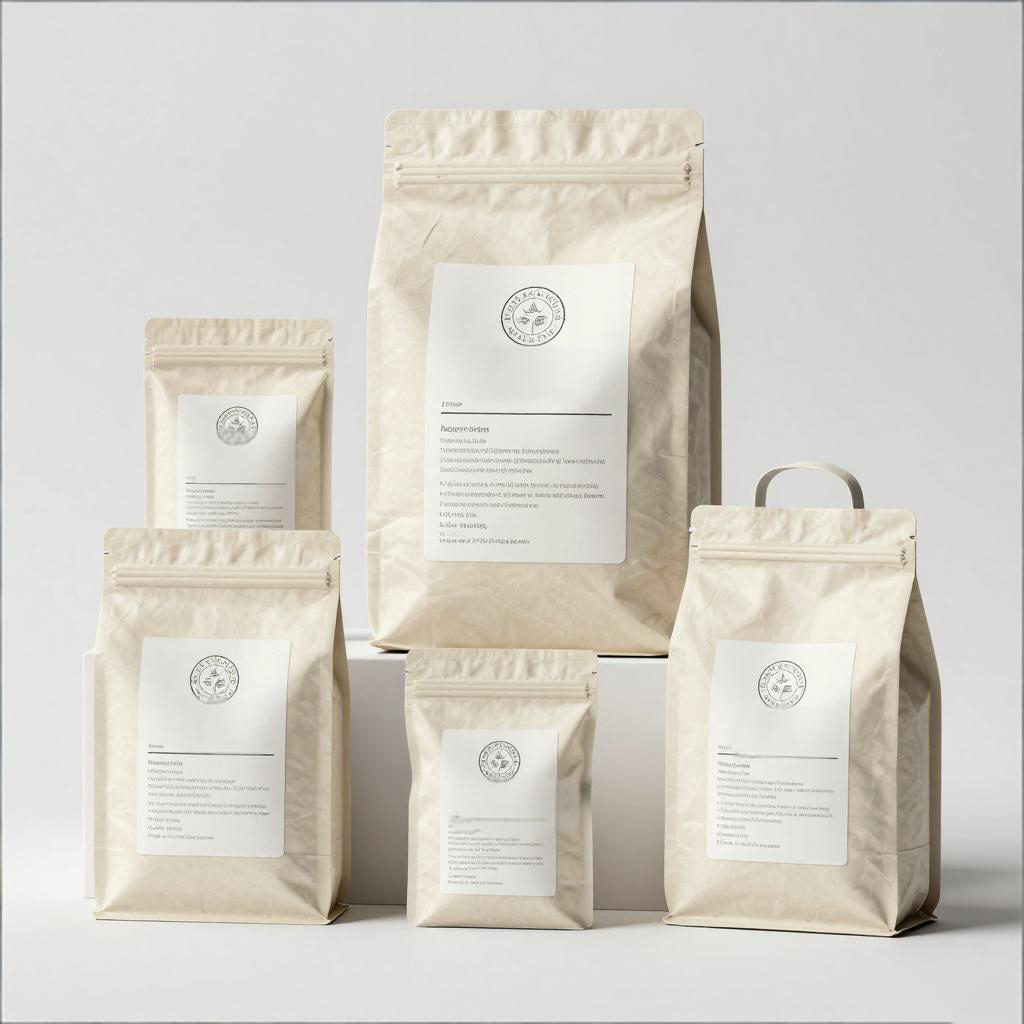
Granule Filling Machine——Industrial Solid Particle Packaging System
Granule packaging is a critical process in industries where product consistency, dosing accuracy, and flow stability directly affect final product quality. Unlike liquid or paste filling, granular materials behave unpredictably depending on particle size, humidity, and density. They can bridge, stick, or flow unevenly if the system is not properly engineered.
The Granule Filling Machine developed by MIC Machinery is designed for controlled and stable dosing of free-flowing and semi-free-flowing granular products. It is widely used in food processing, agricultural materials, chemical granules, and industrial additive packaging. The system focuses on accurate weighing, stable feeding, and reduced material loss during continuous operation.
In modern production environments, granule filling is not only about speed but also about maintaining consistency across different batch densities and ensuring clean, dust-free operation.
The granule filling process begins with material feeding into a storage hopper. Depending on the product type, vibration or mechanical agitation may be applied to ensure smooth flow and prevent bridging or clogging. Materials such as sugar, fertilizer granules, or plastic pellets may behave differently, so feeding stability is a key design consideration.
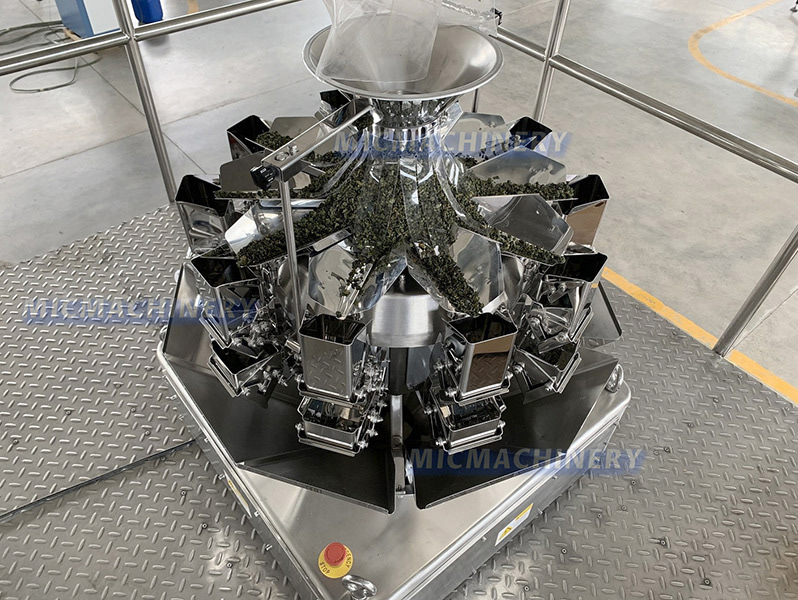
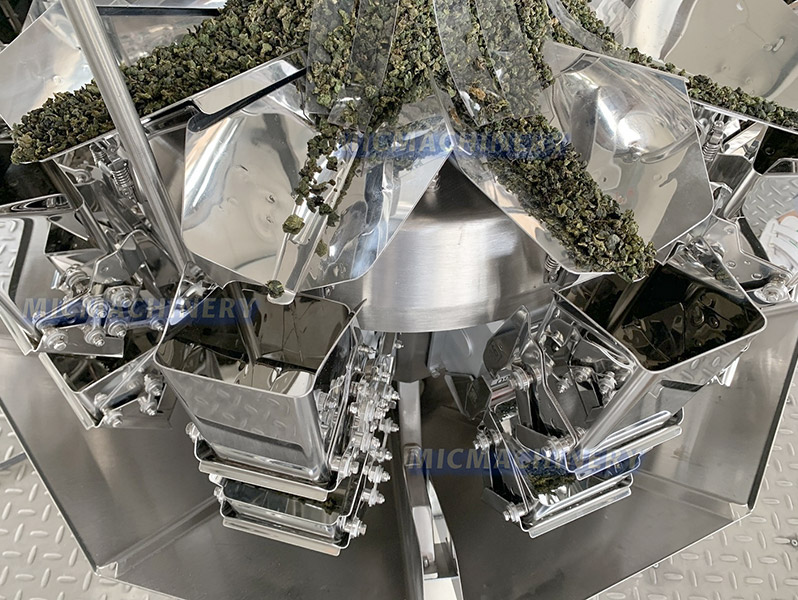
Once the material enters the dosing system, it is measured using either a weighing system or volumetric cups. In weighing systems, multiple load cells continuously monitor product weight and adjust feeding speed in real time to ensure accuracy. This method is especially useful for products with inconsistent density.
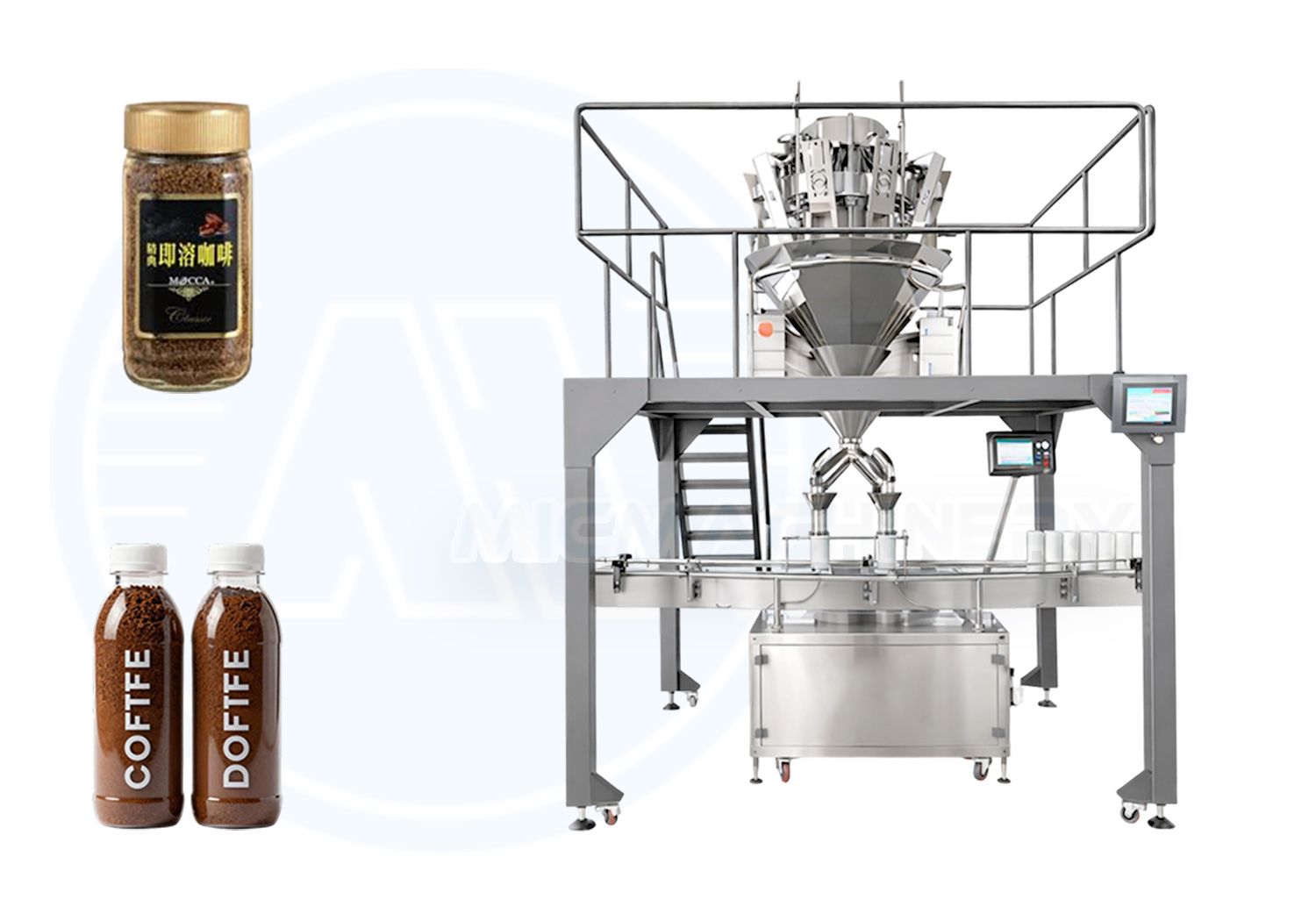
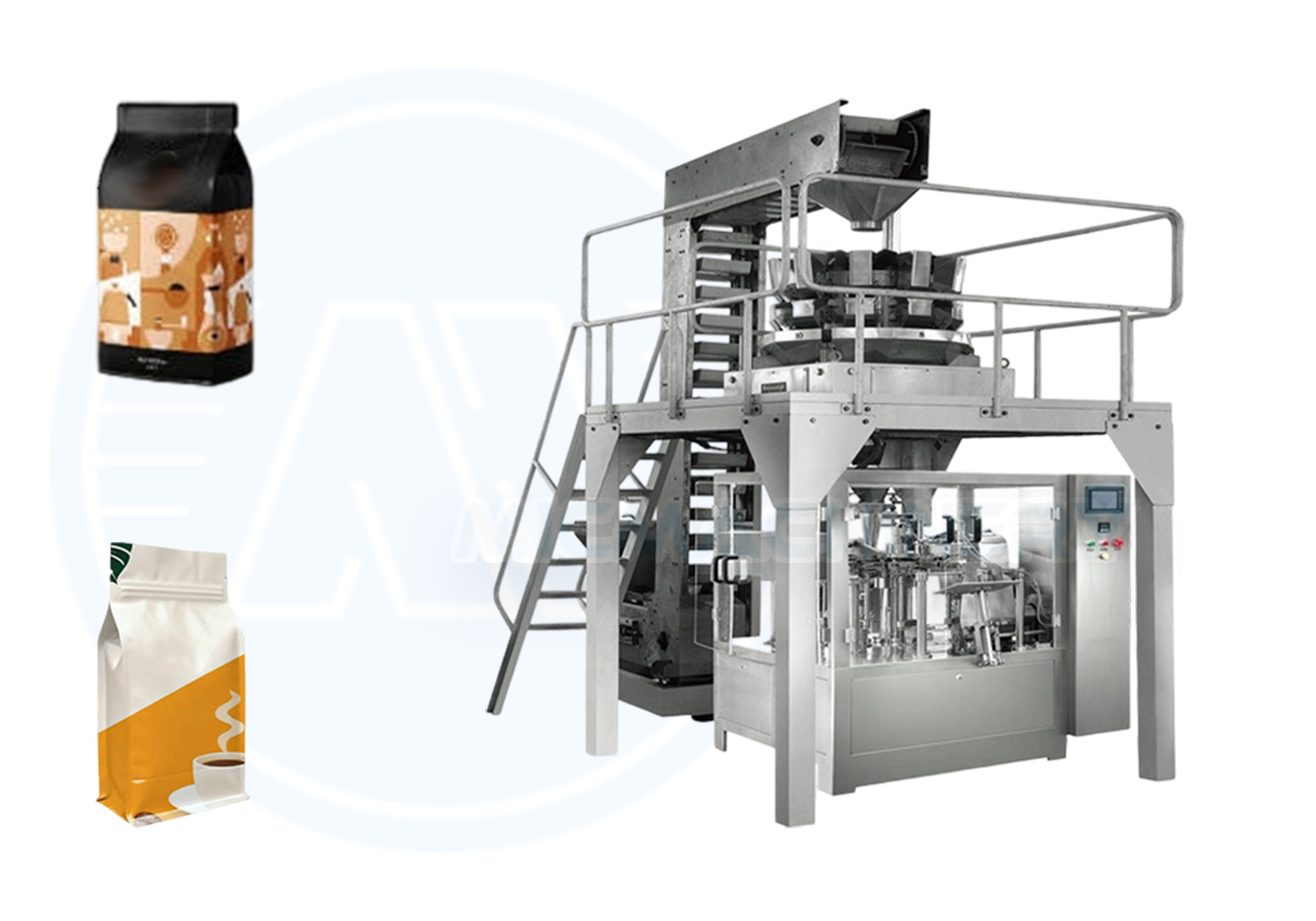
After reaching the target weight, the system releases the measured granules into the container through a controlled discharge gate. For bag packaging systems, the material is dropped directly into pre-formed bags or pouches. For bottle or jar filling, a guided chute ensures precise positioning and minimal spillage.
During high-speed operation, dust control systems may activate to capture fine particles and maintain a clean working environment. Once filling is complete, containers move to sealing, stitching, or capping systems depending on packaging type. The entire process is synchronized through PLC control to maintain stable production flow.
Video Demonstration
Applications
The Granule Filling Machine is widely used across multiple industries where solid particle packaging is required.
Typical applications include:
Agricultural fertilizers
Pesticide granules
Food ingredients (sugar, salt, spices)
Plastic pellets (resins, polymers)
Chemical additives
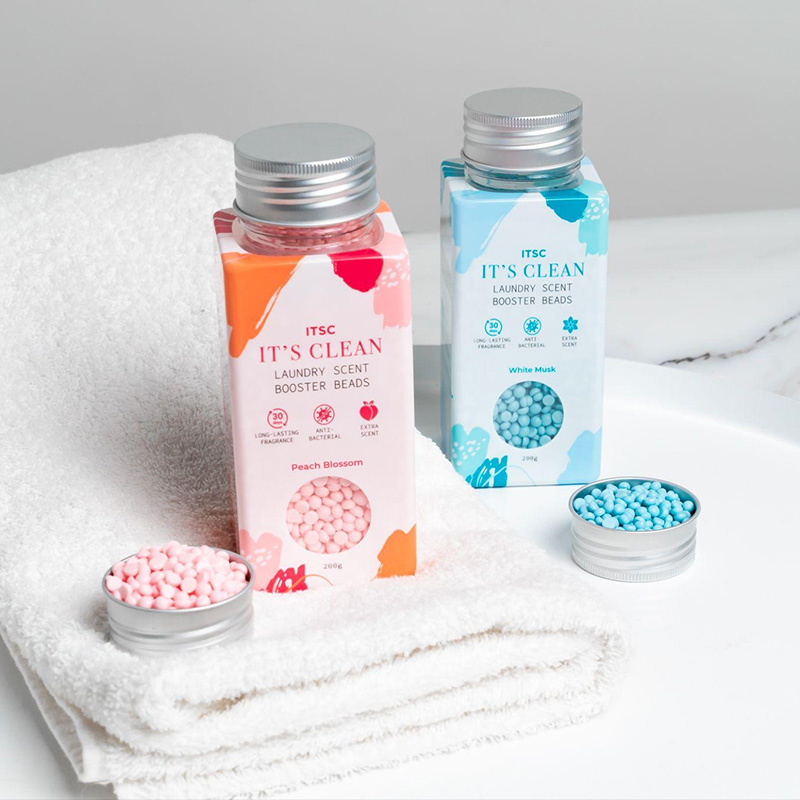
Detergent granules
Coffee and tea granules
Pet food pellets
Industrial abrasive materials
Pharmaceutical granules
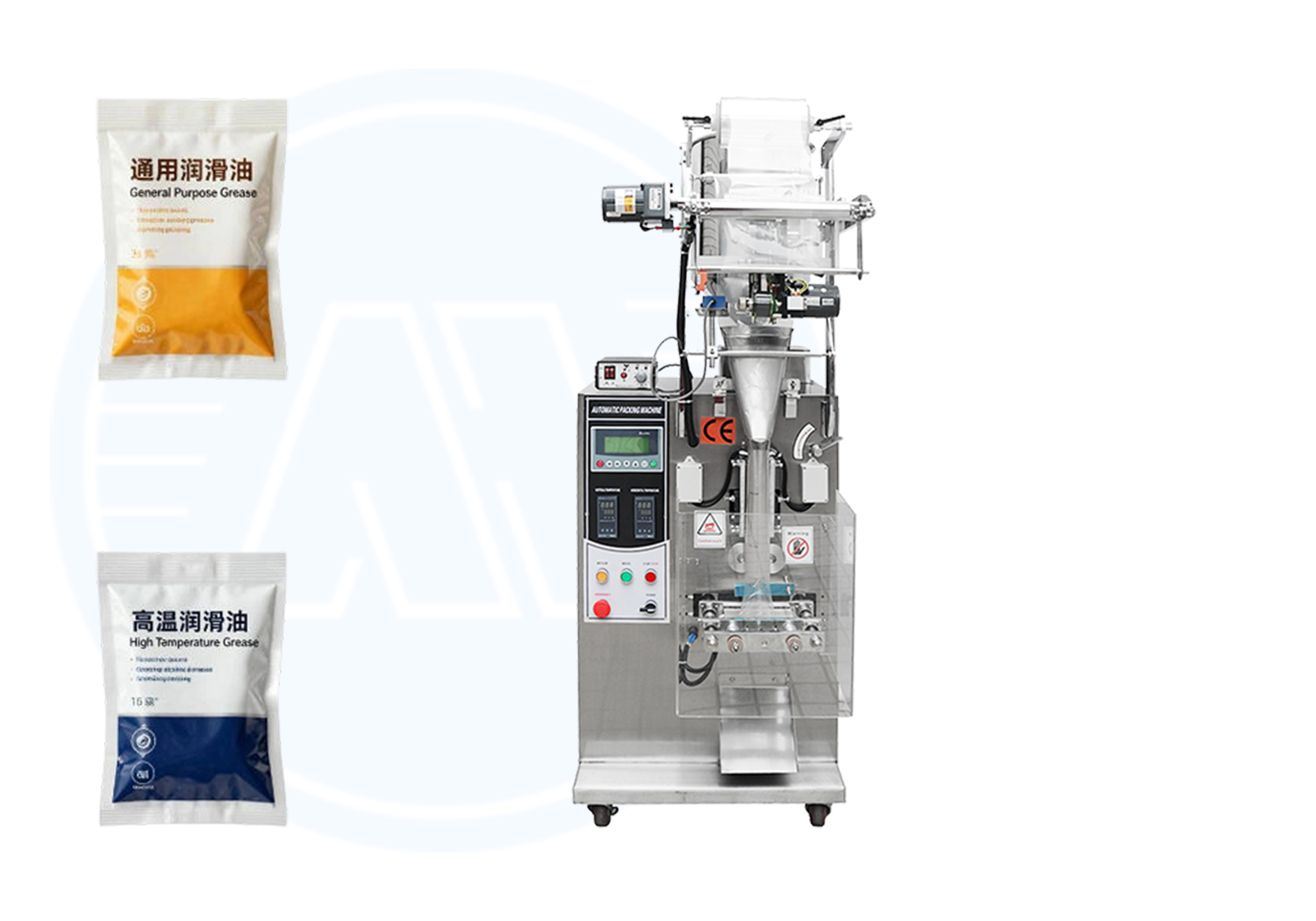
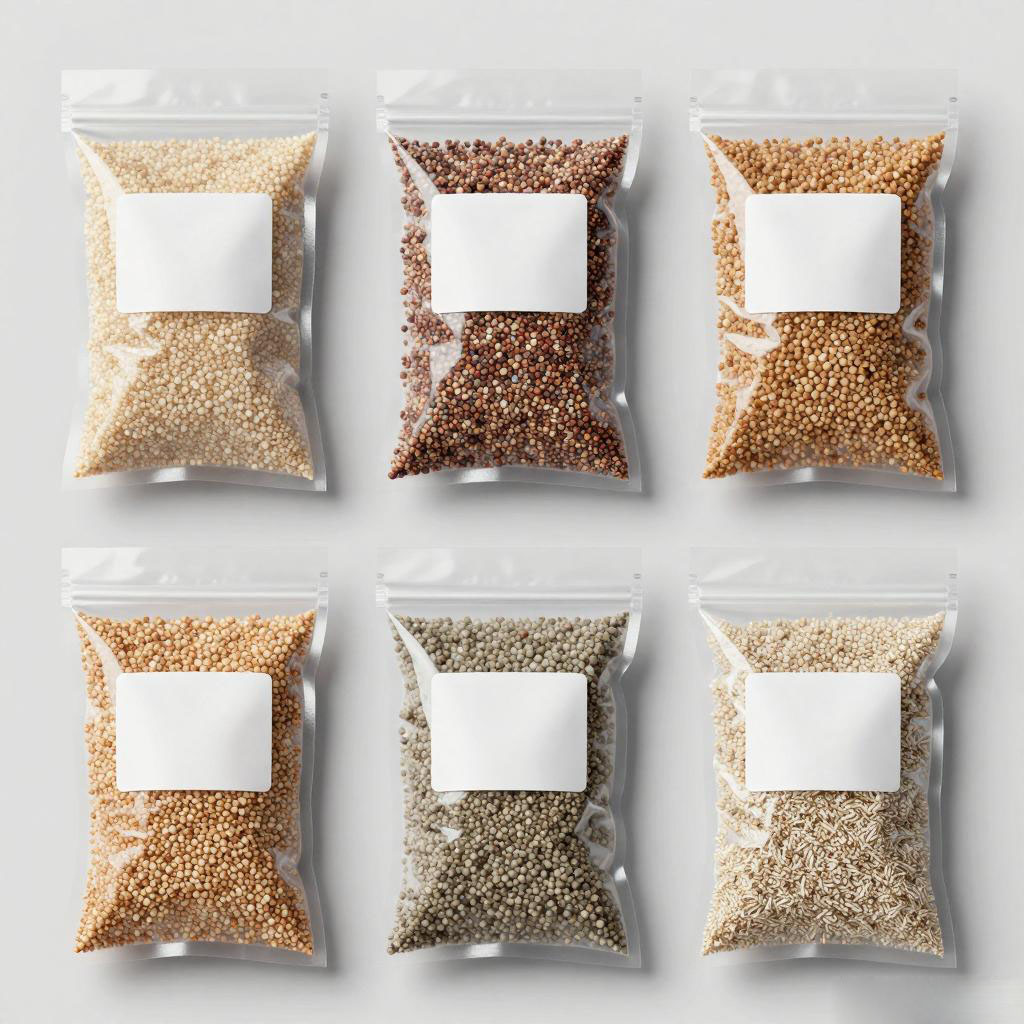
The system supports bags, pouches, bottles, and jars, making it suitable for both retail packaging and industrial bulk supply.
Machine Overview
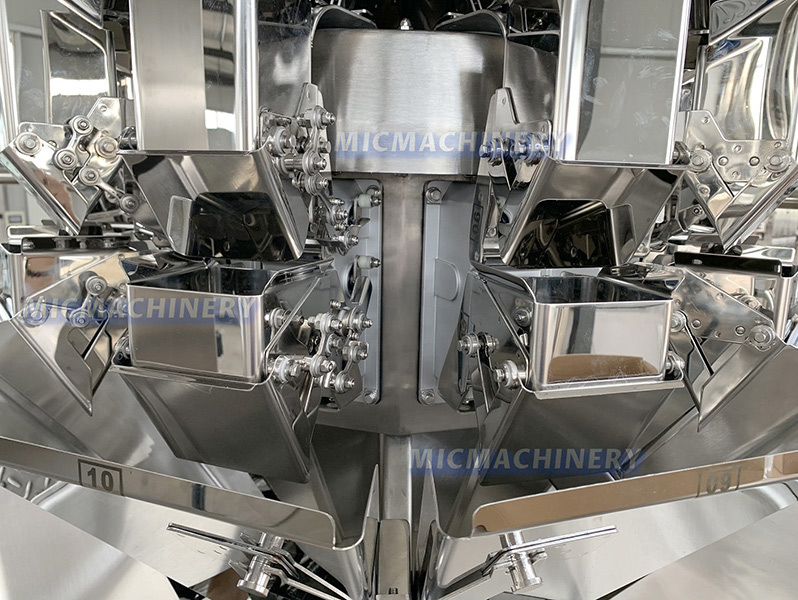
The granule filling system is typically designed using weighing-based (checkweigher or multi-head scale), volumetric cup filling, or auger-based dosing technology depending on material characteristics. Weighing systems are most common in high-precision applications, as they compensate for density variations in real time. Volumetric systems are used in stable-density materials where high-speed output is prioritized.
MIC Machinery integrates stainless steel SUS304 construction with optional SUS316 contact parts for chemical or food-grade applications. The feeding system is designed with vibration-assisted hoppers or belt conveyors to ensure smooth material flow into the weighing or dosing units. Anti-blocking structures are used to prevent bridging in powders with irregular particle shapes.
For dusty or lightweight granules, the system can be equipped with dust collection ports or enclosed filling chambers. This reduces contamination and improves operator safety during continuous production. The discharge system uses controlled gates or pneumatic valves to ensure clean and accurate release of measured material into containers.
The machine can be used as a standalone filling unit or integrated into full packaging lines including bag forming, sealing, labeling, and carton packaging systems.
Customization Options
Granule packaging systems vary significantly depending on material flow characteristics and production requirements. MIC Machinery provides multiple customization options.
Multi-Head Weighing System
Improves speed and accuracy for high-volume production lines.
Volumetric Cup System
Cost-effective solution for stable-density granules.
Auger Feeding System
Suitable for fine granules or powder-like materials with controlled flow.
Dust-Free Enclosure Design
Reduces airborne particles and improves workplace safety.
Anti-Blocking Hopper System
Prevents bridging in irregular or sticky granules.
Multi-Format Packaging Compatibility
Supports bags, bottles, and rigid containers with quick adjustment.
Full Production Line Integration
Can be connected with feeding elevators, sealing machines, labeling systems, and carton packaging equipment.
Maintenance
Granule filling machines require regular maintenance to ensure stable dosing accuracy and smooth material flow. Daily cleaning involves removing residual particles from hoppers, chutes, and discharge gates to prevent buildup and blockage.
Weekly inspections should focus on weighing sensors, vibration systems, and mechanical gates. Any dust accumulation around sensors should be cleaned to maintain measurement accuracy.
For long-term operation, calibration of load cells is recommended to ensure consistent weighing performance. Bearings and moving parts should be lubricated periodically to reduce wear under continuous vibration conditions.
Proper maintenance not only improves machine lifespan but also ensures stable production efficiency and consistent product quality.
FAQ
Q1: Can the machine handle different granule sizes? Yes. It can be configured for fine, medium, or coarse particles.
Q2: Is weighing more accurate than volumetric filling? Yes. Weighing systems compensate for density variations and provide higher accuracy.
Q3: Can it handle dusty materials? Yes. Dust collection and enclosed systems can be added.
Q4: What packaging types are supported? Bags, pouches, bottles, and jars.
Q5: Can it be used in food production? Yes. SUS304 or SUS316 configurations are available for food-grade applications.
Q6: Is full production line integration possible? Yes. It can be integrated with feeding, sealing, and packaging systems.
Industrial Granule Filling Machinefrom MIC Machinery
The MIC Machinery Granule Filling Machine is engineered for accurate, stable, and efficient packaging of solid particle materials. It is designed to meet the demands of modern industrial production lines where precision, speed, and adaptability are essential for consistent output quality.