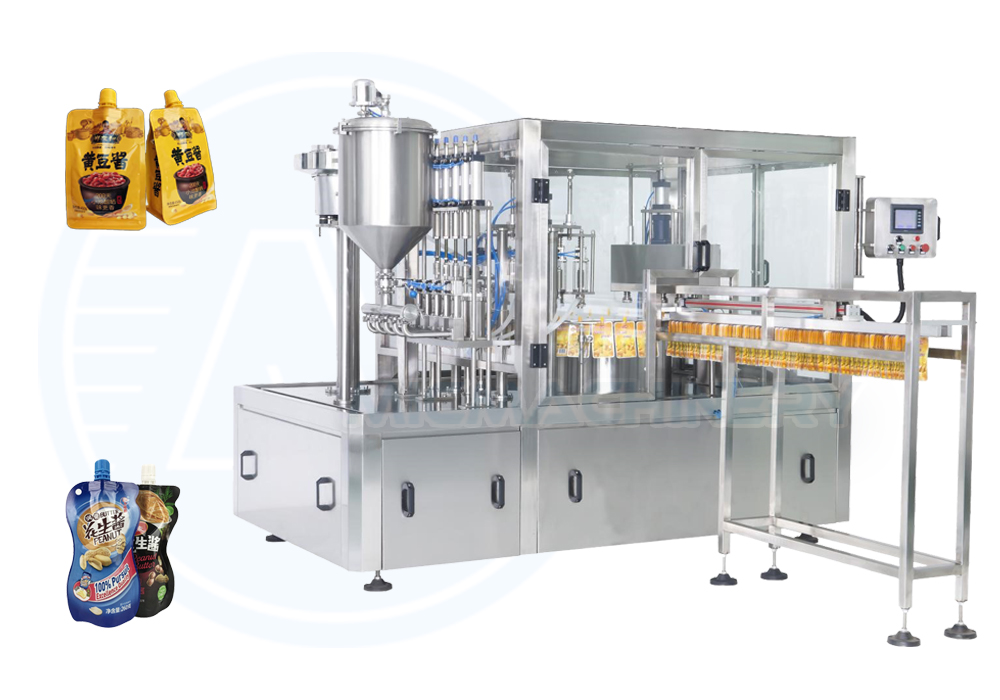
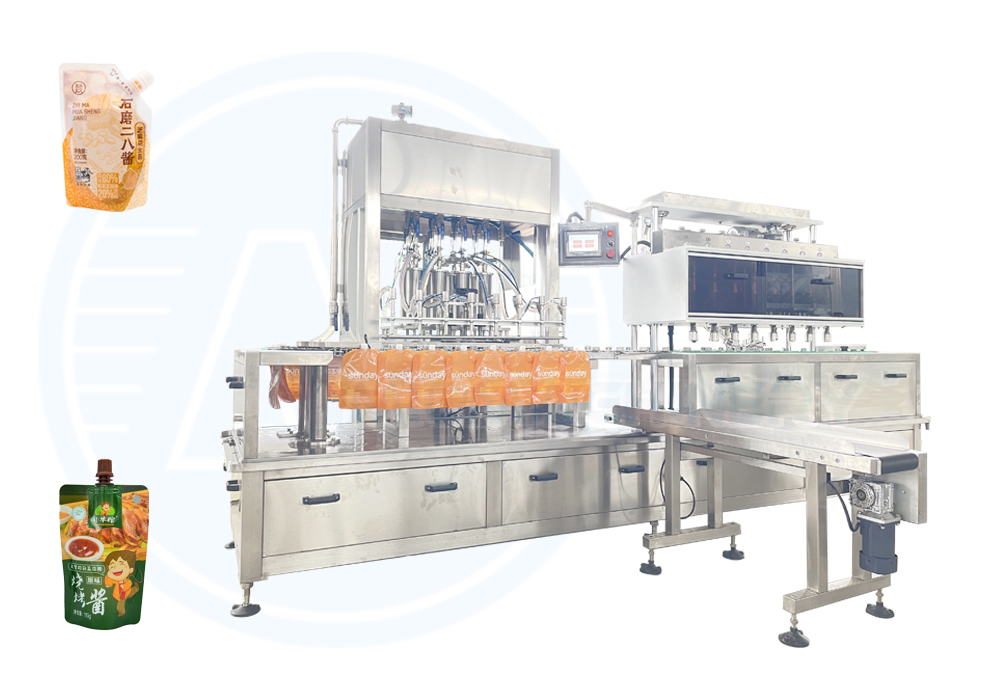
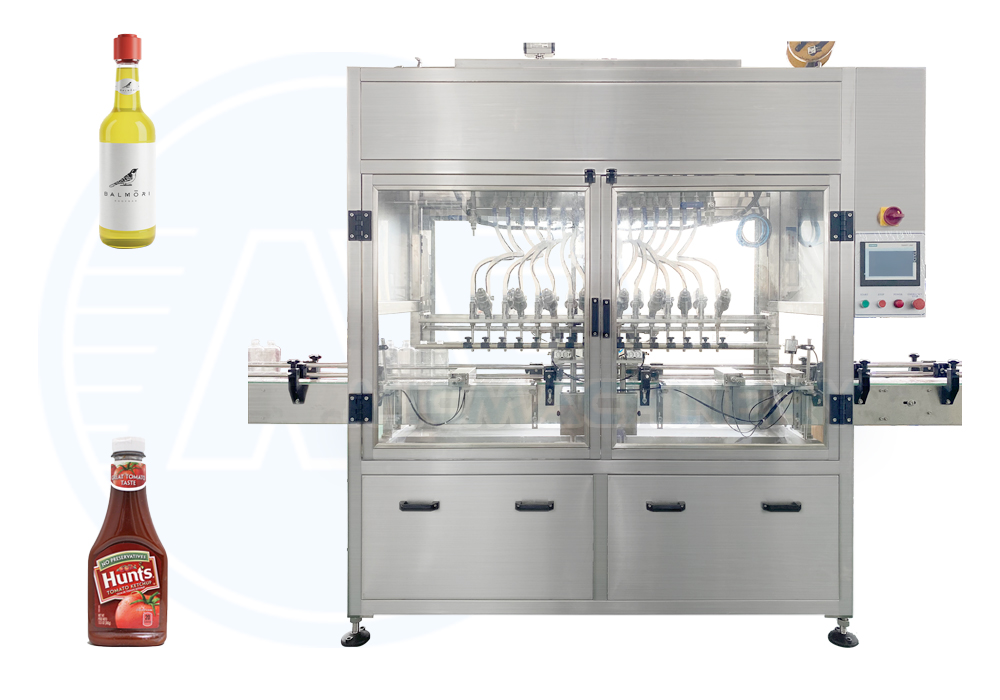
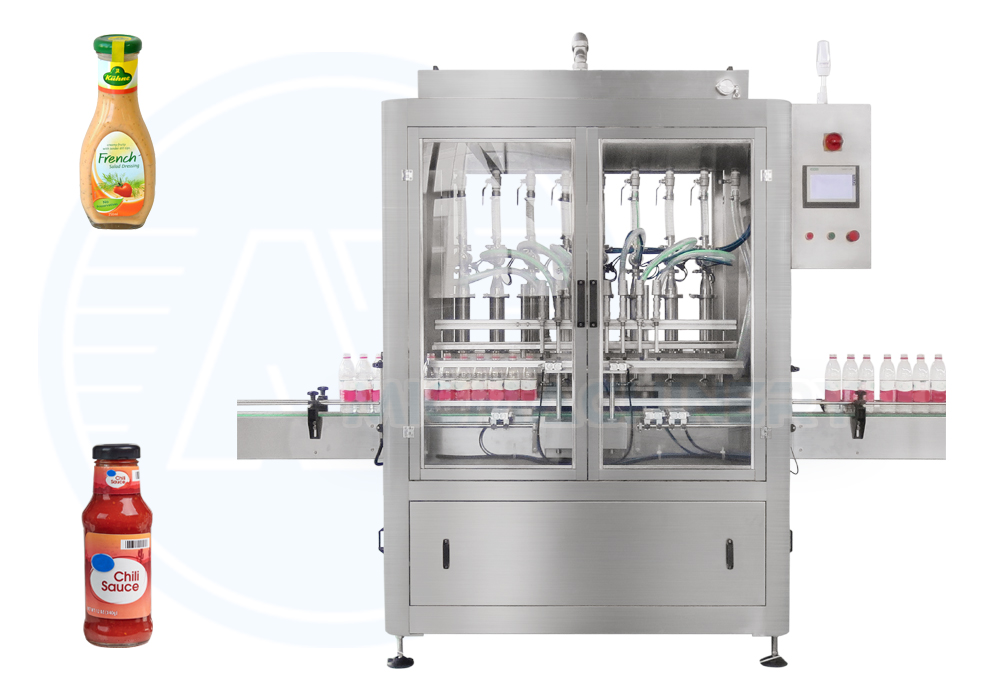
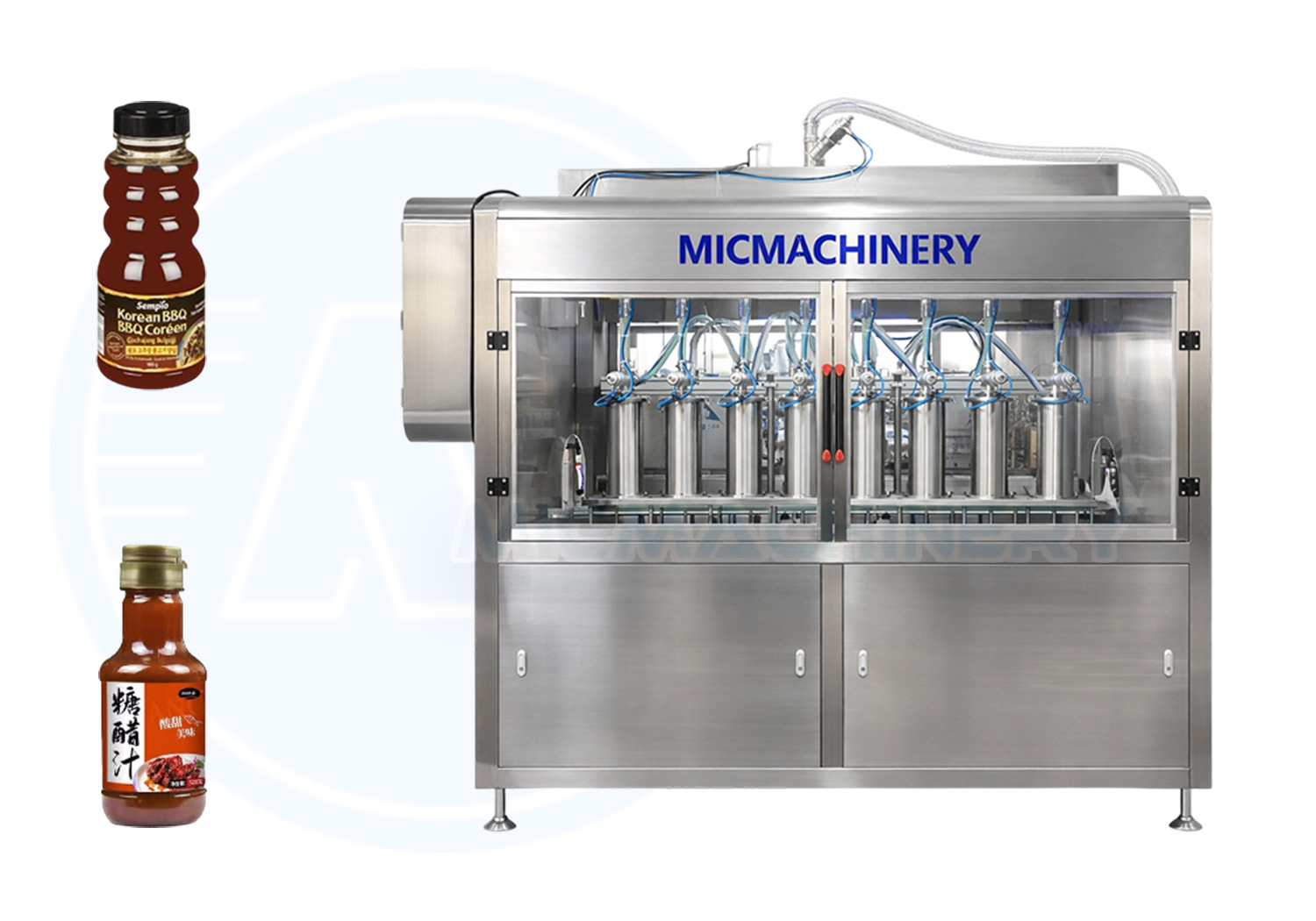
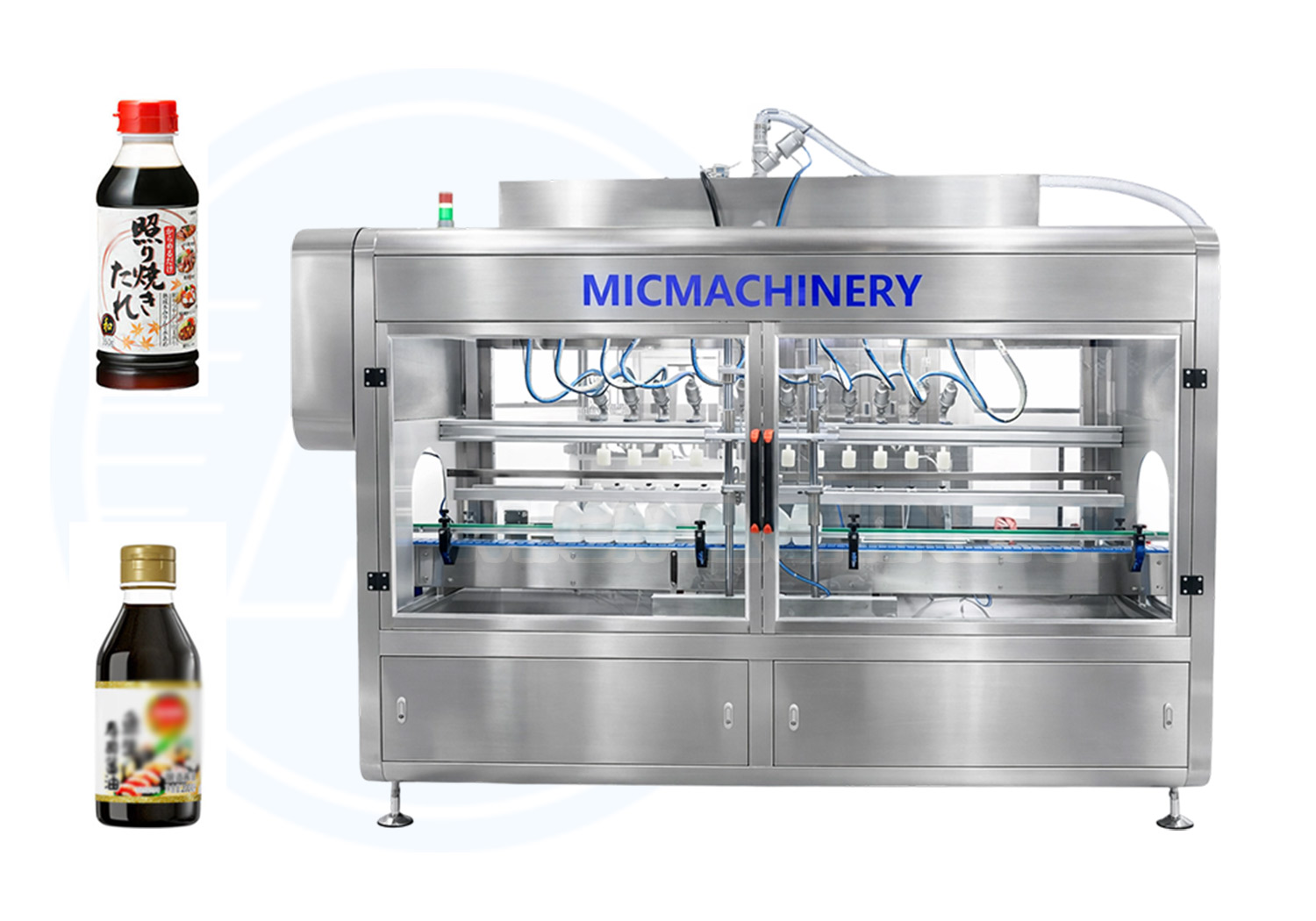
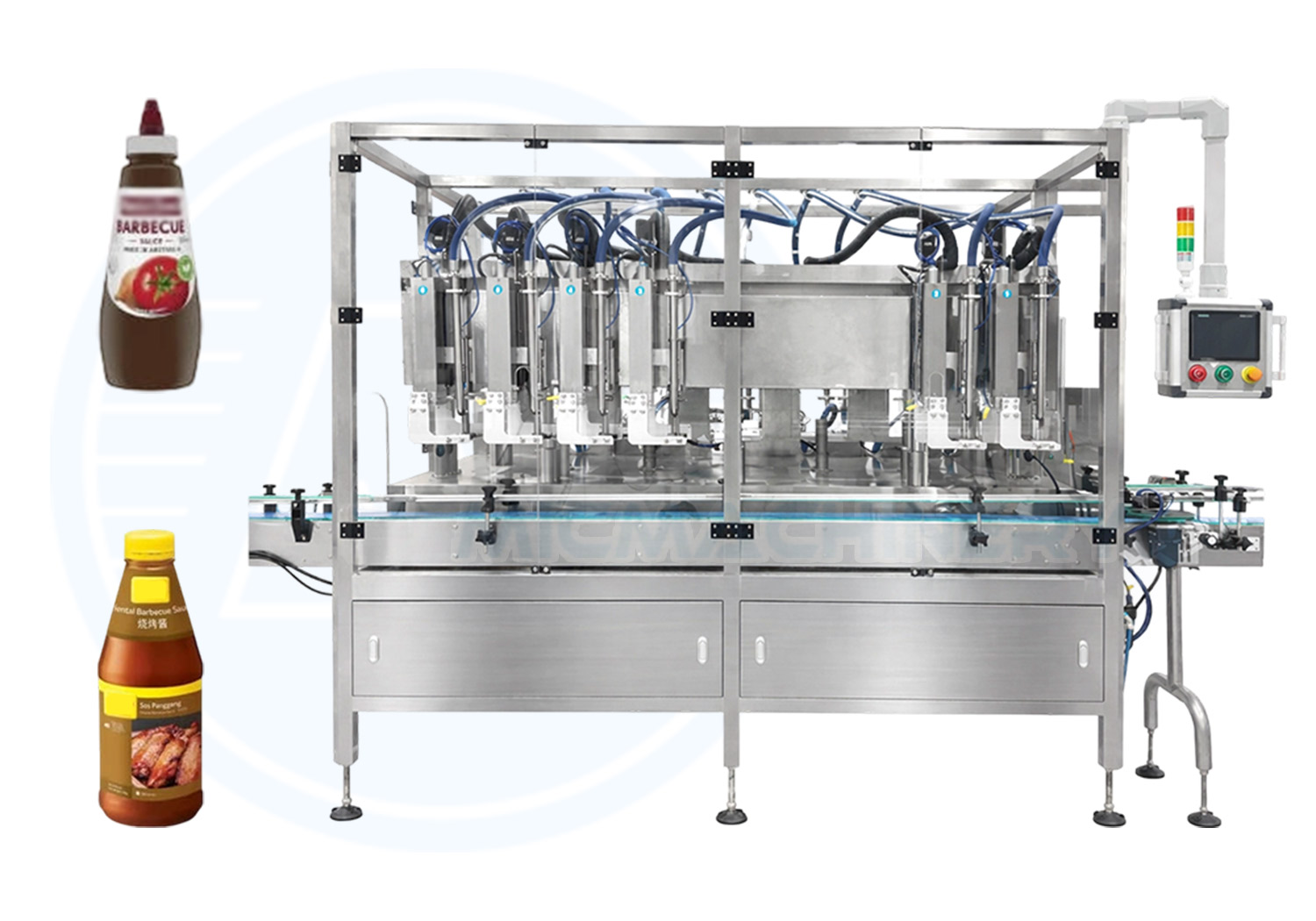
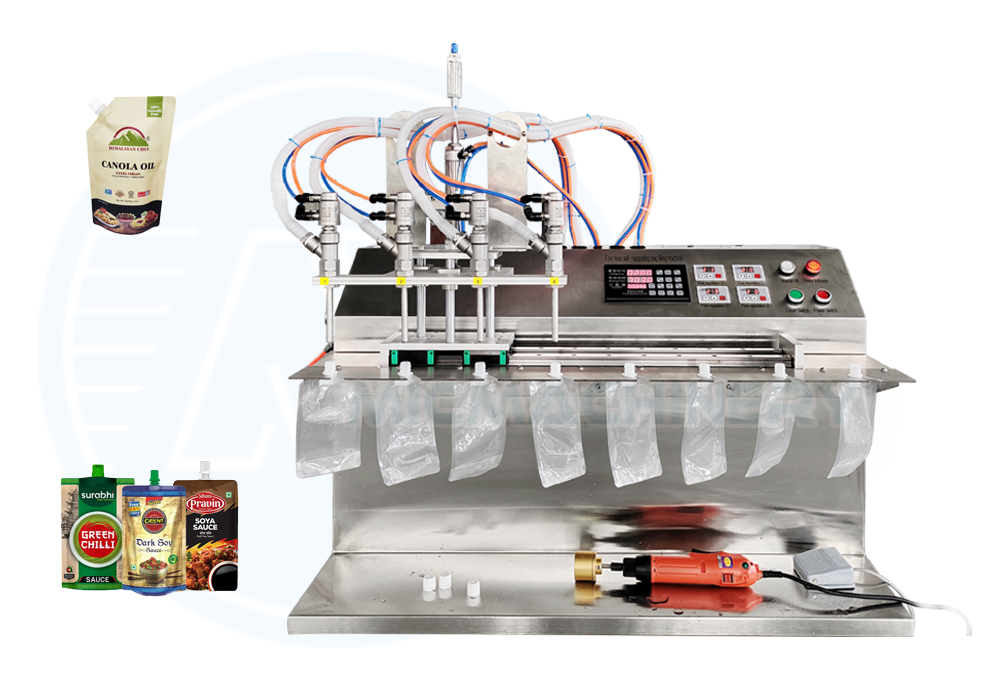
Sauce Filling Equipment——Industrial Filling System for Viscous Products By MIC Machinery
Sauce production places a different set of demands on filling technology compared with standard liquid packaging. Viscosity is inconsistent, particulates are often present, and flow behavior changes with temperature. For these reasons, standard liquid fillers are rarely sufficient in real production environments.
The Sauce Filling Equipment developed by MIC Machinery is designed specifically for these conditions. It focuses on stable metering, controlled flow, and predictable output even when handling thick or non-homogeneous products such as chili sauce, ketchup, peanut butter, and dressing-based formulations.
Rather than relying on a single filling principle, the system is built around modular dosing technologies that can be adapted to different production requirements.
The operation of Sauce Filling Equipment is based on a controlled volumetric displacement cycle designed for stability rather than speed alone.
First, the sauce is transferred from a storage tank into a buffer hopper. For high-viscosity or particle-rich products, an agitation system can be activated to maintain uniform consistency during production.
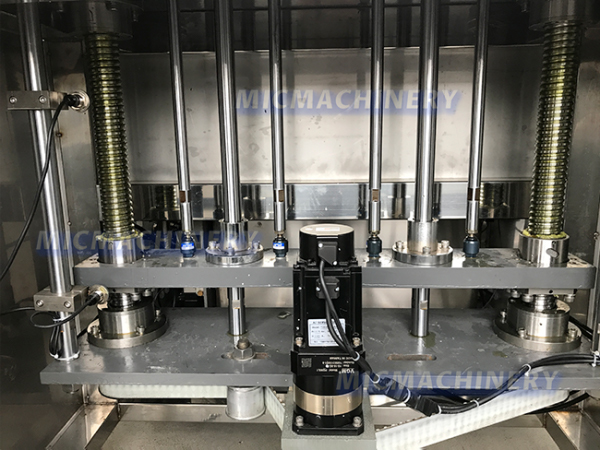
Once the system reaches operating condition, the dosing cylinders or servo units draw a preset volume of product into the measuring chamber. Bottles are then positioned under the filling nozzles through an automatic conveyor system.
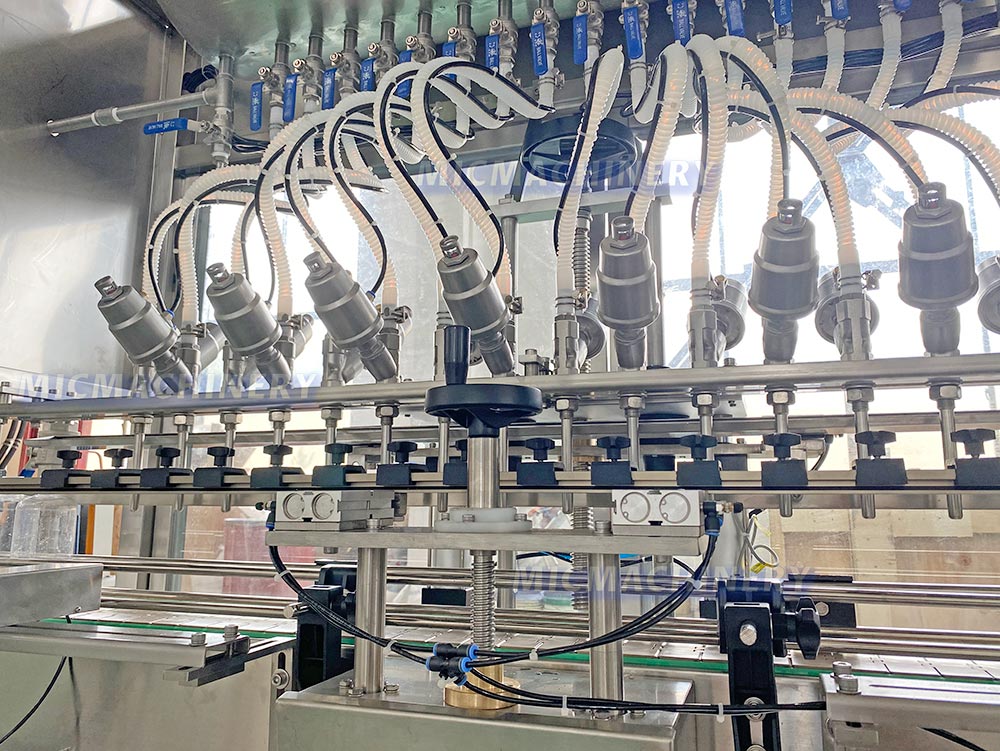
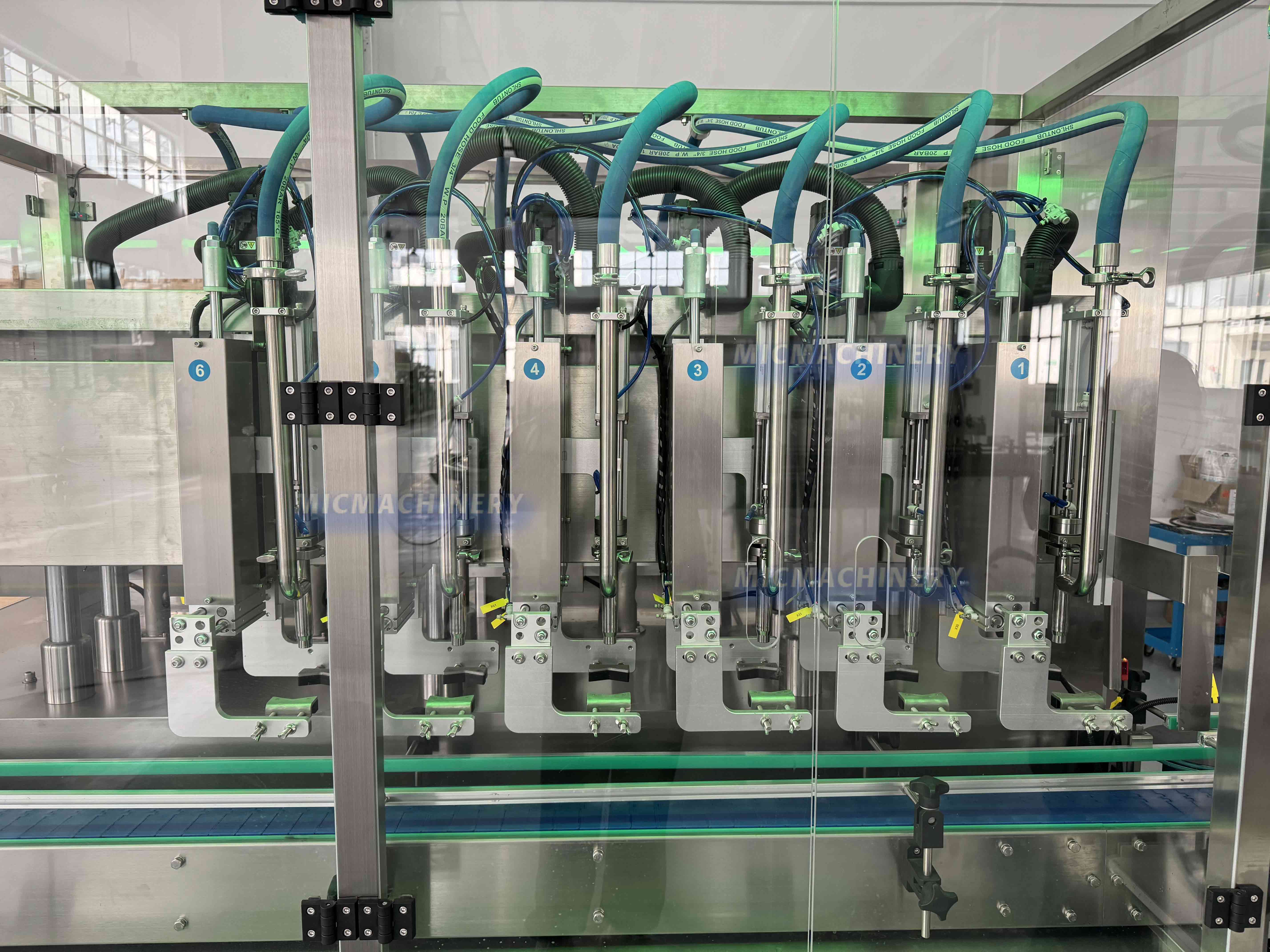
When alignment is confirmed by sensors, the filling cycle begins. The product is pushed into each container at a controlled speed, which can be adjusted based on foam tendency and viscosity level. For certain sauces, diving nozzles descend into the bottle to reduce splashing and air entrapment.
After completion, the nozzles retract and the conveyor advances the filled bottles to the next stage. The entire process is synchronized through PLC logic, ensuring consistent timing across all filling heads.
Equipment Overview
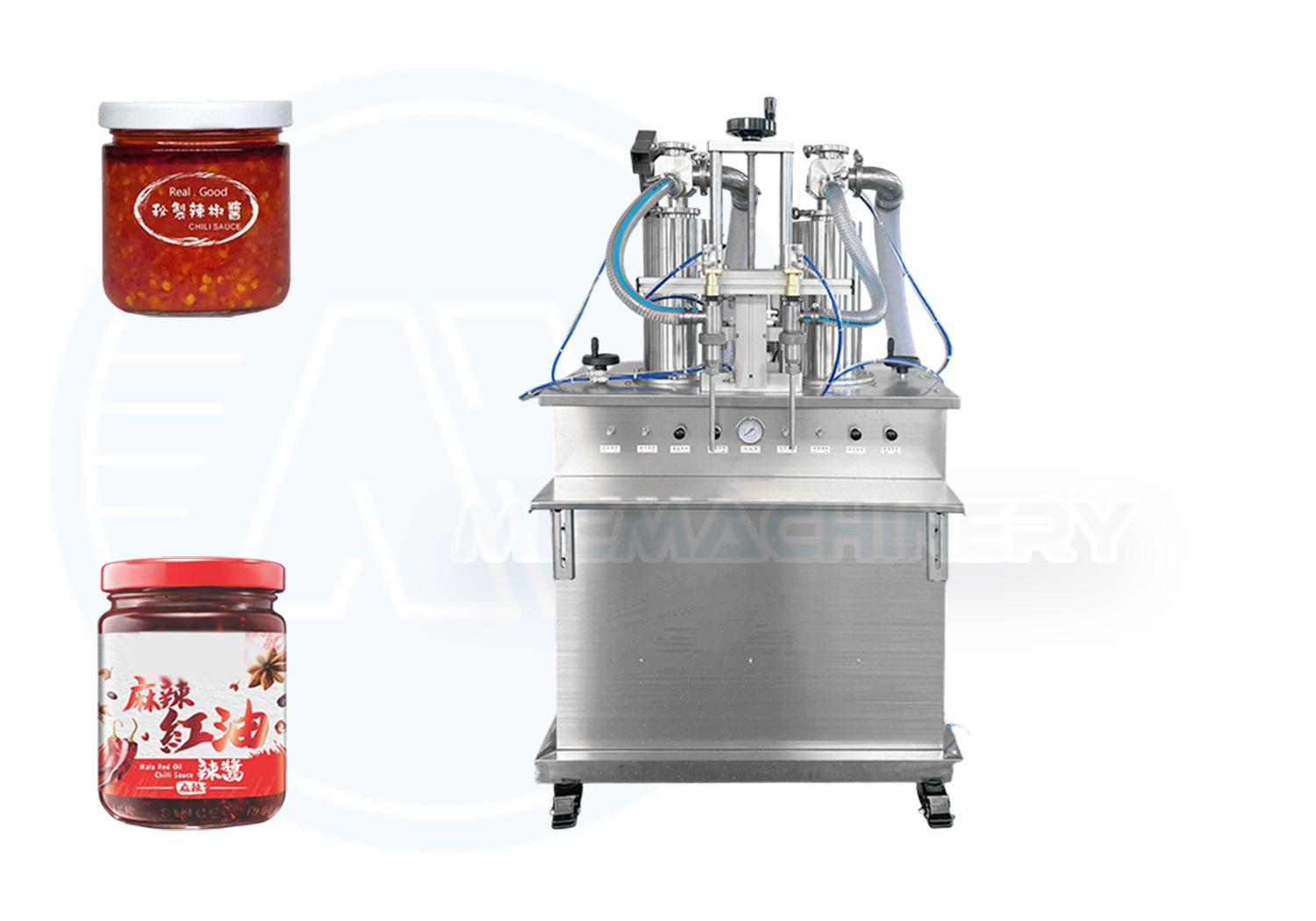
The Sauce Filling Equipment typically adopts a piston dosing system or servo-driven volumetric control, depending on accuracy requirements and production scale.
In practical operation, viscosity variation is the main challenge. Products may shift from semi-fluid to highly dense depending on temperature or formulation batch. The equipment compensates for this through controlled displacement filling, ensuring each container receives a consistent volume regardless of minor flow changes.
All product-contact components are manufactured using SUS304 or SUS316L stainless steel. This ensures chemical stability when handling acidic or oil-based sauces and allows the machine to comply with food-grade hygiene standards.
The system can be configured as a single filling unit or integrated into a fully automated production line with rinsing, capping, labeling, and cartoning equipment.
Video Demonstration
Applications
Sauce Filling Equipment is widely used across food processing and condiment industries. It is suitable for both small-scale production facilities and large automated factories.
Common applications include:
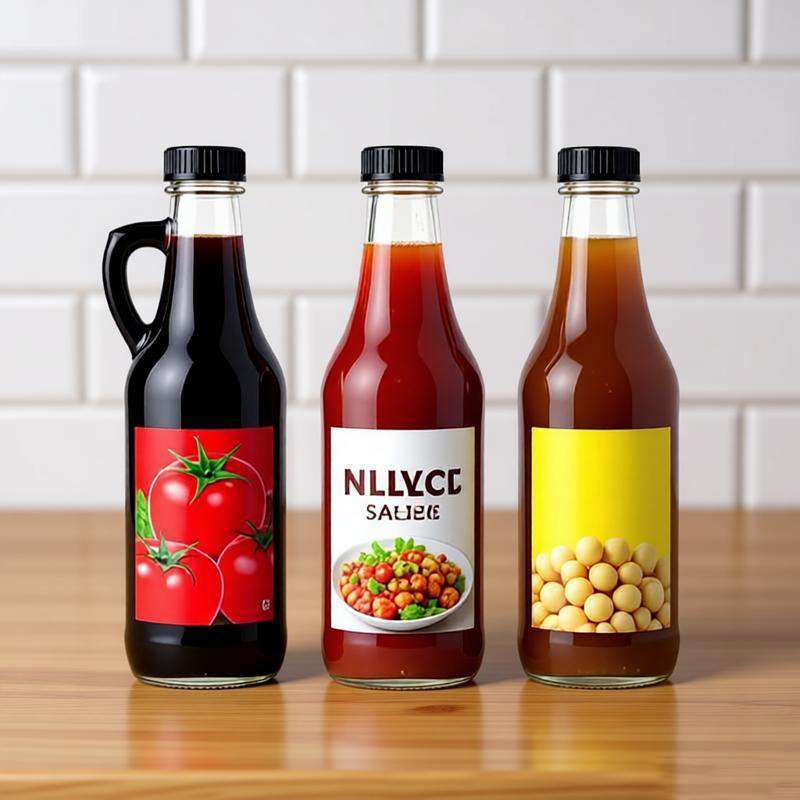
Chili sauce, hot sauce, and fermented pepper paste
Tomato ketchup and pizza sauce
Mayonnaise, salad dressing, and emulsified sauces
Peanut butter, sesame paste, and nut spreads
Soy-based thick seasoning sauces
Industrial marinades and cooking sauces
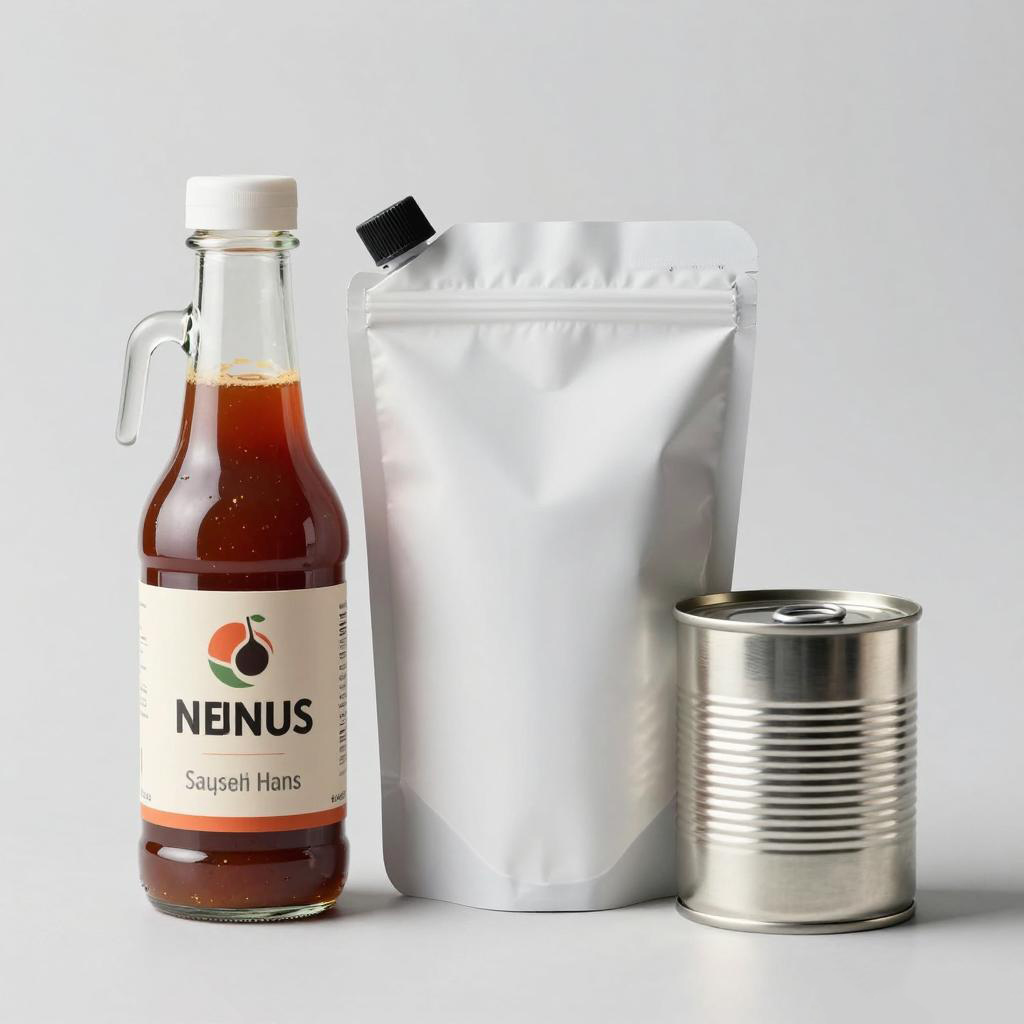
The equipment supports various container types such as glass jars, PET bottles, HDPE containers, and wide-mouth packaging formats. For products with high viscosity, jar filling is particularly common due to ease of discharge and reduced residue buildup.
Customization Options
Production requirements in sauce manufacturing vary significantly from one factory to another. For this reason, Sauce Filling Equipment is designed with flexible configuration options.
Typical customization includes:
Heated hopper systems for temperature-sensitive sauces
Agitator tanks to prevent sedimentation of particulates
Servo-driven filling for higher precision control
Explosion-proof electrical systems for special production environments
Quick-change piston sets for multiple product lines
CIP (Clean-in-Place) cleaning integration
Custom nozzle diameters for coarse or particle-rich sauces
Line integration with sterilization, capping, and labeling machines
For multi-product factories, recipe-based PLC control allows operators to switch parameters without mechanical adjustment.
Maintenance and Operation
Although Sauce Filling Equipment is built for continuous industrial use, stable long-term performance depends on routine maintenance.
Daily maintenance typically focuses on cleaning product-contact surfaces immediately after production. Sauce residues, especially those containing oils or sugars, can harden if left inside pipelines or valves.
Weekly checks usually include piston seal inspection, nozzle condition evaluation, and verification of pneumatic pressure stability. Any irregular resistance in piston movement should be addressed early to avoid dosing deviation.
The PLC system provides diagnostic feedback, which helps operators detect filling inconsistencies, sensor misalignment, or air pressure fluctuations before they impact production output.
Proper maintenance not only extends machine lifespan but also ensures consistent filling accuracy across production batches.
FAQ
Q1: Can the equipment handle sauces with solid particles? Yes. The system is designed with enlarged valves and anti-blocking filling nozzles to handle sauces containing small particles such as chili pieces, seeds, or minced ingredients.
Q2: How is filling accuracy controlled? Accuracy is maintained through volumetric piston systems or servo-driven metering, combined with synchronized PLC control for all filling heads.
Q3: Is it suitable for high-viscosity products like peanut butter? Yes. With optional heating and mixing systems, the equipment can handle very thick and dense materials.
Q4: Can it be used for multiple product types on one line? Yes. Recipe-based parameter switching allows fast changeover between different sauce formulations.
Q5: Does the system require frequent cleaning? Cleaning frequency depends on production schedule, but quick-disassembly structures and optional CIP systems significantly reduce downtime.
Industrial Sauce Filling Equipment from MIC Machinery
Sauce Filling Equipment plays a critical role in modern condiment production lines where consistency, hygiene, and stability are required under continuous operation. With flexible configuration and industrial-grade construction, MIC Machinery provides systems that can adapt to both standard and complex sauce filling environments without compromising control accuracy or production efficiency.