How Does a Spice Filling Machine Handle Different Spice Blends?
How Does a Spice Filling Machine Handle Different Spice Blends?
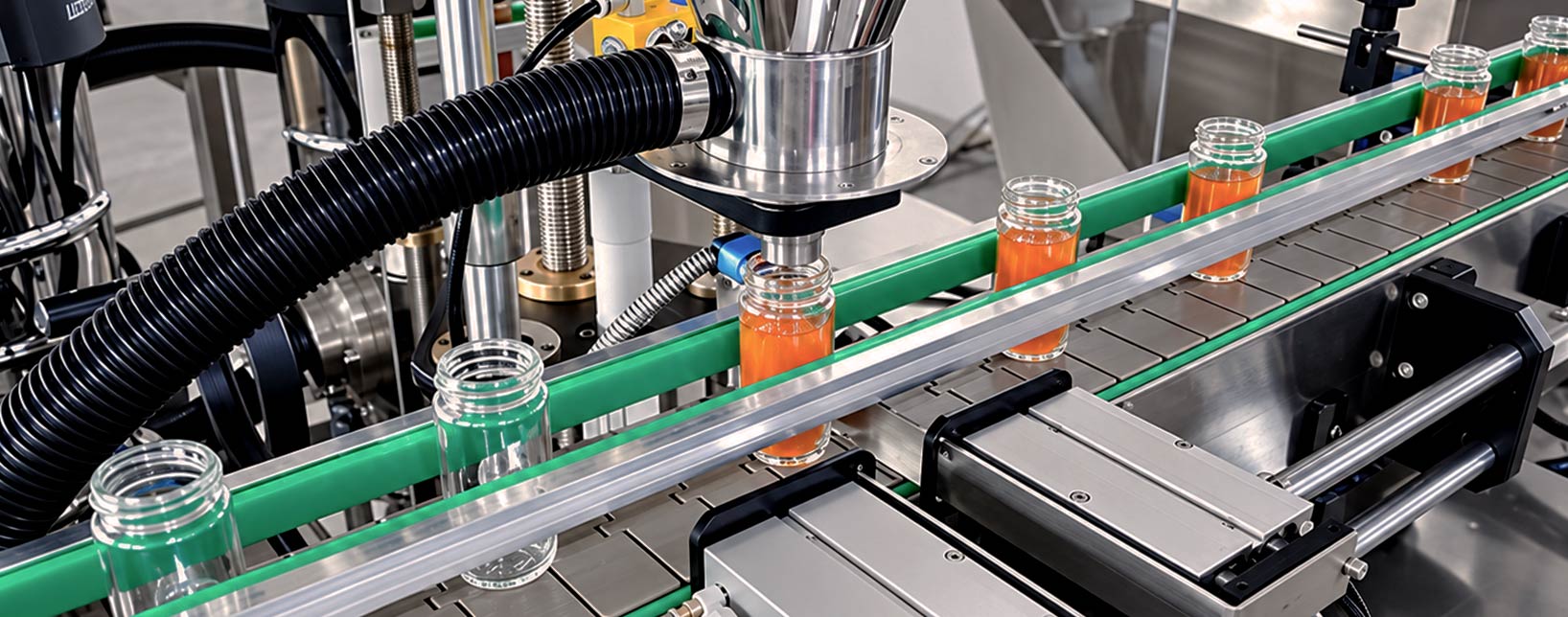
Spice blends are difficult to dose consistently because particle size, bulk density, flowability, moisture and oil content can vary significantly. A professional spice powder filling machine must therefore match its dosing method to the physical characteristics of each product. MIC Machinery provides filling configurations for powders, granules and mixed seasonings, with production options from approximately 10–60 bags/min or up to 3000–3300 bottles/hour, depending on the machine configuration and product.
Can a Spice Filling Machine Handle Both Powder and Granules?
Yes, but the dosing system should be selected according to material behavior rather than simply product name. Fine chili or turmeric powder generally benefits from auger dosing because controlled screw rotation provides repeatable volumetric feeding. Coarser spices or blends containing particles can be better suited to multi-head weighing.
For a production line using several formulations, the hopper, screw tooling, weighing parameters and feeding system may need to be changed or adjusted. MIC configurations can support powder and granular materials while maintaining controlled material flow.
| Material | Typical Challenge | Suitable Dosing Approach |
| Fine chili powder | Dust and poor flowability | Auger dosing |
| Turmeric powder | Variable density | Auger + calibration |
| Cumin granules | Particle variation | Weighing |
| Mixed seasoning | Uneven density | Multi-head weighing |
What Filling Method Is Used for Chili, Turmeric and Cumin Powder?
The filling method depends on particle size, bulk density and target pack weight. An automatic spice filling machine using an auger is commonly selected for fine powders because the screw controls the amount discharged during each cycle. Servo-driven screw control can further improve repeatability.
For granular cumin or blends containing larger particles, load-cell weighing can provide better control. The important point is that the machine should be tested using the customer's actual spice rather than selected only from catalogue specifications.
MIC equipment can be configured for sachets, pouches, bottles and jars. Its product-contact components use SUS304 stainless steel, while SUS316L can be considered for applications requiring greater material compatibility.
What Affects the Filling Accuracy of a Spice Filling Machine?
Filling accuracy is influenced by more than the machine itself. Spice powder bottle filling machine performance can change with bulk density, particle size distribution, moisture, powder adhesion and hopper loading conditions.
For fine powders, screw geometry and rotational speed determine the delivered quantity. If the powder bridges inside the hopper, feeding becomes intermittent and weight variation increases. For mixed spices, density differences between ingredients can also cause separation or inconsistent dosing.
A practical commissioning procedure should therefore include:
1)Testing the actual spice formulation.
2)Measuring bulk density and flowability.
3)Selecting suitable auger or weighing parameters.
4)Calibrating the filling system at the required pack weight.
5)Checking repeatability during continuous production.
For reference, MIC's current product page lists 10–60 bags/min for its filling machine, 3000–3300 bottles/hour for its bottling configuration, and 30–60 bags/min for its filler. Actual output depends on material characteristics, fill volume and packaging configuration.
FAQ
| How should the machine be cleaned between different spice products? |
| Residual powder should be removed from the hopper, auger, contact surfaces and discharge area before changing formulations. This reduces cross-contamination and prevents accumulated material from affecting dosing. |
| What should be checked when the filling weight suddenly changes? |
| Inspect the hopper for bridging, verify the auger or load-cell calibration, and check whether the product's moisture or bulk density has changed. Sensor and feeding-system inspection should follow if the variation continues. |
| How often does the dosing system require maintenance? |
|
Daily cleaning is recommended in dusty applications. Auger condition, drive components, sensors and weighing systems should be inspected periodically according to operating hours and production conditions. |
| Can the filling machine be connected to a complete spice packaging line? |
| Yes. The filling system can be integrated with feeding, mixing, metal detection, capping, labeling and secondary packaging equipment to create a continuous production line. |