How to Choose a Honey Filling Machine for High Viscosity Products?
How to Choose a Honey Filling Machine for High Viscosity Products?
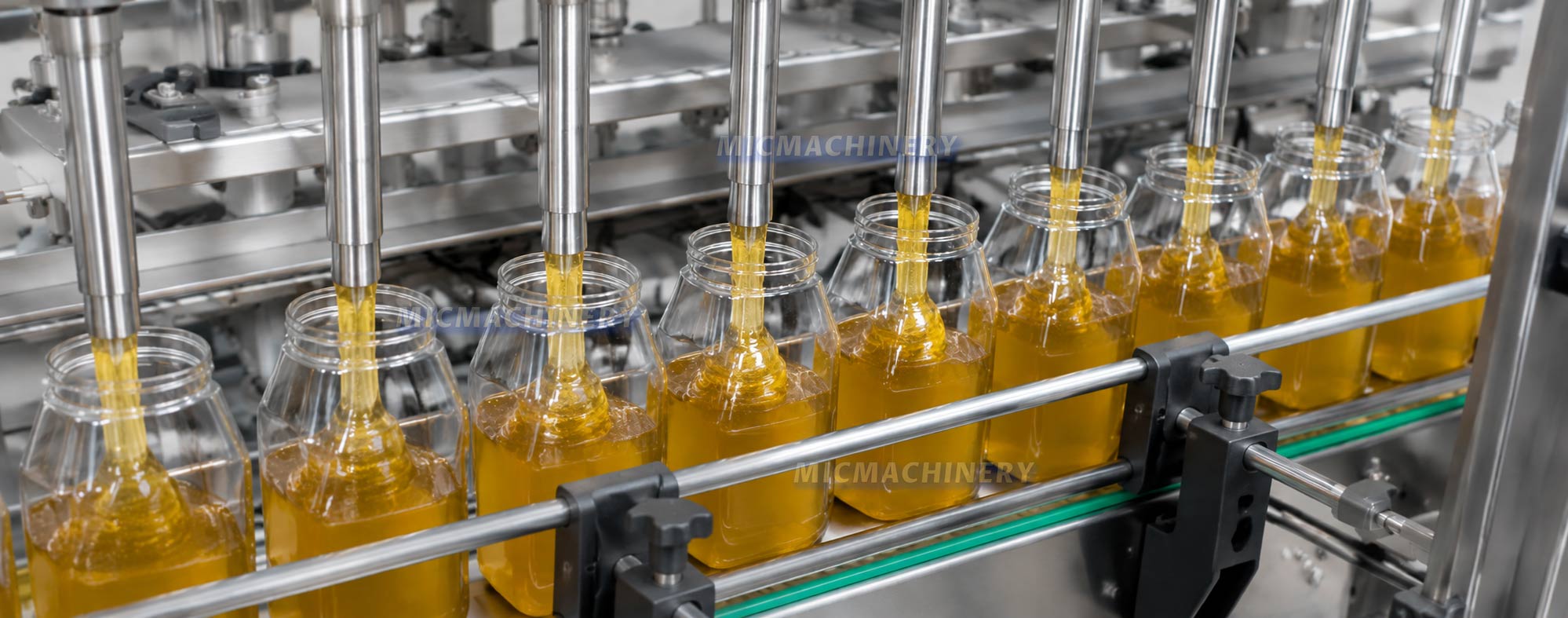
Honey filling requires precise control because of its high viscosity, natural crystallization tendency, and strict hygiene requirements. A suitable honey filling machine helps producers improve filling accuracy, reduce material waste, and maintain stable production. MIC Machinery provides filling solutions with production capacities from small-scale operations to automated industrial packaging lines, supporting different bottle sizes and honey processing requirements.
What Type of Filling Machine Is Suitable for Honey Production?
Choosing a honey filling machine depends on honey characteristics, container type, and required output. Unlike water or low-viscosity beverages, honey requires equipment capable of handling thick materials without affecting filling speed or accuracy.
For small honey businesses, semi-automatic piston filling machines are commonly selected because they provide flexible operation and easy adjustment. For medium and large honey processing plants, automatic filling systems are preferred due to continuous operation and reduced labor requirements.
MIC Machinery honey filling machines are designed for viscous products with stable production performance. The equipment can be configured according to different output requirements:
| Machine Type | Production Capacity | Suitable Application |
|---|---|---|
| Semi-Automatic Honey Filling Machine | 30–60 bottles/hour | Small and medium honey workshops |
| Automatic Honey Filling Machine | 90–3000 bottles/hour | Commercial honey production |
| High-Speed Filling System | Customized | Large-scale food packaging factories |
Can Honey Filling Machines Handle Crystallized Honey?
Honey crystallization is one of the main concerns affecting packaging efficiency. When honey temperature decreases, glucose crystals may form, increasing viscosity and reducing flowability.
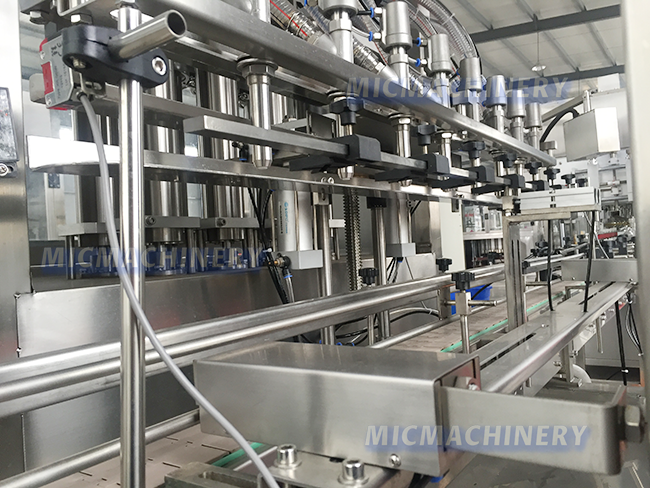 |
Modern filling equipment solves this issue through several methods: ----- · Heating hopper system: Maintains suitable honey temperature and improves material flow. · High-viscosity pump technology: Ensures stable transfer of thick honey. · Precision piston filling system: Controls filling volume even with dense products. · Anti-drip filling nozzle design: Reduces product residue and container contamination. ----- For factories producing natural honey, creamed honey, or seasonal honey products, temperature control and material compatibility are important factors when selecting equipment. |
What Is the Difference Between Volumetric and Weight Filling for Honey?
Different filling methods influence accuracy, production efficiency, and cost control.
| Filling Method | Working Principle | Advantages | Suitable Products |
|---|---|---|---|
| Volumetric Filling | Measures product volume through piston movement | High speed, simple operation, lower investment | Standard honey packaging |
| Weight Filling | Measures actual product weight through load cells | Higher accuracy, compensates density changes | Premium honey and precise filling requirements |
Volumetric filling is widely used because honey density remains relatively stable during normal production. However, weight filling provides better control when products have different temperatures, concentrations, or packaging standards.
MIC Machinery can customize filling solutions according to customer requirements, including bottle size, filling volume, production speed, and automation level.
How Does a Honey Filling Machine Improve Production Efficiency?
A professional honey filling system integrates mechanical control, material handling, and automation technology to achieve consistent output.
The working process usually includes:
1)Material preparation: Honey enters the storage hopper after filtration or temperature adjustment.
2)Product transfer: A suitable pump delivers honey smoothly to the filling unit.
3)Volume measurement: The piston or weighing system controls filling quantity.
4)Bottle filling: Nozzles accurately dispense honey into containers.
5)Post-packaging connection: The machine can connect with capping, labeling, and coding equipment.
Compared with manual filling, automatic systems reduce labor dependence and improve batch consistency, making them suitable for food manufacturers requiring reliable production.
Technical Features of MIC Honey Filling Machine
|
MIC Machinery focuses on practical production requirements and provides equipment solutions with: · Stable filling performance for high-viscosity materials · Adjustable filling volume for different containers · Stainless steel construction suitable for food processing environments · Easy cleaning and maintenance design · Flexible integration with complete packaging lines ------ These advantages make the equipment suitable for honey, syrup, jam, sauce, and other viscous materials. |
 |
FAQ
| How long does installation and commissioning take? |
| Installation time depends on machine configuration and production line complexity. MIC Machinery provides operation guidance, commissioning support, and technical instructions to help customers start production efficiently. |
| What maintenance does a honey filling machine require? |
| Regular cleaning of filling nozzles, checking seals, lubricating moving components, and inspecting pumps can extend equipment service life. Food-grade cleaning procedures are recommended after production. |
| What should I do if the filling volume becomes inaccurate? |
| Possible causes include piston wear, improper parameter settings, air entering the system, or material temperature changes. Operators should check the filling system and contact technical support if adjustment is required. |
| Can the machine be customized for different honey bottles? |
| Yes. MIC Machinery can customize filling solutions according to bottle diameter, filling capacity, production speed, and automation requirements. |
| Is technical support available after purchasing? |
| MIC Machinery provides equipment guidance, troubleshooting assistance, and spare parts support to help customers maintain stable operation. |