How to Choose the Right Peanut Butter Filling Machine for High Viscosity Products?
How to Choose the Right Peanut Butter Filling Machine for High Viscosity Products?
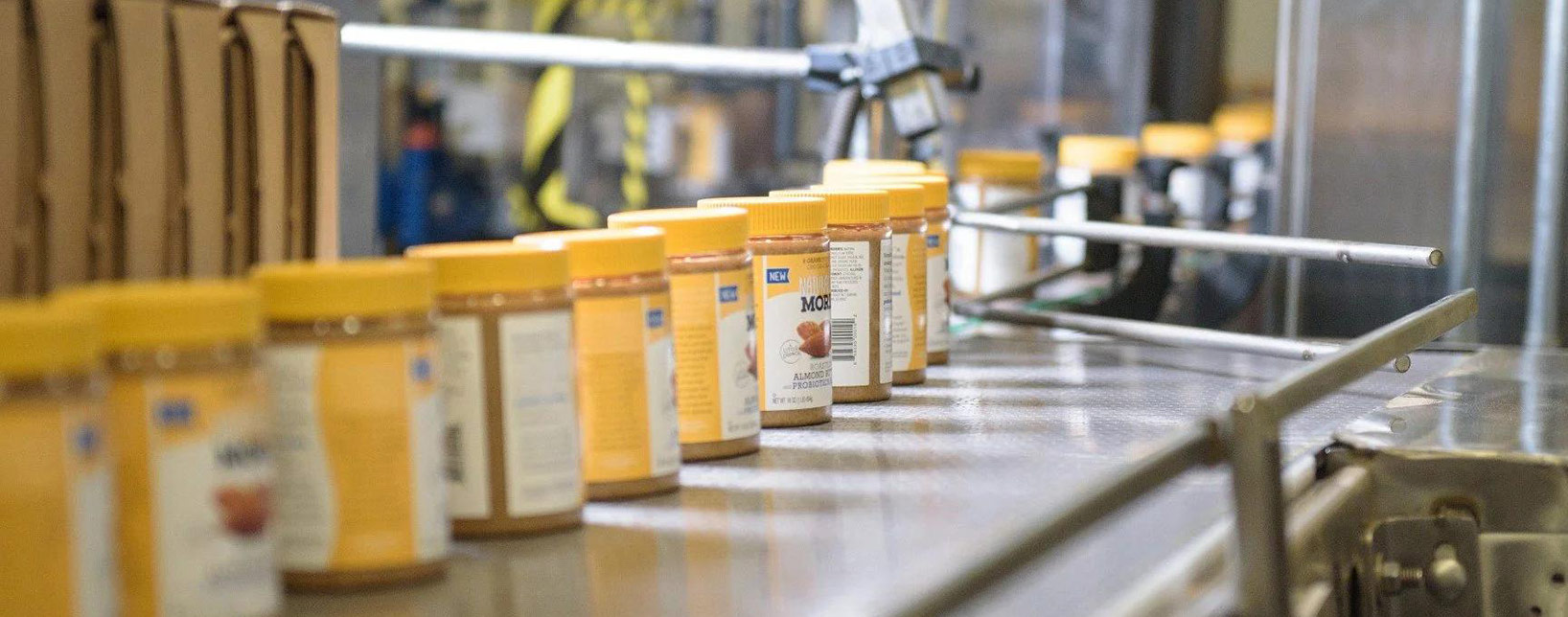
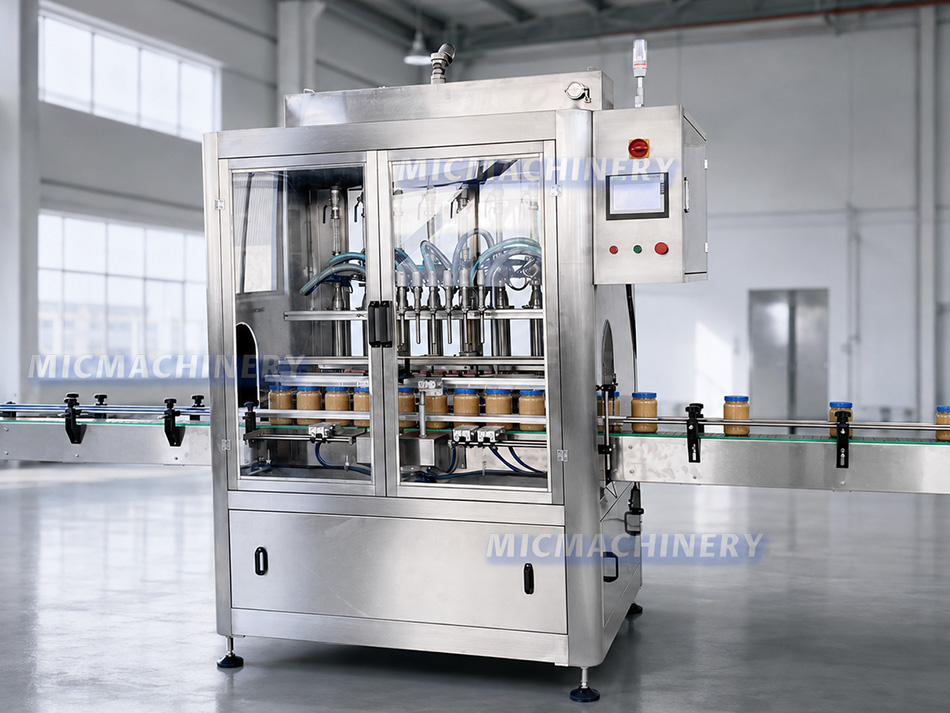
A Peanut Butter Filling Machine is a specialized filling system designed for handling high-viscosity food pastes with complex flow characteristics. Unlike low-viscosity liquid filling equipment, peanut butter requires precise volumetric control, stable material feeding, and anti-drip technology to maintain filling accuracy and production efficiency. MIC Machinery develops filling solutions based on piston filling technology, servo control systems, and customized feeding structures for peanut butter, nut butter, sauces, and other dense paste products.
Filling Technology Insights
What Should Manufacturers Know Before Selecting a Peanut Butter Filling Machine?
Choosing the correct filling equipment is essential for food manufacturers because peanut butter has high viscosity, strong adhesion, and possible particle content. A suitable machine must consider material characteristics, production capacity, packaging format, and hygiene requirements.
How to Choose the Best Peanut Butter Filling Machine?
The selection process should start with product analysis:
| Evaluation Factor | Technical Consideration |
|---|---|
| Product viscosity | High-viscosity materials require piston fillers or positive displacement pumps |
| Filling accuracy | Volumetric control reduces product giveaway and improves consistency |
| Container type | Compatible with glass jars, plastic containers, tubs, or customized packages |
| Production speed | Filling heads and automation level should match factory output |
| Cleaning requirements | Food-grade materials and easy disassembly improve maintenance efficiency |
For industrial production, manufacturers usually prefer automatic systems equipped with PLC control, servo-driven filling mechanisms, and customized nozzles to achieve stable operation.
What Type of Filling Machine Is Suitable for Peanut Butter?
Due to its thick texture, peanut butter is commonly filled by piston-type or servo pump filling systems. These mechanisms create controlled displacement instead of relying on gravity flow, allowing the machine to handle materials with poor fluidity.
For products containing peanut particles or uneven texture, manufacturers may require larger filling channels, customized valves, and agitator-equipped hoppers to prevent material separation.
|
How Much Does a Peanut Butter Filling Machine Cost? The investment cost depends on several technical parameters: · Semi-automatic or fully automatic configuration · Number of filling heads · Filling volume range · Automation components · Integration with capping, labeling, and packaging systems ----- A small-scale production workshop may choose a compact semi-automatic filler, while large food factories usually require a complete automatic filling line with higher throughput and integrated packaging functions. |
 |
High Viscosity Filling Technology for Peanut Butter Applications
Positive Displacement Filling System
Peanut butter requires controlled material movement because excessive suction or unstable feeding can cause inconsistent filling. MIC Machinery uses volumetric filling principles where the piston or pump transfers a fixed amount of product into each container.
Key advantages include:
· Stable filling volume
· Reduced material waste
· Suitable for thick paste products
· Adjustable filling parameters
This technology is widely applied in peanut butter, chocolate spread, honey, sauces, and other high-density materials.
Heated Hopper and Material Flow Control
Temperature directly affects peanut butter viscosity. When the product becomes too cold, its resistance increases and filling performance may decrease.
A professional Peanut Butter Filling Machine can be equipped with:
· Jacketed hopper systems
· Temperature control units
· Slow-speed agitators
· Insulated product pipelines
These components help maintain consistent material flow and prevent product settling during continuous operation.
Precision Servo Control and Automation
Modern filling equipment uses PLC and servo drive technology to improve operational stability.
The automation system controls:
· Filling volume adjustment
· Filling speed
· Production monitoring
· Fault alarms
Compared with manual filling processes, automated systems provide better repeatability and reduce labor dependency.
Hygienic Design and Food Grade Manufacturing
Since peanut butter belongs to food processing applications, equipment design must meet strict hygiene requirements.
MIC Machinery focuses on:
· Stainless steel construction
· Smooth product-contact surfaces
· Easy-clean filling components
· Quick-change nozzles
These designs help improve cleaning efficiency and support continuous production environments.
Application Areas of Peanut Butter Filling Equipment
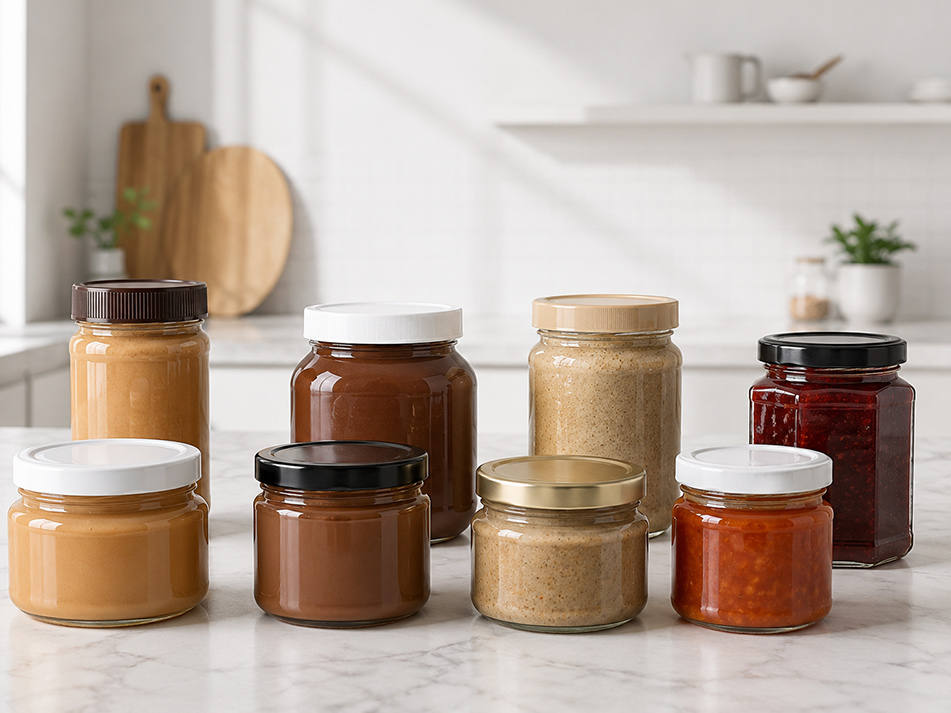 |
A professional peanut butter filling system can be applied to: · Peanut butter jars · Nut butter containers · Chocolate peanut spreads · Sesame paste · Jam and thick sauces · High-viscosity food products ------ The machine can also be integrated with complete packaging systems, including capping machines, labeling machines, conveyors, and carton packaging equipment. |
FAQ
| Can a Peanut Butter Filling Machine handle chunky peanut butter? |
| Yes. Customized filling valves, wider nozzles, and optimized feeding systems allow the equipment to process peanut butter containing small particles while maintaining stable filling performance. |
| Is heating required during peanut butter filling? |
|
Heating is not always necessary, but it can improve flow consistency when peanut butter viscosity increases due to low temperatures or formulation characteristics. |
| What filling accuracy can a peanut butter filling machine achieve? |
| The accuracy depends on the filling system, product condition, and machine configuration. Servo-driven piston systems are commonly selected when precise volumetric control is required. |
| Can one machine fill different types of nut butter? |
| Yes. With proper parameter adjustment, the equipment can handle products such as almond butter, sesame paste, and other viscous food pastes. |
| How can manufacturers reduce peanut butter filling waste? |
| Using anti-drip nozzles, accurate metering systems, and optimized filling parameters can minimize product residue and improve production efficiency. |