How to Troubleshoot Lube Oil Filling Machine Accuracy | Mic Machinery
How to Troubleshoot Lube Oil Filling Machine Accuracy
When a lube oil filling machine is filling inaccurately, do not immediately change the filling volume setting or recalibrate the machine. First identify the error pattern, then check the product condition, supply system, metering components, filling valves, nozzles, bottle positioning, and control parameters in sequence. This troubleshooting approach helps determine whether the problem comes from a common process condition or from one specific filling head.
For lubricant manufacturers, inaccurate filling can appear as underfilling, overfilling, inconsistent filling volumes, or gradual accuracy drift during production. The most effective solution is to identify the root cause before making adjustments.
What Are the Signs of an Inaccurate Lube Oil Filling Machine?
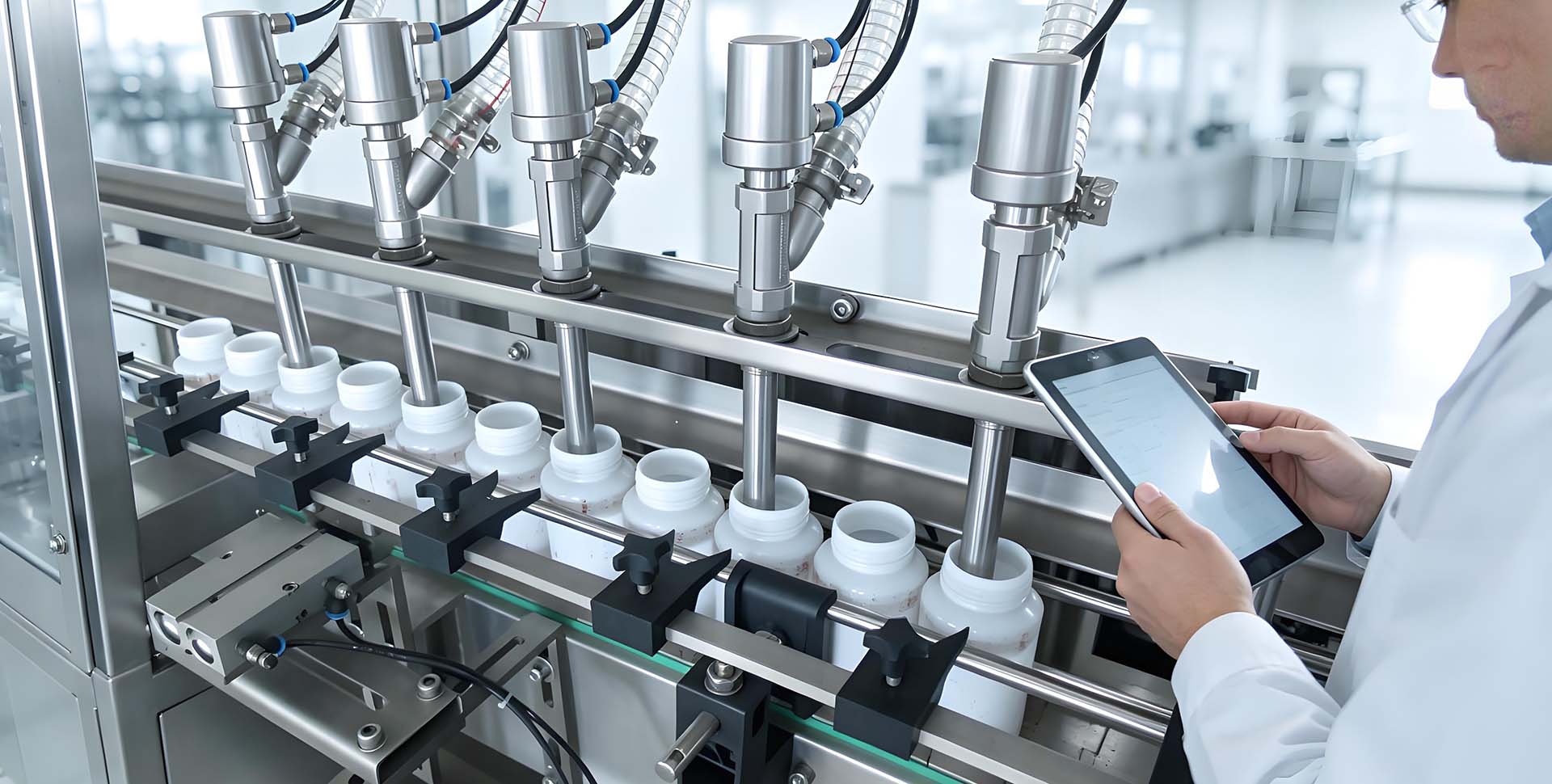
An inaccurate filling machine can show several different symptoms. If all containers are consistently underfilled or overfilled, the problem may be related to the filling parameters, product supply, or the overall metering system. If the filling volume varies from bottle to bottle, check for unstable product flow, air in the product circuit, pump performance, or valve response.
A different situation occurs when only one filling head produces an abnormal result. This usually points to a local problem such as a partially blocked nozzle, valve restriction, seal wear, or incorrect nozzle alignment. Accuracy that gradually changes during production may indicate changes in product temperature, viscosity, tank level, pump performance, or component condition.
After a product changeover, filling accuracy can also change because the new lubricant may require different filling parameters. Therefore, the first troubleshooting step should always be to identify when the error occurs, whether it affects one or all filling heads, and whether the error is consistent or fluctuating.
How Do You Troubleshoot a Lube Oil Filling Machine Step by Step?
A practical troubleshooting sequence should move from measurement to process conditions and then to machine components. Avoid changing several parameters at once because this makes it difficult to determine which action actually corrected the problem.
Step 1 — Check the Actual Filling Volume
Before adjusting the machine, confirm the measurement itself.
Record:
-
Target filling volume
-
Actual measured volume
-
Number of samples
-
Measurement method
-
Filling head or station number
-
Product batch
-
Container format
-
Production condition when the error occurred
Determine whether the error is systematic or random. For example, if every bottle is approximately 20 ml below the target, the problem is different from a situation where some bottles are correct and others vary significantly.
A consecutive sample record is more useful than checking one bottle. Compare results by filling head, production time, product batch, and container position where practical.
Step 2 — Check Product Temperature and Viscosity
Temperature can change lubricant viscosity and therefore affect flow resistance, filling time, suction behavior, and metering performance.
The purpose of this step is not to repeat a general discussion of oil viscosity. Instead, ask:
Did the product condition change when the filling error appeared?
Check whether the oil temperature at the actual filling point is stable. If the product is significantly different from the condition used during the original setup, the previous filling parameters may no longer produce the same result.
For a deeper explanation of the temperature mechanism, link this article to How Does Temperature Affect Lube Oil Filling?. The existing article How Does Oil Viscosity Affect Lube Oil Filling Accuracy? can also serve as the broader viscosity reference.
Step 3 — Check Product Supply and Buffer Tank
The filling system needs a stable and continuous product supply.
Inspect:
-
Product level in the tank
-
Buffer tank condition
-
Supply pressure
-
Product flow
-
Inlet pipeline
-
Filter condition
-
Pump supply
-
Possible air entering the product circuit
An unstable supply can affect several filling heads at the same time. If the filling error appears across the entire machine, investigate common supply conditions before adjusting individual nozzles.
For example, increasing filling time may temporarily compensate for an insufficient product supply. However, once the supply condition returns to normal, the machine may overfill. This is why the unstable process should be corrected before changing the filling recipe.
Step 4 — Check the Pump or Piston System
The metering system should be inspected according to the filling principle used by the machine.
For a piston filling machine, check:
-
Piston movement
-
Cylinder sealing
-
Piston stroke
-
Servo parameters
-
Internal leakage
-
Product intake
For a pump-based filling system, check:
-
Pump speed
-
Pump output
-
Suction condition
-
Pump wear
-
Pipeline restriction
-
Air entering the suction line
MIC Machinery's Lube Oil Piston Filling Machine uses a piston-based metering system for controlled filling of lubricating oils and is particularly relevant when the production process requires repeatable volumetric dosing.
Step 5 — Check Filling Valves and Nozzles
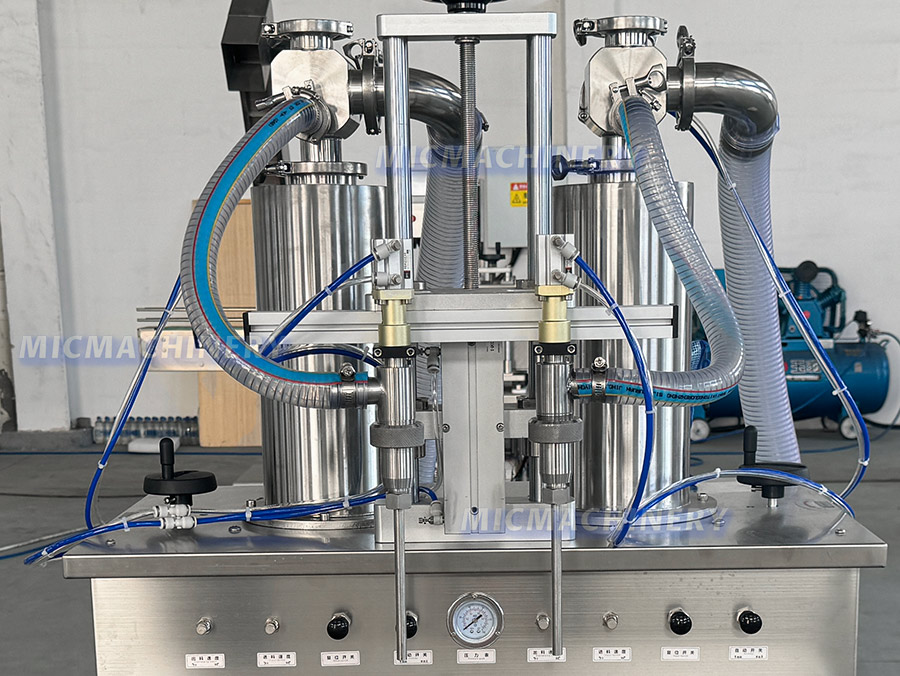
If one filling head behaves differently from the others, inspect the individual filling circuit before making machine-wide adjustments.
Check for:
-
Nozzle blockage
-
Product residue
-
Valve response
-
Seal wear
-
Internal leakage
-
Nozzle alignment
-
Abnormal shut-off
-
Air entering the filling path
A partially restricted nozzle can reduce product flow, while a valve that does not close consistently can change the delivered volume. Product residue can also interfere with nozzle movement or shut-off.
The important diagnostic question is:
Is the problem limited to one filling head, or does it affect several heads?
This distinction can significantly reduce troubleshooting time.
Why Is One Filling Head Less Accurate Than the Others?
When a multi-head filling machine has one abnormal filling head while the remaining heads operate normally, the problem is more likely to be local rather than a machine-wide setting.
| Problem | Likely Cause | Recommended Check |
|---|---|---|
| One head underfills | Valve or nozzle restriction | Inspect product path |
| One head overfills | Valve closing problem | Check shut-off response |
| One head drips | Seal or check-valve issue | Inspect sealing components |
| One head fluctuates | Air or unstable local supply | Check hose and valve |
| Several heads fluctuate | Common supply problem | Check tank, pump and product flow |
Do not immediately change the master filling parameter when only one head is affected. A global adjustment can make the other filling heads inaccurate.
Where appropriate, compare the abnormal head with a stable head under the same production conditions. This creates a useful reference for identifying whether the difference comes from the filling circuit, component condition, or control setting.
Why Does Lube Oil Filling Accuracy Change During Production?
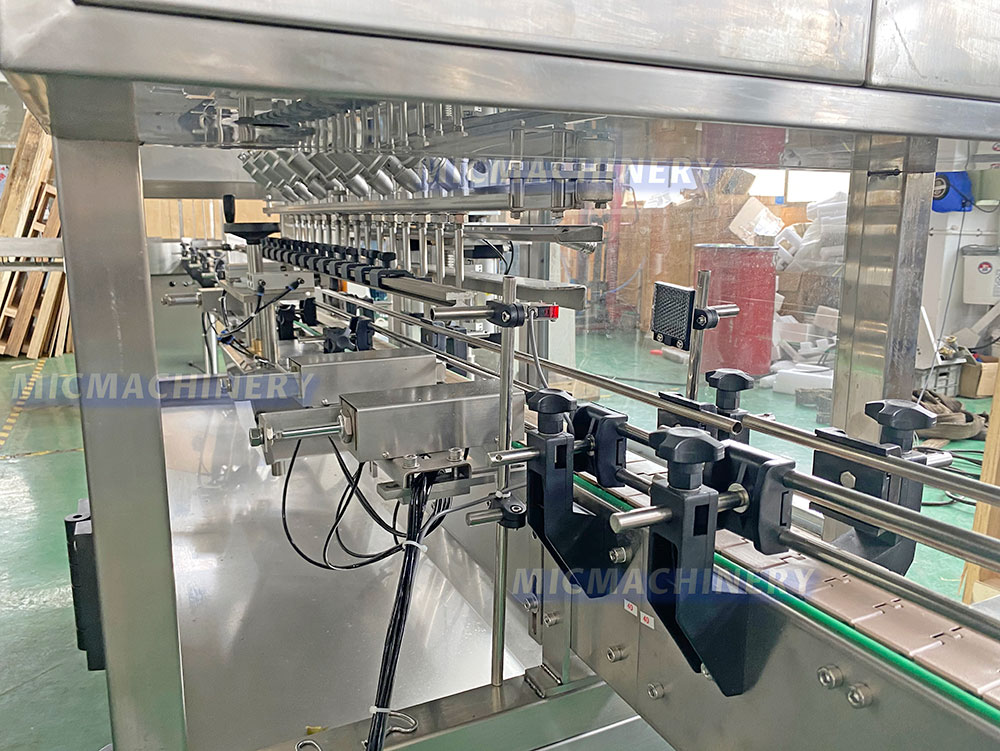
A machine may operate correctly at startup but gradually develop filling variation during continuous production. This is known as accuracy drift.
A filling machine may operate correctly at startup but gradually develop filling variation during continuous production. When this happens, record the point at which the accuracy begins to change. If the deviation appears shortly after startup, product temperature, priming, or initial stabilization should be checked. If accuracy becomes worse after several hours, inspect pump performance, valve condition, seals, and other components that may change with continuous operation.
If the filling volume changes as the product level in the tank decreases, investigate the product supply system and inlet conditions. When the problem appears immediately after changing to another lubricant or SKU, compare the new product's temperature, viscosity, filling volume, and machine recipe with the previous setup. Random fluctuations should prompt an inspection for air entering the product circuit, unstable supply, sensor problems, or control-system issues.
This approach is more useful than simply recalibrating the machine because it connects the timing of the accuracy change with its possible root cause.
Temperature and viscosity can change during production, while prolonged operation can expose wear in seals, valves, pumps, or other moving components. Air entrainment can also create unstable dosing behavior.
The key is to record when the error begins rather than simply recording that the machine is inaccurate.
How Do You Fix Inconsistent Lube Oil Filling Volumes?
When the lube oil filling volume is inconsistent, use a symptom-to-cause approach instead of immediately recalibrating the machine.
| Possible Cause | Inspection | Corrective Action |
|---|---|---|
| Unstable product supply | Check tank and pipeline | Stabilize product supply |
| Pump performance issue | Compare pump output | Inspect or service pump |
| Valve restriction | Inspect affected valve | Clean or replace component |
| Incorrect parameter | Compare current recipe | Correct filling settings |
| Nozzle contamination | Inspect product-contact area | Clean nozzle |
| Bottle positioning problem | Check sensors and conveyor | Adjust container handling |
| Air in product circuit | Check suction and pipeline | Remove source of air and prime system |
| Product condition changed | Check temperature and viscosity | Stabilize process conditions |
The order matters. If the root cause is unstable supply, changing the filling parameter may only hide the problem temporarily.
A useful troubleshooting principle is:
Measure → Compare → Inspect → Correct → Verify.
After each corrective action, repeat the same measurement method under comparable conditions.
How Does Calibration Help Restore Lube Oil Filling Accuracy?
Calibration is an important part of maintaining filling performance, but it should not automatically be the first response to every filling error.
Calibration should be checked after conditions such as:
-
Product changeover
-
Filling volume change
-
Pump or valve replacement
-
Major maintenance
-
Persistent accuracy drift
-
Changes in production conditions
-
Long periods of operation
However, calibration cannot correct every mechanical or process problem.
If a nozzle is blocked, a valve is leaking, a pump is worn, or the product supply is unstable, recalibrating the machine may only compensate for the symptom temporarily.
A better sequence is:
Stabilize the process → identify the root cause → repair or adjust the affected component → calibrate if necessary → verify the result.
This approach helps prevent repeated parameter changes and provides a more reliable maintenance record.
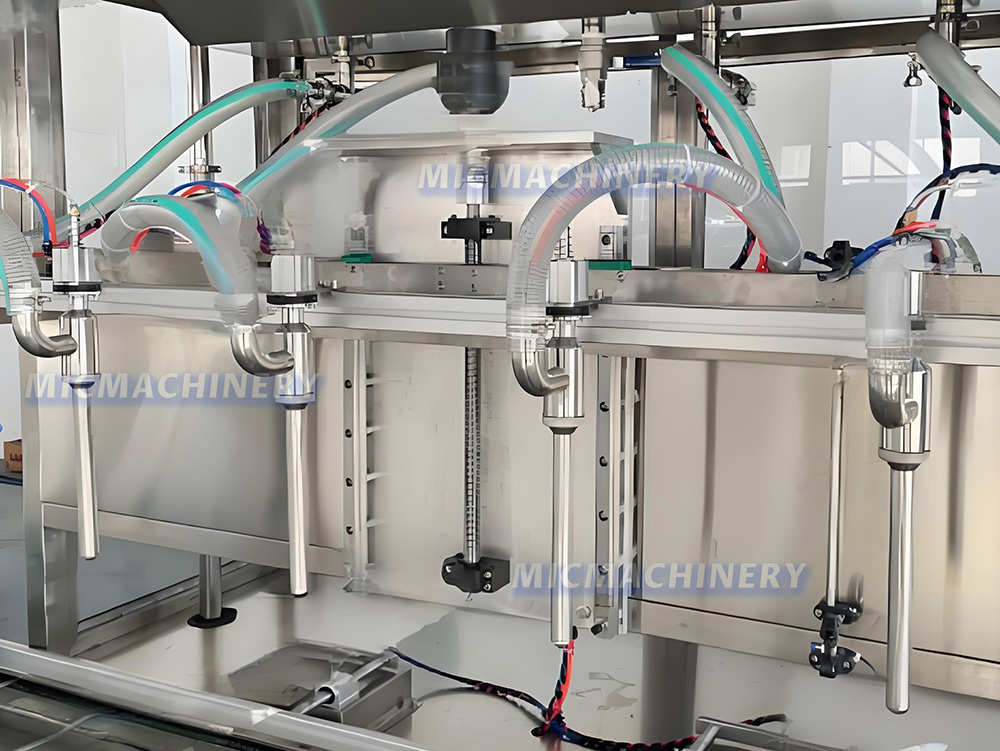
How Do Different Lube Oil Filling Systems Require Different Troubleshooting?
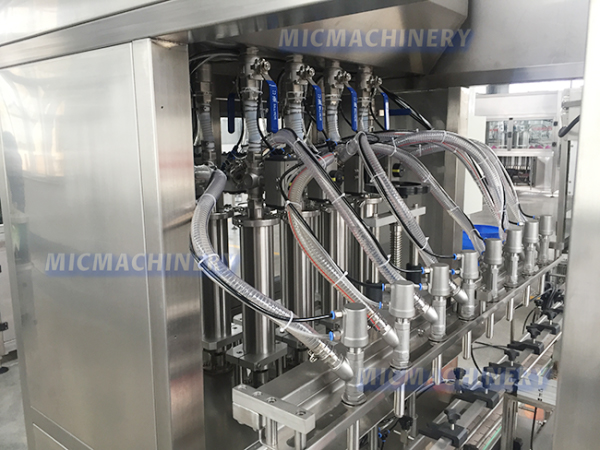
Different filling principles have different components to inspect. Therefore, troubleshooting should consider the actual machine configuration rather than applying one procedure to every lubricant filling machine.
| Filling System | Main Components to Check | Typical Diagnostic Focus |
|---|---|---|
| Piston Filling | Piston, cylinder, seals, servo | Stroke and metering consistency |
| Gravity Filling | Tank level, valves, nozzles | Product head and flow stability |
| Flowmeter Filling | Flowmeter, valve, product supply | Metering signal and flow stability |
| Weighing Filling | Load cell, valve, container | Weight signal and container position |
| Tracking Filling | Sensors, conveyor, filling head | Bottle tracking and timing |
MIC Machinery provides multiple lubricant filling configurations for different filling volumes, container formats, and production requirements. The Lube Oil Filling Machine range includes piston, gravity, weighing, and tracking filling solutions.
This allows the troubleshooting process to be connected directly with equipment configuration. For example, a weighing system should be investigated differently from a piston system because the measurement principle is different.
Preventive Maintenance for Stable Lube Oil Filling
Troubleshooting should not stop after the machine returns to normal production. The final step is to prevent the same problem from recurring.
A practical maintenance routine can include:
| Frequency | Recommended Check |
|---|---|
| Daily | Nozzles, leakage, bottle positioning and visible residue |
| Weekly | Valves, pneumatic condition, conveyor alignment and product lines |
| Periodically | Pump, piston seals, filling components and calibration |
| After Product Changeover | Cleaning, parameter verification and trial filling |
| After Component Replacement | Test filling and accuracy verification |
Keep records of filling errors, replaced components, calibration adjustments, product conditions, and corrective actions. Over time, these records can reveal recurring problems that are difficult to identify from a single production event.
For plants running multiple lubricant products or container sizes, preventive maintenance should also be combined with a controlled changeover procedure.
Lube Oil Filling Machine Troubleshooting Flowchart
Inaccurate Filling Detected
↓
Confirm Target vs. Actual Volume
↓
Is the Error Common to All Heads?
↓
YES → Check Product Supply / Temperature / Pump / Recipe
↓
NO → Check Individual Valve / Nozzle / Seal / Filling Circuit
↓
Check Bottle Position and Sensors
↓
Correct the Confirmed Root Cause
↓
Calibrate if Required
↓
Run Repeatability Test
↓
Record Results and Return to Production
This sequence helps operators avoid unnecessary adjustments and makes technical communication between the production team, maintenance team, and equipment supplier more precise.
When Should a Lube Oil Filling Machine Be Repaired or Upgraded?
If inaccurate filling continues after the product condition, supply system, metering system, valves, nozzles, bottle positioning, and parameters have been checked, the machine may require component replacement or a broader equipment review.
Repeated problems may indicate:
-
Aging pumps or metering components
-
Frequent valve or seal replacement
-
Inadequate filling range
-
Insufficient changeover flexibility
-
Unstable product supply
-
Outdated control systems
-
Production capacity exceeding the original machine design
In these situations, replacing one worn component may solve the immediate problem, while a machine modification or new filling configuration may provide a longer-term solution.
For example, a plant handling several lubricant grades and container sizes may benefit from a filling system designed around multiple filling volumes, product characteristics, and automated bottle handling rather than repeatedly adjusting one basic filler.
FAQ
Why is my lube oil filling machine underfilling?
Underfilling can result from incorrect filling parameters, unstable product supply, restricted valves or nozzles, pump or piston problems, air in the product circuit, or changes in product conditions. First determine whether all filling heads or only one head is affected.
Why does one filling nozzle fill more than the others?
A single abnormal nozzle often indicates a local problem such as valve response, nozzle restriction, seal wear, air in the filling path, or incorrect individual adjustment. Compare the affected filling head with a stable head before changing the overall machine setting.
Why does lube oil filling accuracy change during production?
Accuracy can change when product temperature, viscosity, tank level, supply conditions, pump performance, or component condition changes. Recording when the error begins can help identify whether the cause is related to startup, continuous operation, product changeover, or equipment wear.
How often should a lube oil filling machine be calibrated?
Calibration frequency should follow the equipment manufacturer's procedure and the plant's quality requirements. It should also be checked after product or filling-volume changes, relevant maintenance, component replacement, or unexplained accuracy drift.
Can temperature cause lube oil filling errors?
Yes. Temperature can change lubricant viscosity and flow behavior, which may affect filling time, suction, metering, and nozzle shut-off. The actual filling-point temperature should be considered when investigating a change in filling performance.
How do you troubleshoot inconsistent lube oil filling volumes?
Start by confirming the measurement method and identifying whether the variation affects all filling heads or only specific heads. Then check product supply, temperature, pump or piston operation, valves, nozzles, bottle positioning, and filling parameters before recalibrating.
Conclusion
Troubleshooting an inaccurate lube oil filling machine should begin with identifying the error pattern rather than immediately changing the filling setting. Check the actual filling volume first, then investigate product conditions, supply stability, pump or piston performance, valves, nozzles, bottle positioning, and control parameters.
The most reliable maintenance strategy is to distinguish between a common system problem and a single-head problem, correct the confirmed root cause, and then verify the filling result through repeatable testing. This approach can reduce unnecessary adjustments, support preventive maintenance, and improve long-term filling stability.