What Factors Should Be Considered Before Buying Palletizing Equipment?
What Factors Should Be Considered Before Buying Palletizing Equipment?
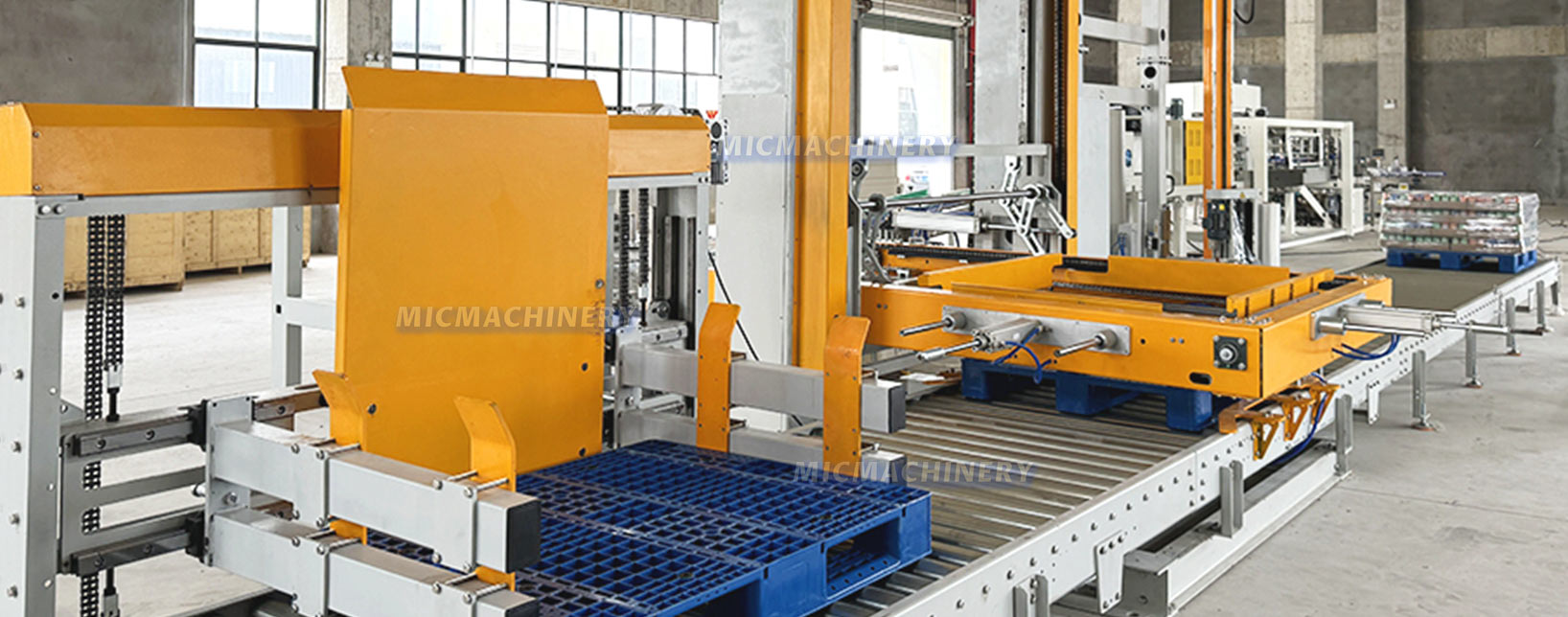
Palletizing equipment is an important automation solution for chemical, adhesive, beverage, food, and manufacturing industries. It helps factories improve packaging efficiency, reduce manual handling, and maintain consistent pallet stacking quality. However, selecting the right palletizing system requires more than considering machine speed. Production capacity, product characteristics, factory layout, automation level, and future expansion plans all influence the final investment decision.
Production Capacity Requirements
Production capacity is the first factor when choosing palletizing equipment. A suitable system should match the output of the filling, packaging, or production line to avoid bottlenecks.
Factories should evaluate:
· Product output per hour
· Package weight and dimensions
· Number of pallets required per shift
· Working hours and production schedules
· Future capacity expansion requirements
For example, high-volume chemical production lines may require a fully automatic robotic palletizer with continuous operation capability, while small and medium factories may benefit from a compact palletizing solution.
When selecting equipment, manufacturers should calculate actual palletizing speed instead of only focusing on the maximum machine capacity. A properly matched system improves production stability and reduces unnecessary investment.
Factory Layout and Installation Conditions
|
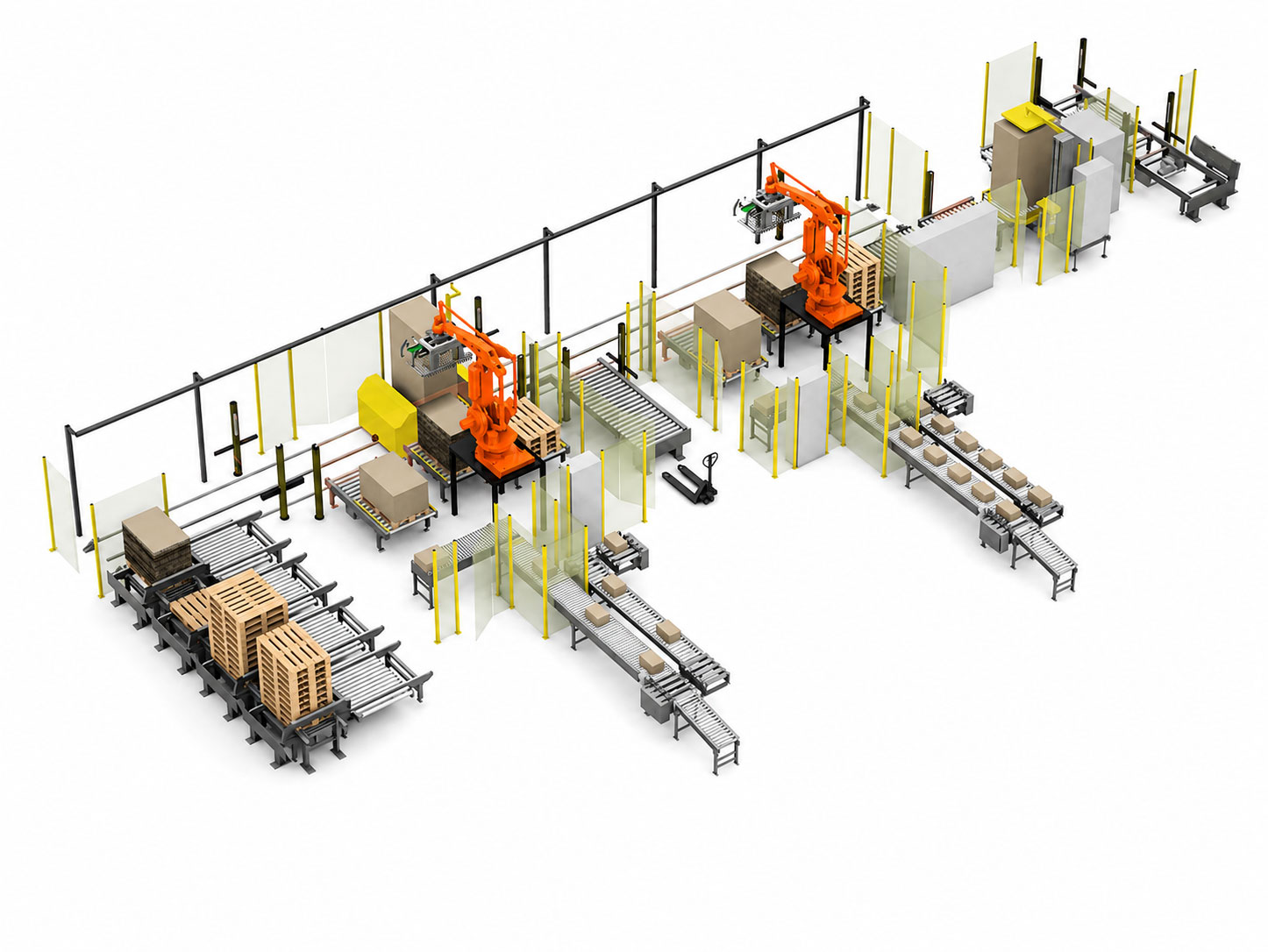
Factory space directly affects palletizer selection and installation design. Before purchasing equipment, companies should analyze: ----- · Available installation area · Conveyor direction · Pallet storage position · Operator access space · Safety protection requirements ----- Different palletizing systems require different layouts. Robotic palletizers usually provide flexible installation options because the robot arm can work within a defined operating range. Conventional palletizers often require a fixed mechanical structure and more dedicated floor space. ----- For chemical industries handling drums, bags, cartons, or containers, the layout should also consider dust control, material safety, and compatibility with existing packaging equipment. |
 |
Main Types of Palletizers
Industrial palletizing equipment can generally be divided into several categories:
| Type | Features | Suitable Applications |
|---|---|---|
| Robotic Palletizer | Flexible programming, high adaptability, multiple product handling | Chemical bags, cartons, containers |
| Conventional Palletizer | High-speed fixed stacking pattern, stable operation | Large-volume standardized production |
| Semi-Automatic Palletizer | Lower investment, requires some manual operation | Small production lines |
Robotic systems are becoming increasingly popular because they can handle different package sizes and stacking patterns with simple program adjustments.
Robotic vs Conventional Palletizing Equipment
Choosing between robotic and conventional palletizing equipment depends on production requirements.
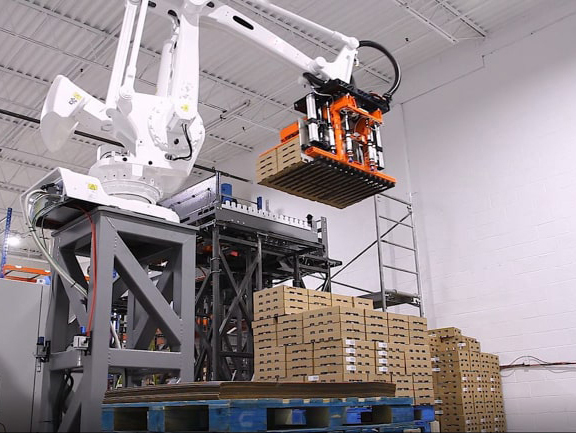 |
Robotic Palletizer Advantages: · Flexible product changeover · Suitable for multiple packaging formats · Requires less mechanical modification · Easier integration with automated production lines ----- Robotic palletizers are ideal for chemical manufacturers producing different products or frequently changing packaging specifications. |
Conventional Palletizer
Advantages:
· High-speed operation for fixed products
· Stable stacking performance
· Suitable for large-scale continuous production
However, conventional systems usually have lower flexibility when product types or pallet patterns change.
Maintenance Requirements
Maintenance is essential for ensuring long-term palletizing equipment performance. Before purchasing, companies should evaluate:
· Availability of spare parts
· Machine structure reliability
· Control system accessibility
· Technical support capability
· Cleaning requirements
For chemical production environments, palletizing equipment should have durable components and protection measures against dust, vibration, or corrosive materials.
Regular maintenance includes:
· Checking mechanical transmission parts
· Inspecting robot positioning accuracy
· Lubricating moving components
· Updating control system parameters
· Verifying safety devices
A well-designed palletizing system can reduce downtime and improve overall equipment utilization.
Investment Planning and Production Integration
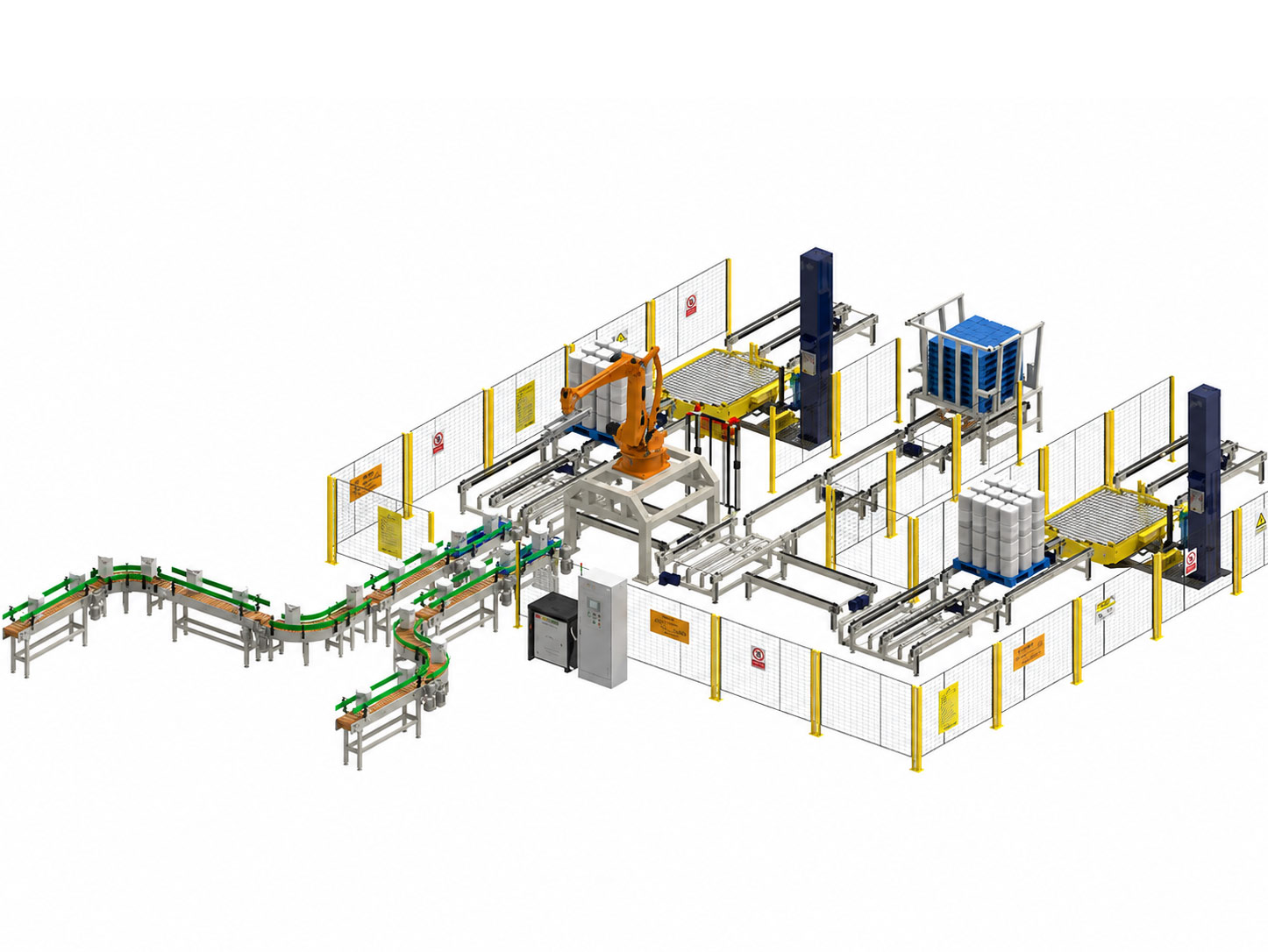
Before buying palletizing equipment, manufacturers should consider whether the system can connect with existing production lines.
|
A complete automated packaging solution may include: · Filling machine · Packaging machine · Conveyor system · Labeling equipment · Palletizing unit · Warehouse handling system ------ Integrated automation improves production coordination and reduces manual material transfer between processes. |
 |
FAQ
| What is the cost of palletizing equipment for a factory? |
| The cost depends on several factors, including palletizer type, payload capacity, automation level, robot brand, conveyor configuration, and customization requirements. A robotic palletizing system generally requires a higher initial investment but provides better flexibility and labor savings. |
| How can companies calculate the return on investment (ROI) of palletizing equipment? |
| ROI can be evaluated by comparing equipment investment with labor savings, production improvement, reduced product damage, and lower operational costs. Companies should calculate both short-term savings and long-term production benefits. |
| Does palletizing equipment need to connect with the complete production line? |
| Not always. Some palletizers can operate independently, while advanced systems can integrate with filling, packaging, and warehouse automation equipment. The best option depends on factory automation goals. |
| How is a palletizing machine installed? |
| The machine is positioned according to the factory layout, connected to conveyors and utilities, then tested and commissioned to ensure stable operation. |
| What should be prepared before installing a palletizing machine? |
| Prepare sufficient floor space, power and air supply, conveyors, safety clearance, and product, pallet, capacity, and stacking pattern specifications. |