What Filling Method Is Best for High Viscosity Mayonnaise?
What Filling Method Is Best for High Viscosity Mayonnaise? | MIC Machinery
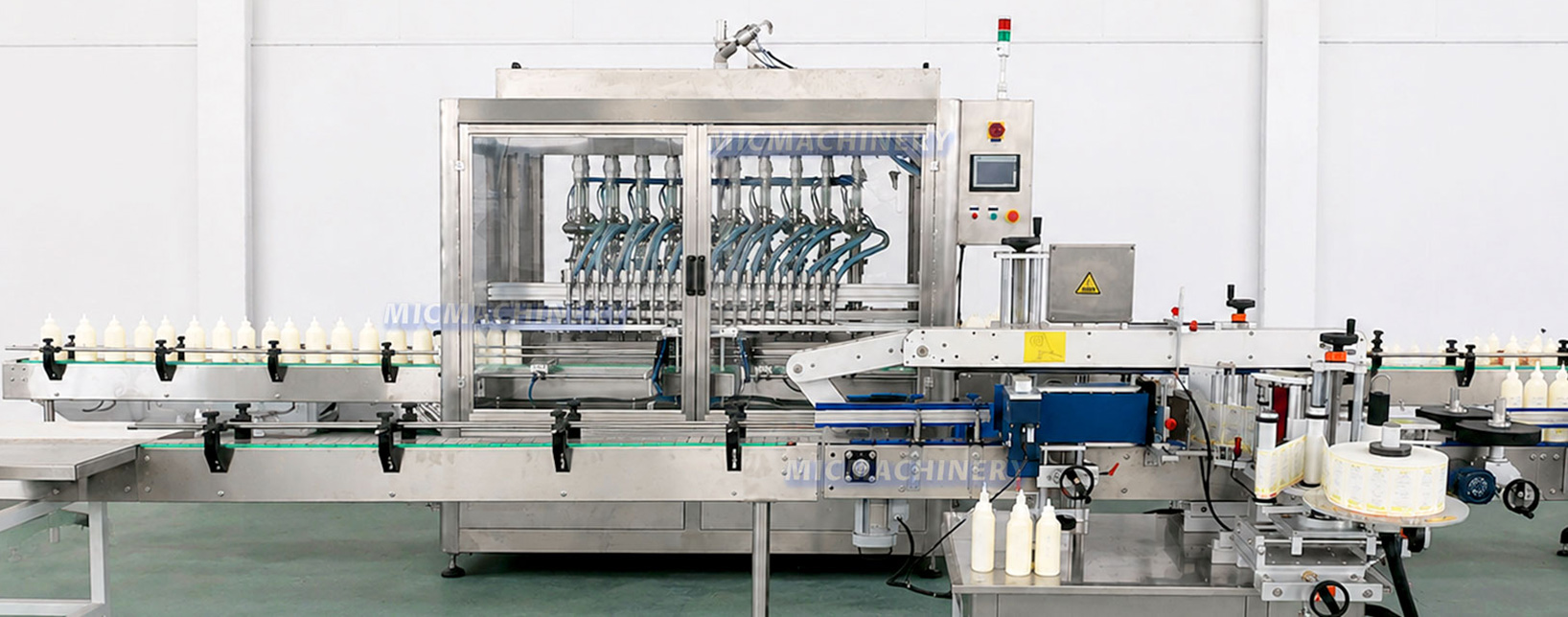
Mayonnaise is a high-viscosity emulsion containing oil, egg ingredients, and stabilizers, requiring precise control during filling. Traditional liquid fillers often struggle with inconsistent volume, air bubbles, and dripping. MIC Machinery’s Mayonnaise Filling Machine uses advanced piston filling technology and food-grade stainless steel construction to provide accurate, stable filling solutions for sauce, condiment, and chemical-like viscous material processing industries.
Why Is Piston Filling Ideal for High Viscosity Mayonnaise?
For high viscosity mayonnaise products, piston filling is generally the most suitable method because it provides positive displacement filling and maintains stable volume accuracy regardless of material thickness. Compared with gravity or overflow filling systems, piston fillers can handle dense emulsions with better control of filling speed, pressure, and product flow.
The filling performance depends on several factors:
| Key Factor | Influence on Filling Process |
| Viscosity | Determines piston size and filling speed |
| Product temperature | Affects flow consistency |
| Air content | Impacts filling accuracy and appearance |
| Filling nozzle design | Prevents dripping and contamination |
For mayonnaise manufacturers, selecting the correct filling method helps reduce material waste, improve production efficiency, and maintain consistent product quality.
Technology
Precision Piston Filling System
|
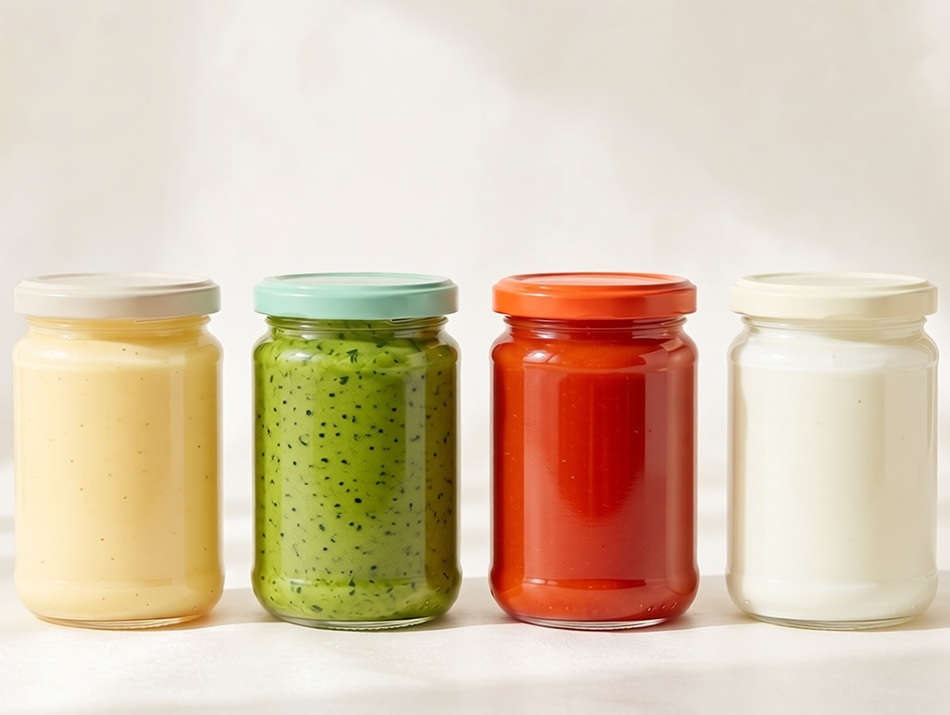
MIC Machinery’s mayonnaise filling solution adopts a piston-driven volumetric filling structure. The piston chamber measures a fixed volume of mayonnaise and transfers it into containers with high repeatability. ----- The system is suitable for products with different viscosity levels, including: · mayonnaise · salad dressing · ketchup · cream sauce · thick emulsified materials The filling volume can be adjusted according to production requirements, making the machine suitable for different bottle sizes and packaging formats. |
 |
|
|
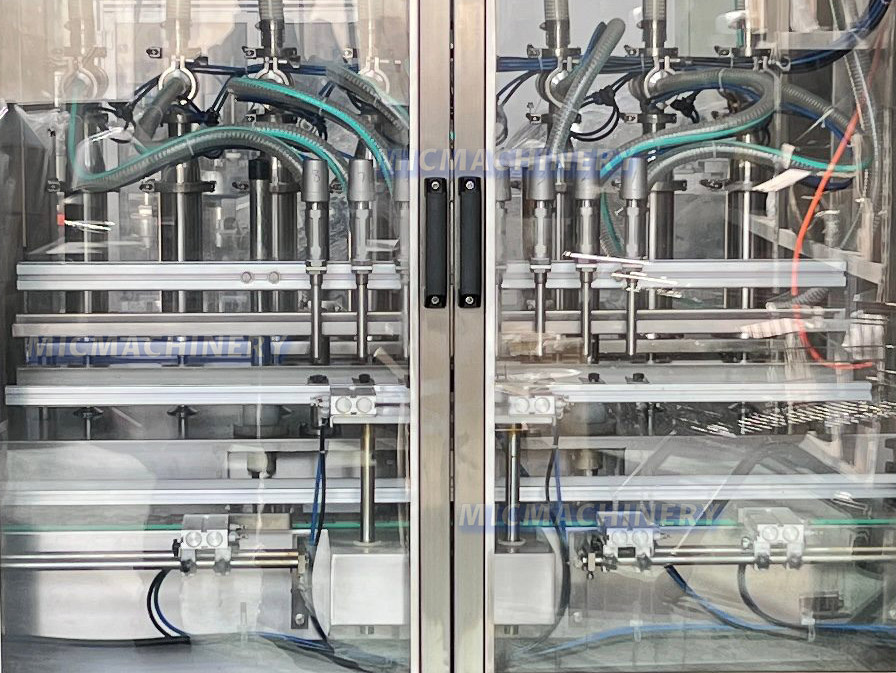
Anti-Drip Nozzle and Product Protection Design High-viscosity products often create problems such as nozzle residue and material stringing. MIC Machinery optimizes the filling nozzle structure to improve shut-off performance and reduce product dripping. ----- Key technical advantages include: · controlled filling speed · reduced air introduction · cleaner bottle openings · improved packaging appearance These features are especially important for automated food production lines where continuous operation is required. |
|
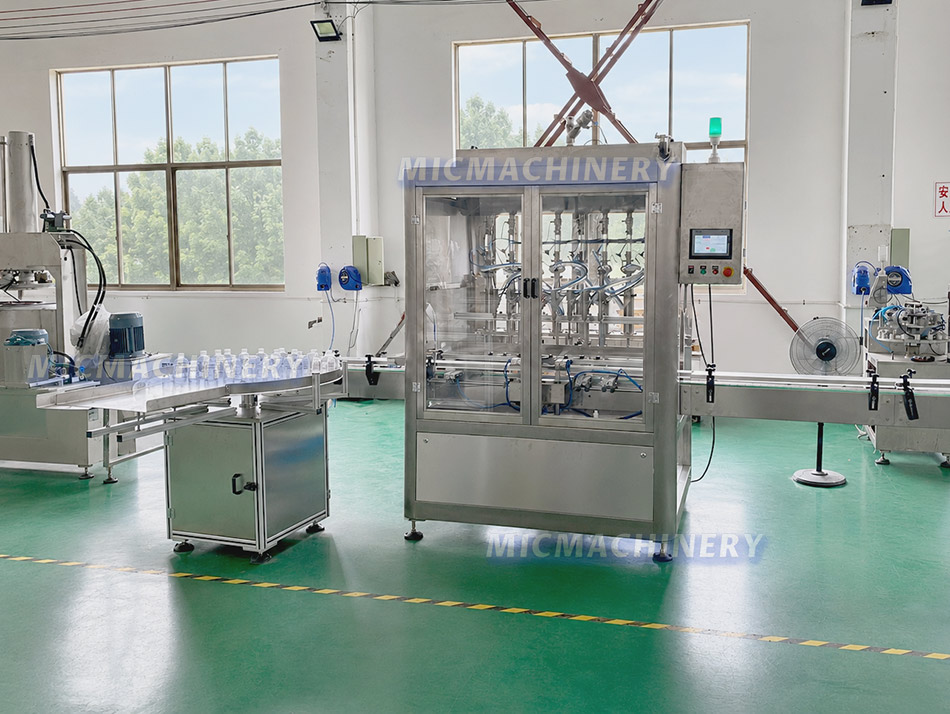
Hygienic Construction and Easy Cleaning Mayonnaise production requires strict hygiene control. The machine adopts food-contact stainless steel materials and a design that supports convenient cleaning and maintenance. ----- Main design considerations include: · stainless steel contact parts · smooth internal surfaces · reduced material retention areas · simple disassembly for cleaning This structure helps manufacturers meet daily production sanitation requirements. |
 |
How Do Different Mayonnaise Filling Machines Compare?
Different production scales require different filling solutions. Selecting the right equipment depends on output demand, automation level, and factory layout.
| Machine Type | Recommended Capacity | Features | Application |
| Semi-Automatic Mayonnaise Filling Machine | 20–60 bottles/hour | Flexible operation, lower investment | Small factories and startups |
| Automatic Mayonnaise Filling Machine | 100–3000 bottles/hour | Continuous filling, higher efficiency | Medium-scale production |
| Fully Automatic Filling Line | 3000+ bottles/hour | Integrated filling, capping, labeling | Large food manufacturers |
For small producers, semi-automatic equipment provides an economical solution with easy operation. Medium and large manufacturers usually choose automatic systems to improve labor efficiency and production consistency.
What Factors Affect Mayonnaise Filling Machine Performance?
The performance of a mayonnaise filling machine depends not only on machine structure but also on product characteristics.
Important considerations include:
Product Viscosity
Higher viscosity requires stronger filling force and optimized piston parameters. Incorrect settings may cause slow filling or unstable output.
Filling Accuracy
Precision filling reduces product loss and ensures consistent package weight. Servo-controlled systems can provide improved repeatability for high-value products.
Production Environment
Temperature, cleaning procedures, and raw material conditions can influence filling stability. Industrial users should evaluate the complete production process before selecting equipment.
FAQ
| Can a mayonnaise filling machine fill other thick sauces? |
| Yes. A properly configured piston filling machine can handle various high-viscosity products, including ketchup, cream sauces, and salad dressings. |
| What Causes Filling Errors in a Mayonnaise Filling Machine? |
| Filling errors may result from viscosity changes, air bubbles, unstable material supply, or improper machine settings. |
| How Can I Improve Mayonnaise Filling Accuracy During Production? |
| Maintain stable viscosity, optimize filling parameters, remove air bubbles, and calibrate the machine regularly. |
| How can air bubbles be reduced during mayonnaise filling? |
| Optimizing filling speed, nozzle design, and material handling conditions can minimize air mixing and improve product appearance. |
| What material is recommended for food filling equipment? |
| Food-grade stainless steel such as SS304 or SS316 is commonly used for product-contact components because of its corrosion resistance and easy cleaning characteristics. |