Why Use an Explosion Proof Filling Machine?
Why Use an Explosion Proof Filling Machine?| Mic Machinery
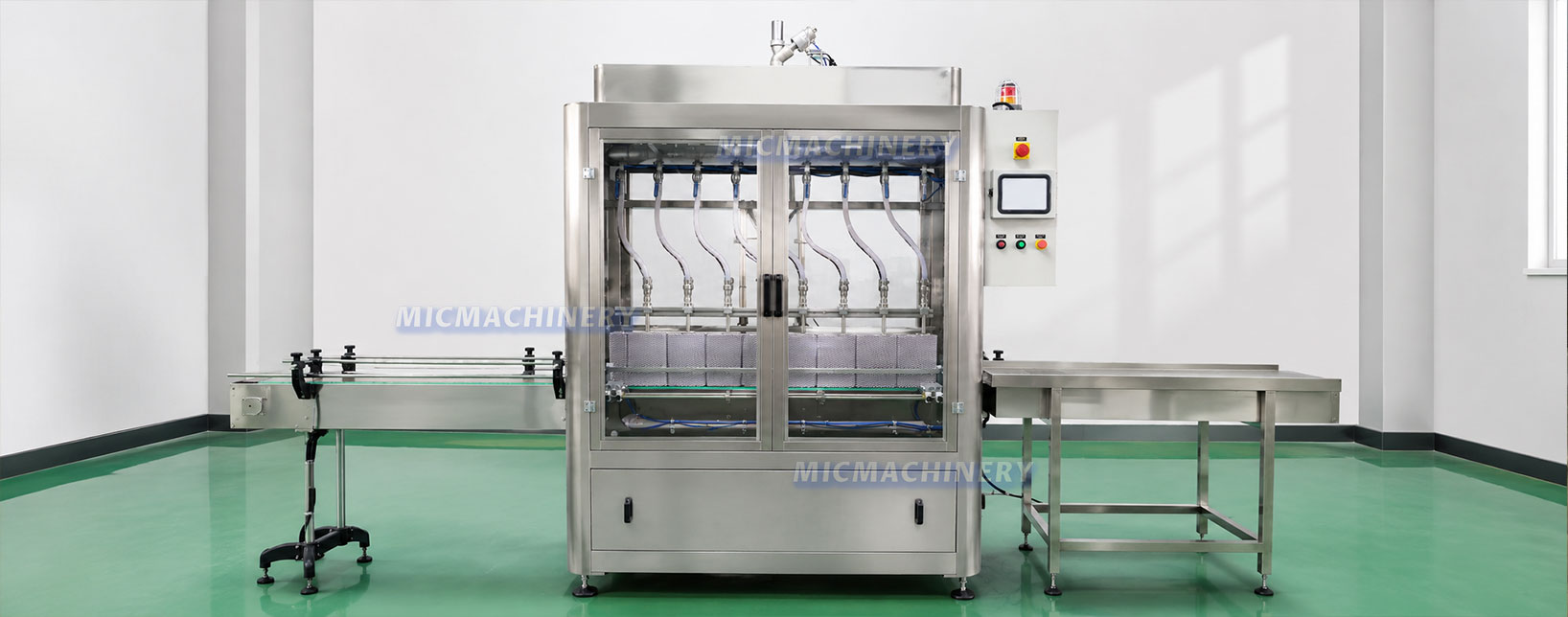
An Explosion Proof Filling Machine is designed for filling flammable, volatile, or combustible liquids where vapor or mist may create a hazardous atmosphere. In chemical, coating, pharmaceutical, and automotive-chemical production, filling is not only a dosing process but also an ignition-risk control point. MIC Machinery combines explosion-proof electrical protection, anti-spark design, sealed material transfer, and automated control to support safer industrial filling.
Why Do Flammable Liquids Require Explosion-Proof Filling Equipment?
Flammable liquids can release vapors during storage, transfer, and filling. If a combustible vapor-air mixture is present, electrical, static, mechanical, or thermal ignition sources can create a serious fire or explosion hazard. OSHA specifically identifies static, electrical, and mechanical sparks among ignition sources that must be controlled where flammable vapors may occur.
This is why an explosion proof filling machine for chemicals is considered when filling solvents, thinners, solvent-based coatings, alcohol-based formulations, fuel additives, and other volatile products. The correct configuration should be determined from the liquid's properties, process conditions, and hazardous-area classification rather than from product name alone.
How Does It Work?
The process begins with container positioning and detection. The filling nozzles then align with the containers, while liquid is transferred from the storage tank through controlled and, where appropriate, sealed pipelines. After dosing, containers move to capping, labeling, or packing. MIC Machinery separates or protects electrical components in the hazardous filling area and can configure closed filling structures for volatile liquids.
How Does It Prevent Ignition?
|
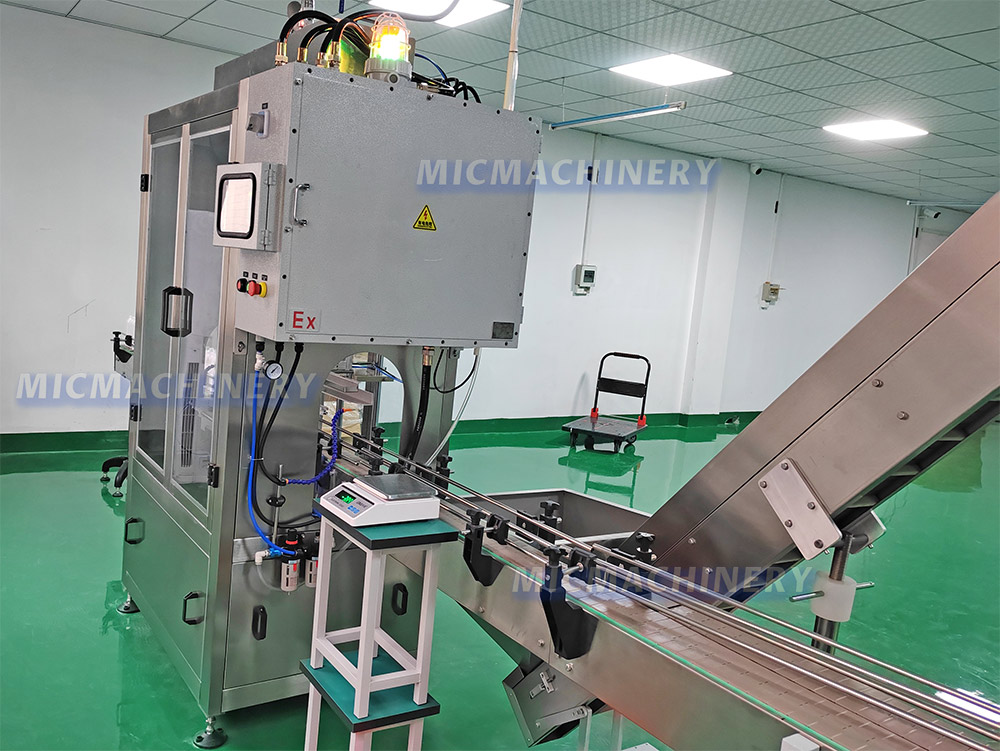
Explosion-Proof Electrical Protection The key difference is not simply a stronger motor or enclosure. Electrical components intended for explosive atmospheres require protection concepts appropriate to the classified area. IEC 60079-0:2026 defines general requirements for Ex equipment and components, while IEC 60079-1 covers flameproof enclosure “d” protection and IEC 60079-11 addresses intrinsic safety “i.” ------ Sealed Liquid Transfer and Anti-Drip Filling A suitable flammable liquid filling machine can use sealed pipelines, controlled nozzles, and anti-drip structures to reduce splashing and unnecessary vapor release. MIC Machinery also offers foam-control and anti-drip nozzle options according to product behavior. |
 |
Material and Corrosion Compatibility
Chemical compatibility is equally important. Product-contact components can be upgraded to SUS316L stainless steel and PTFE sealing materials for applications involving corrosive or chemically active liquids.
Metering and Automation
Explosion protection does not replace filling accuracy. Depending on the application, MIC Machinery can configure multi-nozzle filling, automatic weighing with feedback, and PLC-based control. The machine can therefore combine controlled dosing with the safety requirements of hazardous production environments.
Ordinary vs. Explosion-Proof Fillers
| Feature | Ordinary Filling Machine | Explosion-Proof Filling Machine |
| Typical environment | Non-hazardous production areas | Hazardous areas with flammable vapors |
| Electrical design | Standard industrial components | Ex-rated or otherwise appropriately protected components |
| Ignition control | Standard machine safety | Spark, static, and ignition-risk control |
| Liquid applications | Water, oils, detergents, etc. | Solvents, alcohols, volatile chemicals, coatings |
| Sealed transfer | Application dependent | Often prioritized for volatile liquids |
| Configuration basis | Product and capacity | Product + process + hazardous-area classification |
The important distinction is application risk, not simply filling speed. A conventional filler should not be assumed suitable for a hazardous area merely because it can physically handle the liquid.
Technical Selection Reference
| Parameter | MIC Configuration Reference |
| Filling configuration | Single or multi-nozzle |
| Material options | SS316L / PTFE according to chemical compatibility |
| Control | Automated PLC control |
| Optional systems | Weighing feedback, anti-drip, foam control |
Actual specifications should be confirmed against the product's viscosity, volatility, container, target capacity, and hazardous-area requirements.
FAQ
| What should I provide before buying an explosion-proof filling machine? |
| Provide the liquid name, flash point or relevant safety data, viscosity, filling volume, container dimensions, required output, and hazardous-area classification. These parameters allow the machine configuration to be evaluated correctly. |
| Can an explosion-proof filler handle corrosive chemicals? |
| Yes, with appropriate wetted-part materials. SS316L and PTFE can be selected when chemical compatibility requires greater corrosion resistance. |
| Does an explosion-proof filling machine eliminate all explosion risks? |
| No. It is one part of a hazardous-area safety system. Equipment selection, grounding, ventilation, process controls, installation, inspection, and operator procedures must also be considered. |
| What maintenance is most important? |
| Inspect seals and gaskets for vapor leakage, check explosion-proof housings, maintain grounding, clean filling nozzles, and verify sensors and PLC operation. |
| Can the machine be connected to a complete chemical packaging line? |
| Yes. MIC Machinery can integrate the filler with capping, labeling, and packing equipment for automated production lines. |