Bleach Filling Machine——Corrosive Chemical Filling System
Bleach production presents a unique challenge in liquid chemical packaging due to its highly corrosive nature and chemical instability. Sodium hypochlorite solutions commonly used in household and industrial bleach products release active chlorine over time, which can accelerate equipment corrosion if materials are not properly selected. In addition, bleach tends to generate gas and vapor during handling, requiring controlled filling conditions to ensure both safety and product stability.
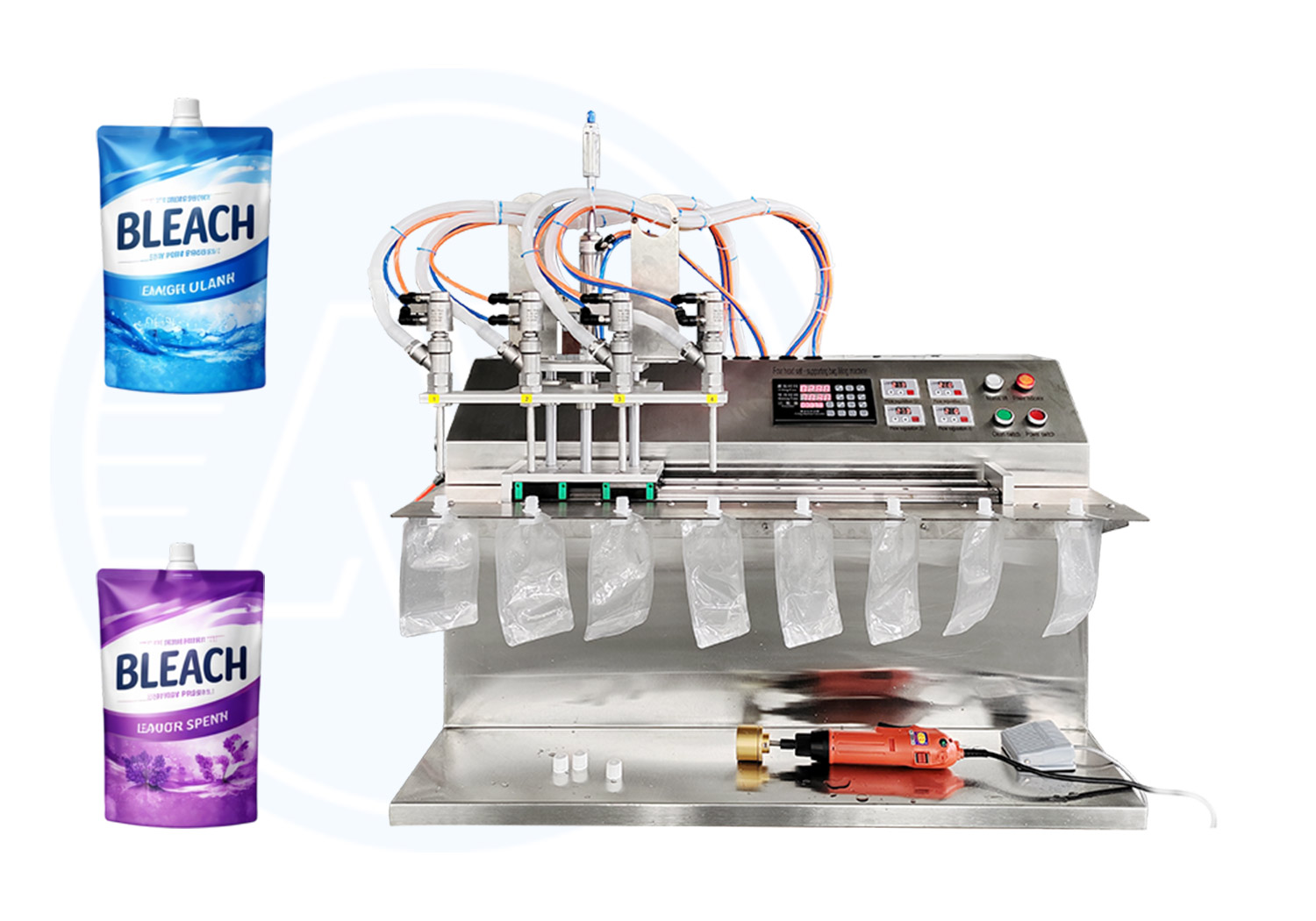
The Bleach Filling Machine developed by MIC Machinery is designed specifically for corrosive liquid filling applications in the daily chemical and sanitation industries. It is widely used in disinfectant plants, household cleaning product factories, and OEM production lines supplying bleach and sterilizing solutions to global markets. The system focuses on corrosion resistance, anti-leak performance, dosing accuracy, and stable long-term operation under chemically aggressive environments.
Unlike standard liquid filling systems, bleach filling equipment must maintain strict material compatibility and sealing integrity to prevent degradation, leakage, and product decomposition during continuous production.
The bleach filling process begins with chemical preparation in a closed mixing tank where sodium hypochlorite solution is stabilized under controlled conditions. Because bleach is sensitive to heat, light, and contamination, production environments typically use sealed or semi-sealed systems to maintain product stability.
Once prepared, the bleach solution is transferred into a corrosion-resistant buffer tank that supplies the filling machine. This tank is designed to maintain steady pressure while minimizing exposure to air, which can accelerate chemical decomposition and reduce active chlorine concentration.
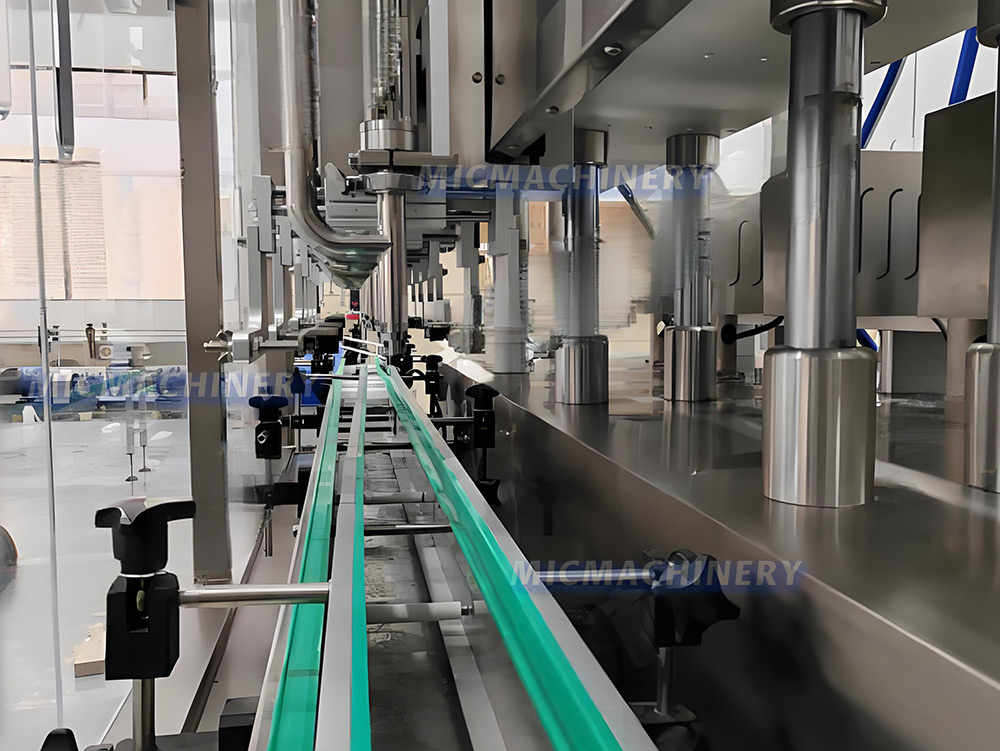
Empty bottles are automatically conveyed into the filling station and aligned precisely under the filling nozzles using sensor detection. Once positioning is confirmed, the flowmeter or gravity system begins dispensing a controlled volume of liquid bleach into each container.
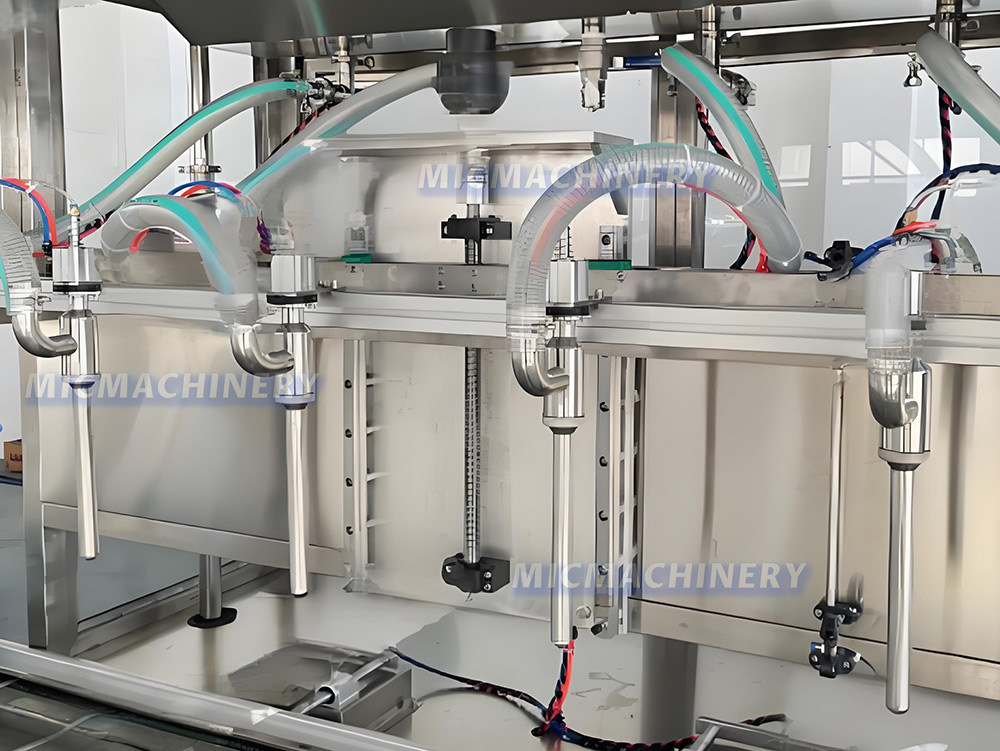
Diving nozzles are commonly used to reduce splashing and vapor release, ensuring smooth liquid entry into the bottle. Anti-drip valves close precisely at the end of each filling cycle to prevent leakage and maintain clean bottle necks. After filling, containers are transferred to capping and sealing systems, followed by labeling and packaging.
The entire process is managed by a PLC control system that synchronizes filling speed, conveyor movement, and safety interlocks, ensuring stable and safe operation throughout production.
Video Demonstration
Applications
The Bleach Filling Machine is widely used in the sanitation, household cleaning, and industrial chemical industries.
Typical applications include:
Household bleach
Sodium hypochlorite disinfectant
Toilet cleaning solutions
Industrial sterilizing agents
Surface disinfectant liquids
Hospital sanitation products
Laundry whitening solutions
Commercial cleaning bleach
Water treatment chemicals
OEM disinfectant formulations
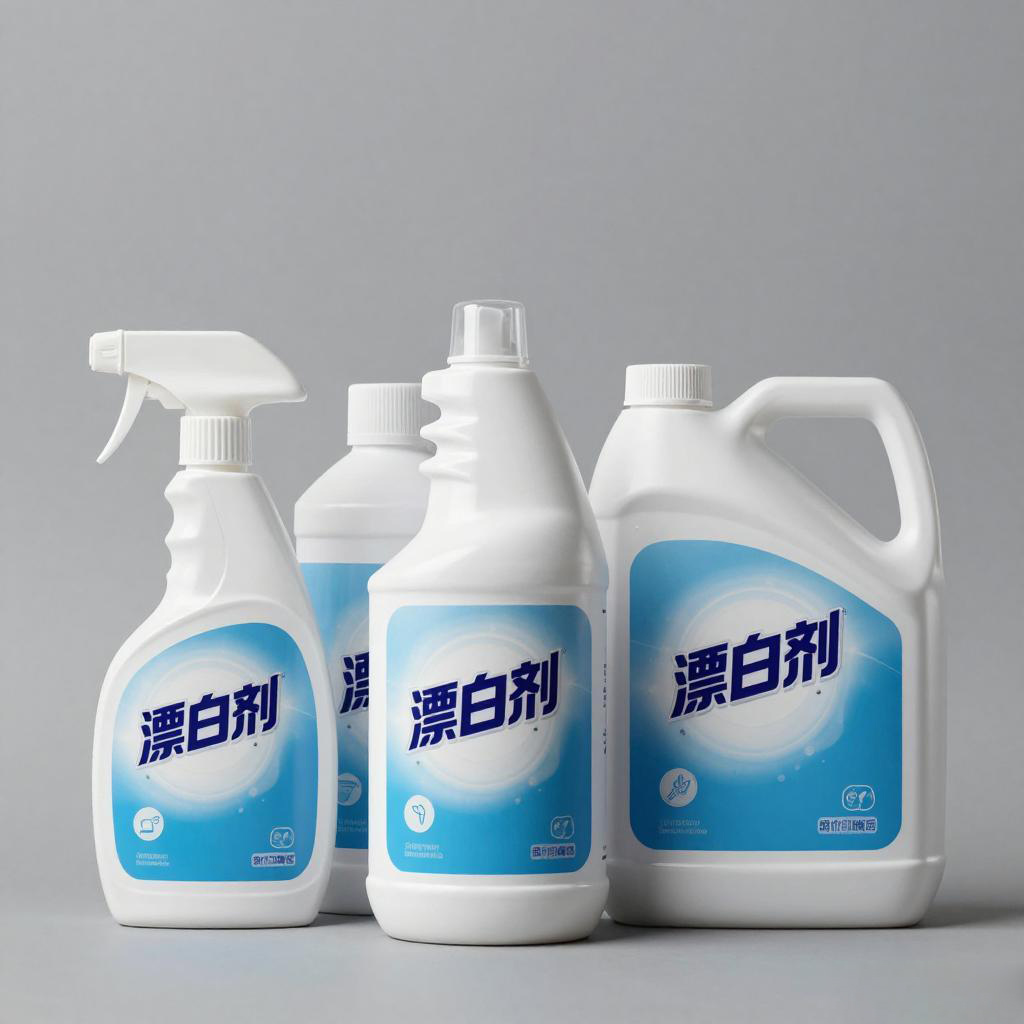
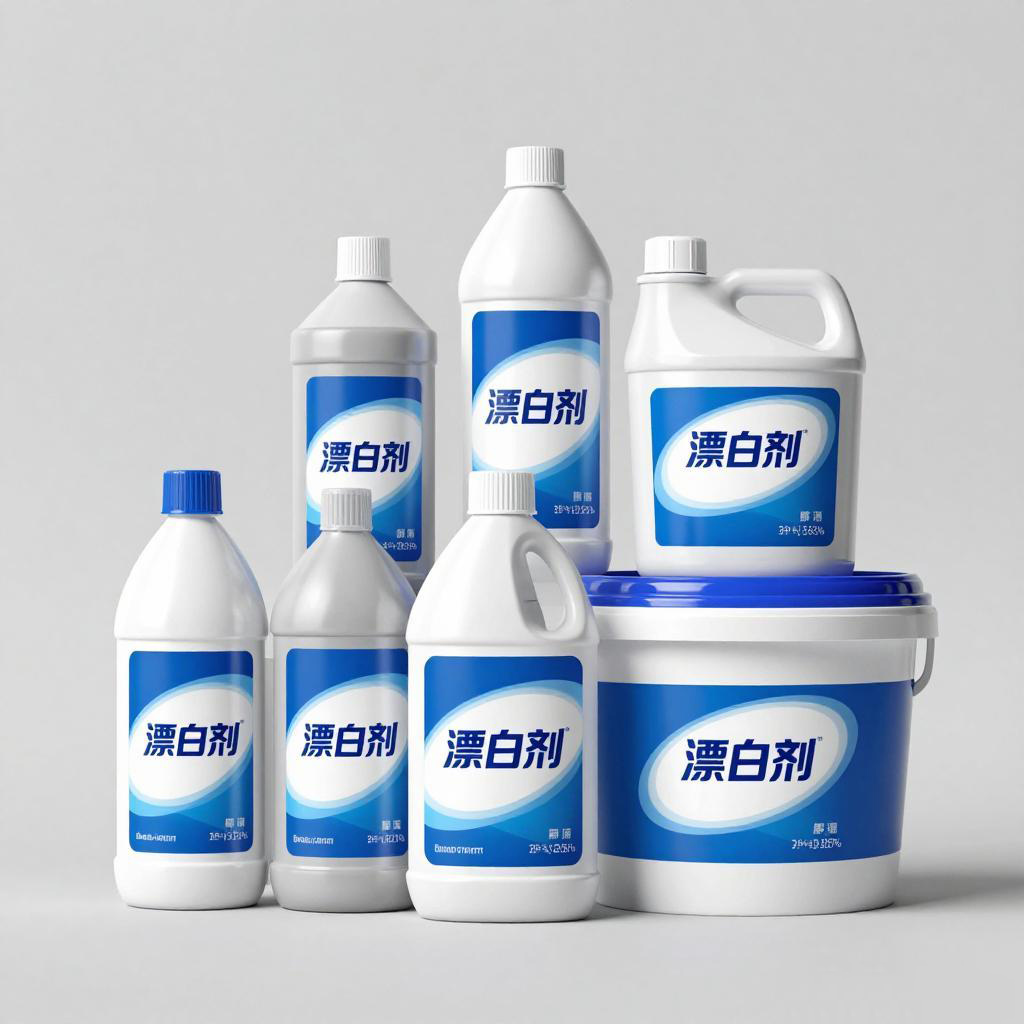
The system supports HDPE and PET chemical-resistant bottles, jerry cans, and industrial containers, making it suitable for both retail cleaning products and large-scale sanitation supply chains.
Customization Options
Bleach production requires strict corrosion control and flexible system configuration. MIC Machinery offers several customization options to meet different production requirements.
Full SUS316L Corrosion-Resistant System
Ensures long-term resistance against sodium hypochlorite and oxidizing agents.
Flowmeter Precision Filling
Provides high-accuracy dosing without direct mechanical contact with corrosive liquids.
Gravity Filling System
Suitable for cost-efficient production with stable low-viscosity filling.
Anti-Drip Diving Nozzles
Reduce splashing and prevent vapor release during filling.
Sealed Buffer Tank System
Minimizes exposure to air and improves product stability.
Multi-Format Bottle Compatibility
Allows quick adjustment between different bottle sizes and container shapes.
Full Line Integration
Can be connected with bottle unscramblers, capping machines, labeling systems, and palletizing equipment for fully automated production.
Maintenance and Operation
Bleach filling systems require careful maintenance due to the corrosive and oxidizing nature of the product. Daily cleaning involves flushing pipelines, nozzles, and buffer tanks with clean water to prevent chemical residue buildup and minimize corrosion risk.
Weekly inspections should focus on sealing components, valve performance, and corrosion condition of metal parts. PTFE and Viton seals should be checked regularly and replaced when necessary to maintain leak-free operation.
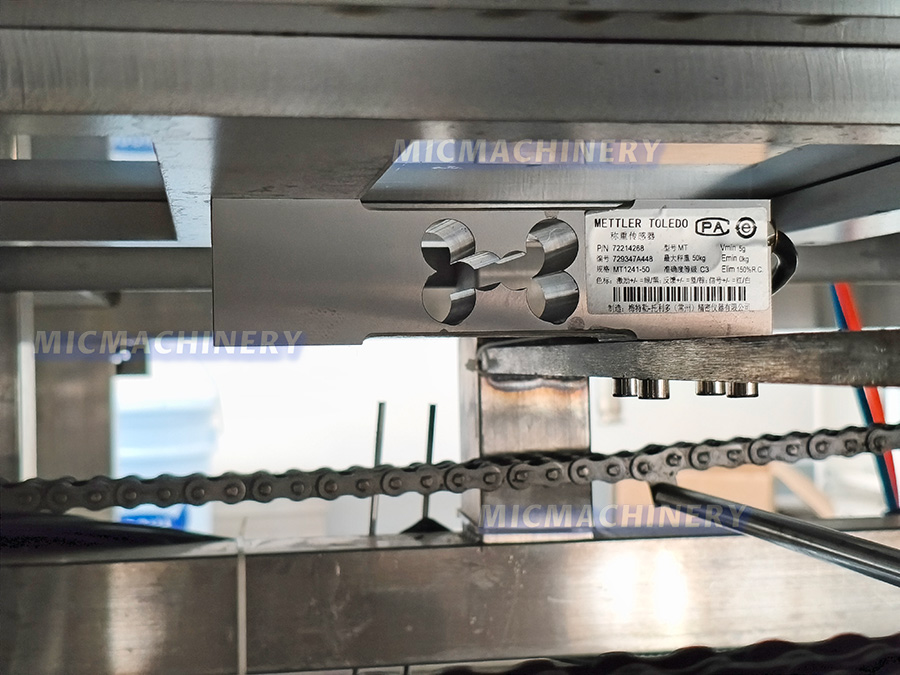
Flowmeter calibration and sensor alignment should be verified periodically to ensure filling accuracy. Electrical and pneumatic systems should also be inspected to maintain stable production performance.
Proper maintenance is essential not only for machine longevity but also for maintaining product quality and safety in corrosive chemical environments.
FAQ
Q1: Can the machine handle high-concentration bleach? Yes. It is designed for sodium hypochlorite and other disinfectant solutions.
Q2: What materials are used for corrosion resistance? SUS316L stainless steel and PTFE/Viton sealing materials are used.
Q3: How is product decomposition prevented? Closed systems and sealed tanks reduce exposure to air and light.
Q4: What container types are supported? HDPE, PET chemical-resistant bottles, and jerry cans.
Q5: Can it fill different bleach formulations? Yes. Flowmeter systems allow flexible adjustment for different concentrations.
Q6: Is full production line integration available? Yes. It can be integrated with capping, labeling, and palletizing systems
Industrial Bleach Filling Machine from MIC Machinery
The MIC Machinery Bleach Filling Machine is engineered for safe, accurate, and corrosion-resistant filling of sodium hypochlorite and disinfectant products. It is designed for continuous industrial operation in demanding chemical environments where reliability, safety, and chemical compatibility are essential.