Grease Filling Machine——High-Viscosity Lubrication Product Filling System
Grease products present one of the most demanding challenges in industrial filling technology. Unlike liquid lubricants, grease is semi-solid, highly viscous, and often formulated with thickening agents such as lithium, calcium, or complex soaps. Its flow behavior changes significantly under pressure and temperature, which makes stable dosing and clean filling more difficult than standard oil or chemical products.
The Grease Filling Machine developed by MIC Machinery is engineered for precise handling of high-viscosity lubrication materials used in automotive, mechanical, and industrial maintenance applications. It is widely applied in grease manufacturing plants, bearing lubricant factories, and industrial chemical packaging facilities where accuracy, pressure stability, and long-cycle reliability are essential.
The system is designed to maintain consistent volume output even when grease resistance changes during continuous operation, ensuring stable filling quality across different container types and production speeds.
The grease filling process begins with material preparation in a mixing or holding tank where the grease is homogenized to ensure uniform texture. Many grease formulations require continuous slow mixing to prevent separation of base oil and thickening agents.
Once stabilized, the grease is transferred into a high-pressure buffer hopper that feeds the filling system. In heated configurations, the hopper maintains a controlled temperature to reduce viscosity and improve flow consistency.
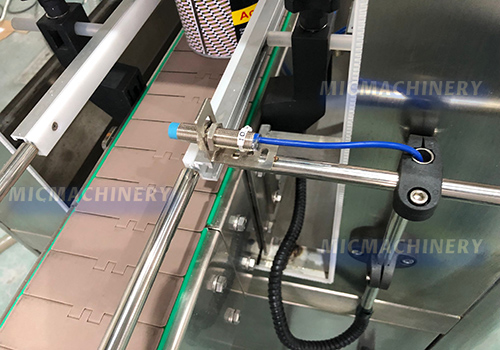
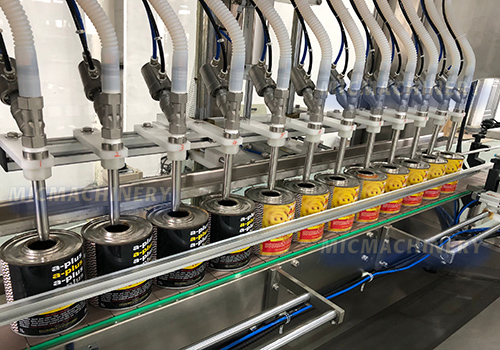
Containers are automatically transported to the filling station and positioned under the nozzles using sensor-based alignment. Once correctly positioned, the piston or servo system activates and draws a precise volume of grease from the hopper. The material is then pushed into the container under controlled pressure.
For large containers such as 5kg or 20kg buckets, dual-stage filling or bottom-up filling may be used to improve accuracy and reduce air entrapment. Anti-drip valves ensure a clean cut-off after each cycle, preventing grease residue on container rims.
After filling, containers are transferred to sealing, capping, and labeling systems. The entire process is synchronized through a PLC control system to maintain stable production timing and consistent output across all filling heads.
Video Demonstration
Applications
The Grease Filling Machine is widely used in lubrication, automotive, and heavy industry sectors.
Typical applications include:
Lithium-based grease
Calcium-based grease
High-temperature industrial grease
Bearing lubrication grease
Automotive chassis grease
Gearbox grease
Marine grease
Construction machinery grease
Electrical insulation grease
Multi-purpose industrial lubricants
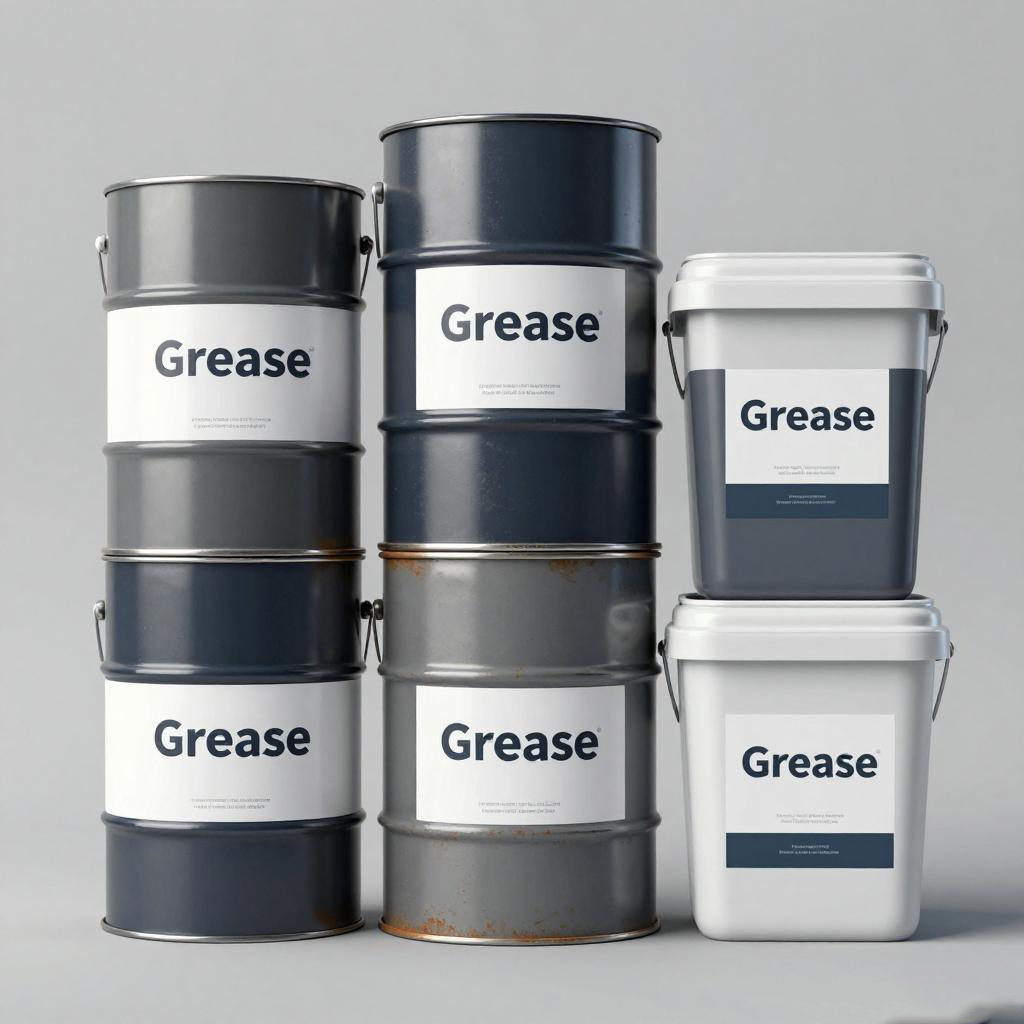
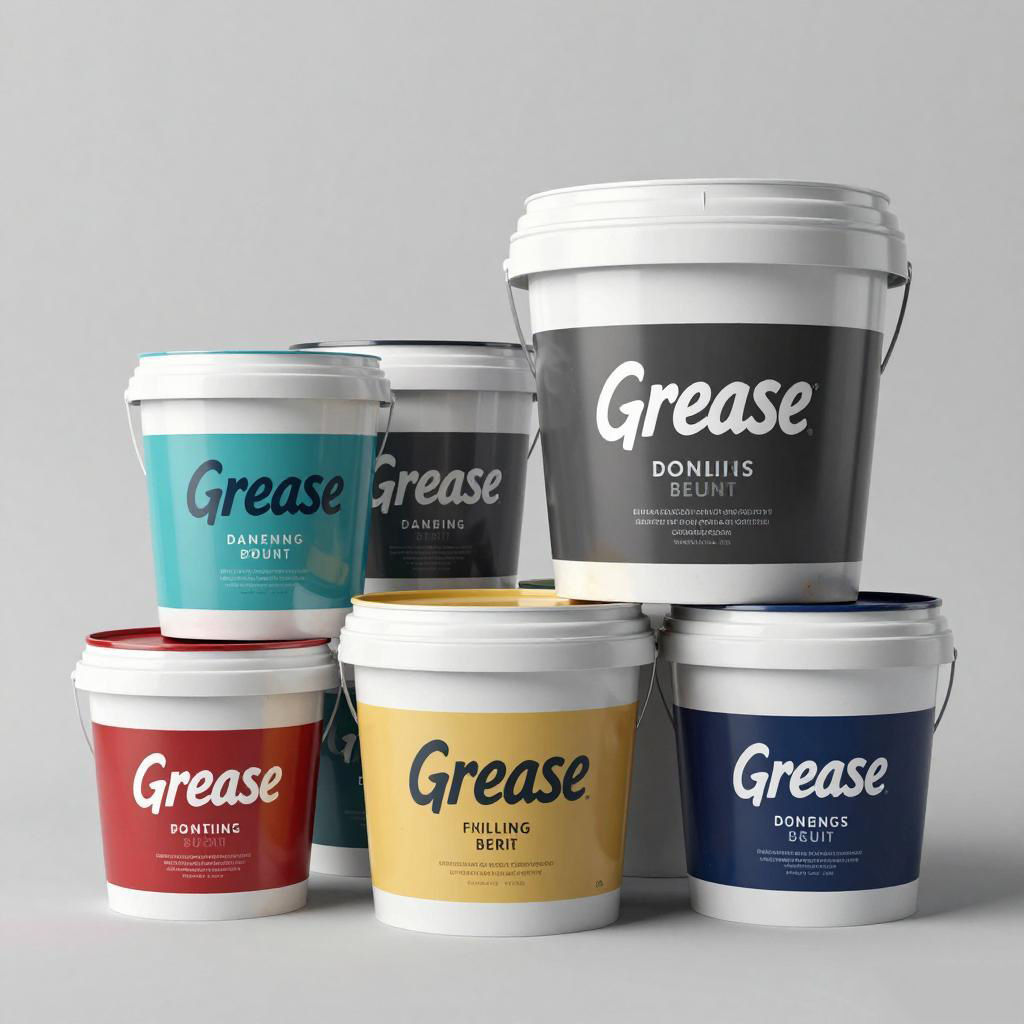
The system supports a wide range of packaging formats including small tubes, metal cans, plastic buckets, and industrial drums, making it suitable for both retail distribution and large-scale industrial supply chains.
Customization Options
Grease production environments require robust and flexible systems due to extreme viscosity and varying packaging requirements. MIC Machinery offers multiple customization options to meet these challenges.
Heated Hopper System
Maintains stable temperature to improve grease flow and reduce resistance during filling.
High-Pressure Piston System
Designed for dense grease materials requiring strong mechanical displacement.
Servo Control System
Provides precise adjustment of filling volume and speed for different grease grades.
Bottom-Up Filling Nozzle
Reduces air entrapment and ensures smoother filling in larger containers.
Heavy-Duty Drum Filling Configuration
Supports 5L, 10L, and 20L industrial packaging requirements.
Explosion-Proof Configuration
Optional design for solvent-based or industrial chemical environments.
Full Line Integration
Can be connected with mixing systems, capping machines, labeling equipment, and palletizing systems.
Maintenance and Operation
Grease filling systems operate under high pressure and require regular maintenance to ensure stable long-term performance. Daily maintenance includes cleaning filling nozzles, checking hopper condition, and removing residual grease from contact surfaces.
Weekly inspections should focus on piston seals, valve performance, pressure stability, and sensor alignment. In heated systems, temperature control units should be checked to ensure consistent heating performance.
Because grease is highly viscous, buildup inside pipelines is a common issue if cleaning is not performed regularly. Preventive cleaning schedules and proper lubrication of mechanical components are essential for reducing wear and maintaining accuracy.
With proper maintenance, the machine can operate reliably in continuous industrial production environments with minimal downtime.
FAQ
Q1: Can the machine handle very thick industrial grease? Yes. It is specifically designed for high-viscosity and semi-solid lubrication materials.
Q2: Is heating required for grease filling? In many cases, yes. Heating improves flowability and filling stability.
Q3: What container sizes are supported? From small tubes and cans to large 20kg industrial drums.
Q4: How is accuracy maintained under high pressure? Piston or servo systems ensure stable volumetric control even with dense materials.
Q5: Can it handle different grease types on the same machine? Yes. With proper cleaning and parameter adjustment, multiple grease formulations can be processed.
Q6: Is full production line integration available? Yes. It can be integrated with capping, labeling, and palletizing systems.
Industrial Grease Filling Machine from MIC Machinery
The MIC Machinery Grease Filling Machine is engineered for demanding industrial lubrication applications requiring stable pressure control, accurate dosing, and durable mechanical performance. It is designed to handle the toughest high-viscosity materials while maintaining consistency and efficiency in modern automated production lines.